
I Like to Move It Move It
Higglety-pigglety narrative chess pieces, and the end of the beginning of the end. Unpacking the TV show LOST — Season 4: Episodes 12-14
World's on fire. Sometimes I distract myself with LOST. Now is one of those times.
My God. We've made it to the end of Season 4. Eighty-six episodes down, only 35 left. We may finish this series before we're out of the 2020s.
OK. You know the drill.
Previously, On LOST: Oceanic Flight 815 crashed. Ain't that just the way? The survivors clashed and bashed with the island dwellers and the smoke monster and the French lady. The Scotsman blew up the hatch, and maybe all of reality, too, so the freighter came, full of scientists and murder-soldiers, and the scientists, they did sigh, and the murder-soldiers, they did murder. Now the smoke monster (let's call that entity The Adversary) has told Locke (let's call him Locke) to move the island (let's call it the island). Locke (incorrectly) believes that this instruction came from a mysterious never-seen entity named Jacob, who the island dwellers (let's call them Jacobians) all worship. Locke believes this because that's what The Adversary told him. The Adversary tells a lot of people a lot of things. Move the island? What the hell does that mean? Let's find out! Oh boy!
Subscribing to The Reframe is free.
It's tough but fair. Subscribe now for free and never miss an essay. Pay whatever you want if you'd like to support the work of an independent writer. Pay absolutely nothing if you would hate to support the work of an independent writer, or if you can't afford to support the work of an independent writer, what with the economy and whatnot, or if ... hold on. Why am I giving you reasons to not give me money?
O B S E R V A T I O N
I'm going to try something different. What's going to happen now is the LOST tradition of a three-part season-ender, resulting in what we published writer-types call "higglety-pigglety narrative chess pieces," whereby everyone moves around like crazy to get where the narrative has already told us they need to get by the end of the season. By this I mean:
Jack, Kate, Aaron, Sayid, Hurly, and Sun all have to get off the island somehow, and Ben has to get off the island some other how. The rest of the Oceanic survivors, including a bunch of unnamed extras and Sawyer, Claire, Rose, Bernard, Locke, and Jin, probably have to not get off the island somehow, and Jin, it has been strongly hinted, has to not survive. The fates of Michael, Juliet, and Desmond, as well as those of Frank and the Freighter Scientists (hear their new top 20 hit, "We're Not Goin' To Guam, Are We?" coming up next on WLOST) are yet to be determined. We don't care as much about the fate of the murder-soldiers, but we assume they each have a fate.
Anyway, the result is a lot of people running around a lot of different places, so I'm just going to tell you what happens to each character, one at a time.
Episodes 12-14: THERE'S NO PLACE LIKE HOME, Pts 1-3 (All):
There's going to be island action and flash-forward action. Let's start with island action, and let's start with Locke and Ben, who have by far the most to do.
Locke: Locke starts this episode in the company of Hurly and Ben, the latter of whom seems to understand exactly what "moving the island" means. The two follow Ben to a brand-new-to-us Dharma station called "The Orchid," which appears to be a greenhouse. The murder-soldiers are already prowling around there, having been given very detailed instructions by their employer (British billionaire/global asshole Charles Widmore). Ben surrenders to the murder-soldiers, in order to give Locke a chance to sneak into the Orchid's hidden sub-basement without getting murdered. Locke hilariously is unable to follow Ben's very detailed instructions and has to wait until Ben—who come on obviously gets away from the murder-soldiers—returns.
Before Ben returns, though, Locke searches for the Orchid entrance, where he is discovered by Jack and Sawyer, come to evacuate Hurley. Locke implores Jack to stay, prophesying, "You know, Jack. You know you're here for a reason. You know it. And if you leave this place, that knowledge is going to eat you alive from the inside out ... until you decide to come back." Jack glowers and anger-smiles. Ben arrives, bids Jack farewell, and brings Locke down with him on a hidden elevator. Locke gives Jack one last disappointed look as he descends.
The two get off the elevator and enter the sub-basement of the Orchid is where Dharma was apparently engaged in experiments beautifully described by Ben as "time-traveling bunnies." Apparently this part of the island has natural caches of what Dharma believed to be "negatively charged exotic matter." Ben and Locke are interrupted by the elevator unexpectedly rising to let somebody else up; after commercial break, it opens to reveal lead murder-soldier Keamy, wounded and limping but upright and dangerous. After the threat he poses is neutralized (more on this soon) Ben sends Locke back up to the surface, instructing him on where to find Richard Alpert and the rest of the Jacobian group colloquially known as The Others, and assuring Locke that they will tell him all he wants to know and then will follow his every word. Locke's journey ends as he finds Richard and the rest of the Jacobians, and takes his place as the new island leader, just as (I believe) The Adversary has been telling him he was destined to do all along.
Ben: Before going to the Orchid with Locke and Hurley, Ben signals to his people using a cached hand mirror. After Ben surrenders to the murder-soldiers, he just stays sullenly quiet until his people—assisted by Kate and Sayid—ambush the murder-soldiers, killing all of them (except, as it turns out, Keamy). Thankful for the assist, Ben gives the Oceanics permission to leave the island, which is nice but also it's not clear that he has the power to stop them. He's probably just enjoying flexing his authority one last time before handing it off to Locke.
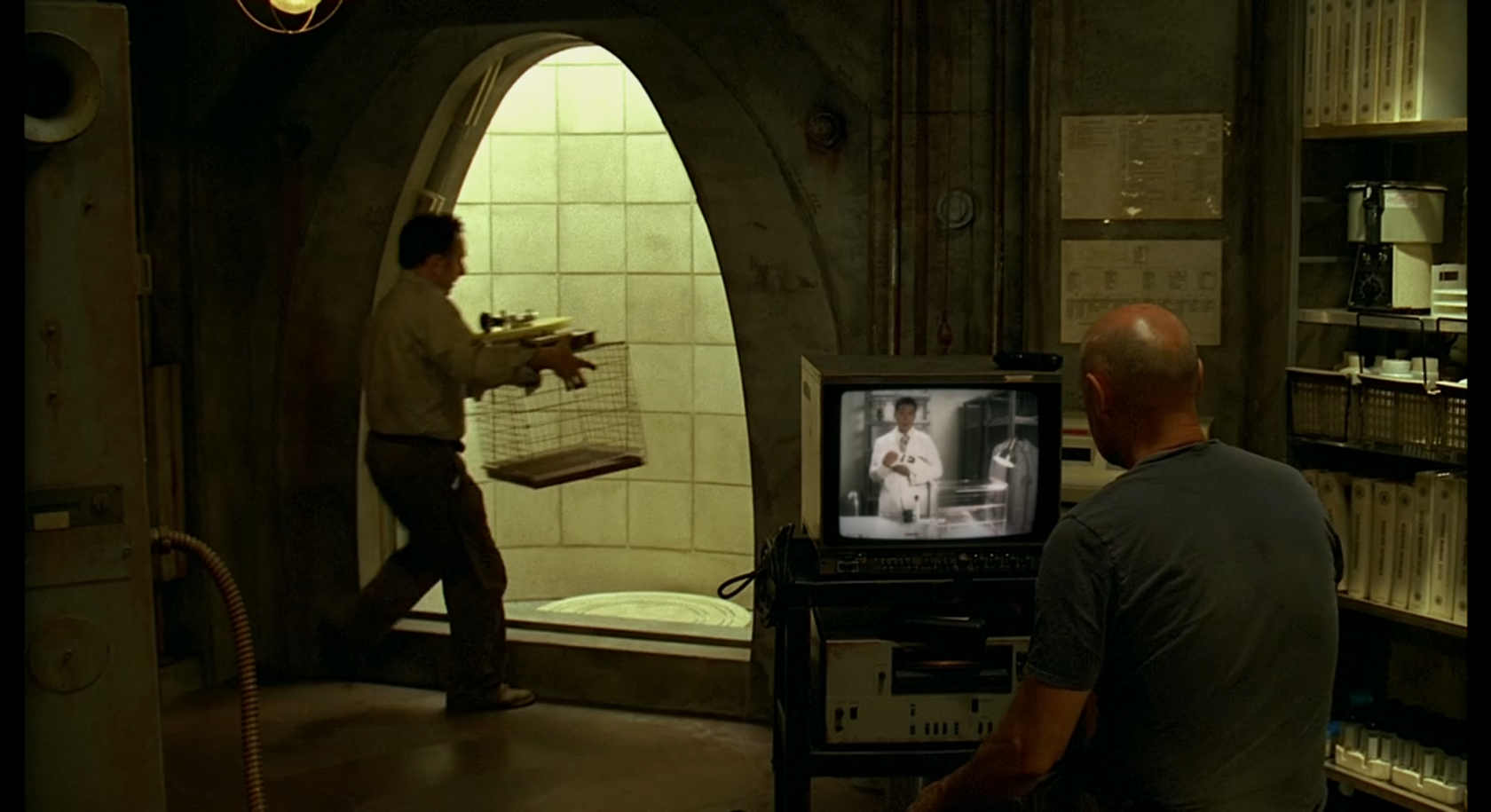
We covered this bit in Locke's recap: Ben returns to the Orchid and gets Locke onto the hidden elevator down ("How deep does this go?" "Deep.") There's a hilarious bit where Locke is pestering Ben with questions so Ben gives Locke a Dharma training video to keep him occupied like you'd distract a little kid with an iPad. There's another hilarious bit where the video instructor Dr. Marvin Candle (here Dr. Edgar Halifax) warns DO NOT UNDER ANY CIRCUMSTANCES put any inorganic materials into the time travel chamber, as Ben stacks trash cans and chairs and whatever he can find in there while Locke goes uhhhhhh ...
This is—to expand on a scene glossed over in Locke's recap—the moment when Tiny Keamy (who did NOT die), interrupts them with a bit of elevator up and down. Ben hides. Entering the sub-basement, Keamy monologues to the effect of "I connected this heart-rate monitor on my arm to the blast trigger rigged to 400 pounds of C4 on the freighter, so if you kill me, then everyone on that freighter will d—" This is when Ben stabby stabby stabby murders Keamy, screaming "you killed my daughter!!!" which Keamy did do, so, hey, fair play, Ben. Locke admonishes Ben about all the people who almost certainly died on the now-almost-certainly-blown-up freighter, and Ben's attitude is basically "fuck them kids." Keamy dies. Ben glares.
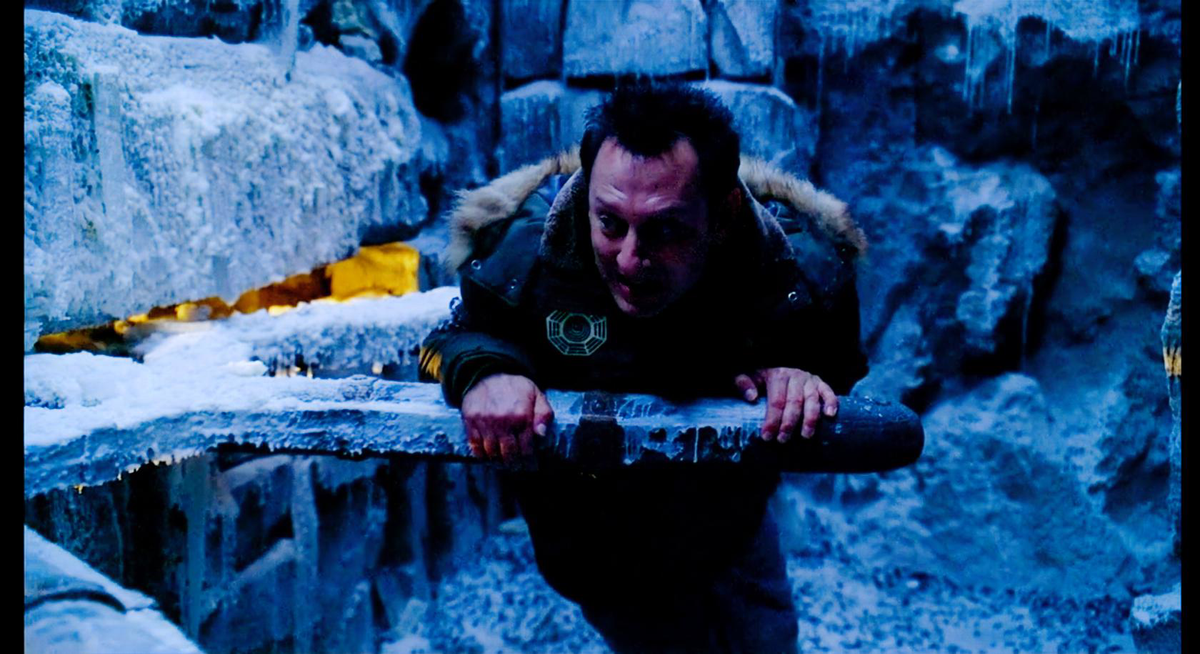
With all that out of the way, Ben uses all the foreign material he packed into the time-travel chamber to make it explode. He explains to Locke that, since "Jacob" didn't give Locke clear instructions on how the island is moved, it clearly means that "Jacob" clearly wants him, Ben, to bear the consequences of his own failure, and to be the one to move the island. (I believe this is something The Adversary told Ben, but your milage may vary.) "If you move the island," Ben tells Locke, "you can never go back." After he sends Locke to lead the Jacobians, Ben climbs through the hole he blew in the time-travel chamber. Behind all the Dharma tech, there's a tunnel leading to an old ladder which Ben descends into a chamber that is very cold and covered in frost and ice, with rough-hewn stone walls, one of which contains a gigantic wooden wheel. Ben laboriously turns the wheel as a strange light glows and strange mechanisms activate. "I hope you're happy, Jacob!" he yells, just as betrayed and shattered and vengeful as The Adversary wants him. Having moved the island, Ben disappears into a white light.
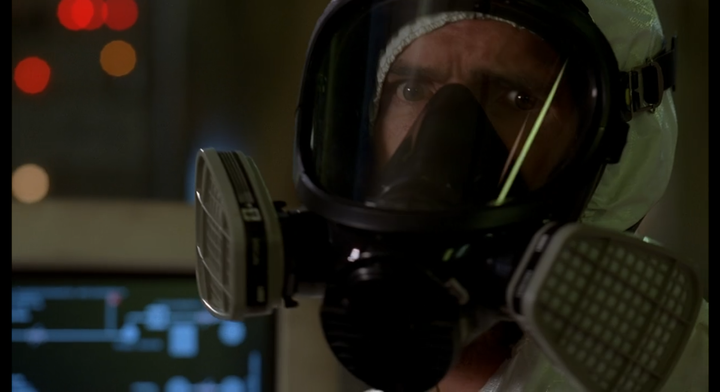
Jack: Jack starts the episode on the Oceanic beach determined to go for the only ride off the island: the freighter's helicopter. One last time, Kate goes along with him into the jungle. They soon run into the last remaining survivors of the New Othertown massacre: Miles and Sawyer (carrying Aaron), whose affect is annoyingly but kind of hilariously "thank Christ, a women" as he thrusts the baby at Kate, and for most of the rest of this episode she will be Kate (holding Aaron). Kate (holding Aaron) returns with Miles to the beach. Jack, now accompanied by Sawyer, finds the helicopter and Frank, but they realize they need to go get Hurley. The two men go do that very easily at the Orchid (and Jack has his talk with Locke), then return to the helicopter with the big lug, only to find Kate (momentarily not holding Aaron), and Sayid already there, and the ground littered with the bodies of murdered murder-soldiers. Kate, Jack, Sayid, Hurley, Frank, and Sawyer all take off on what they hope is the first of several helicopter run to the freighter. Bad news, though: There is a leak in the fuel tank. Worse: When they land on the freighter, they learn from Desmond (who has been on the freighter since mid-season) about a) Keamy's heart-rate bomb, and that b) it is going to go off in c) about five minutes (Keamy having recently died).
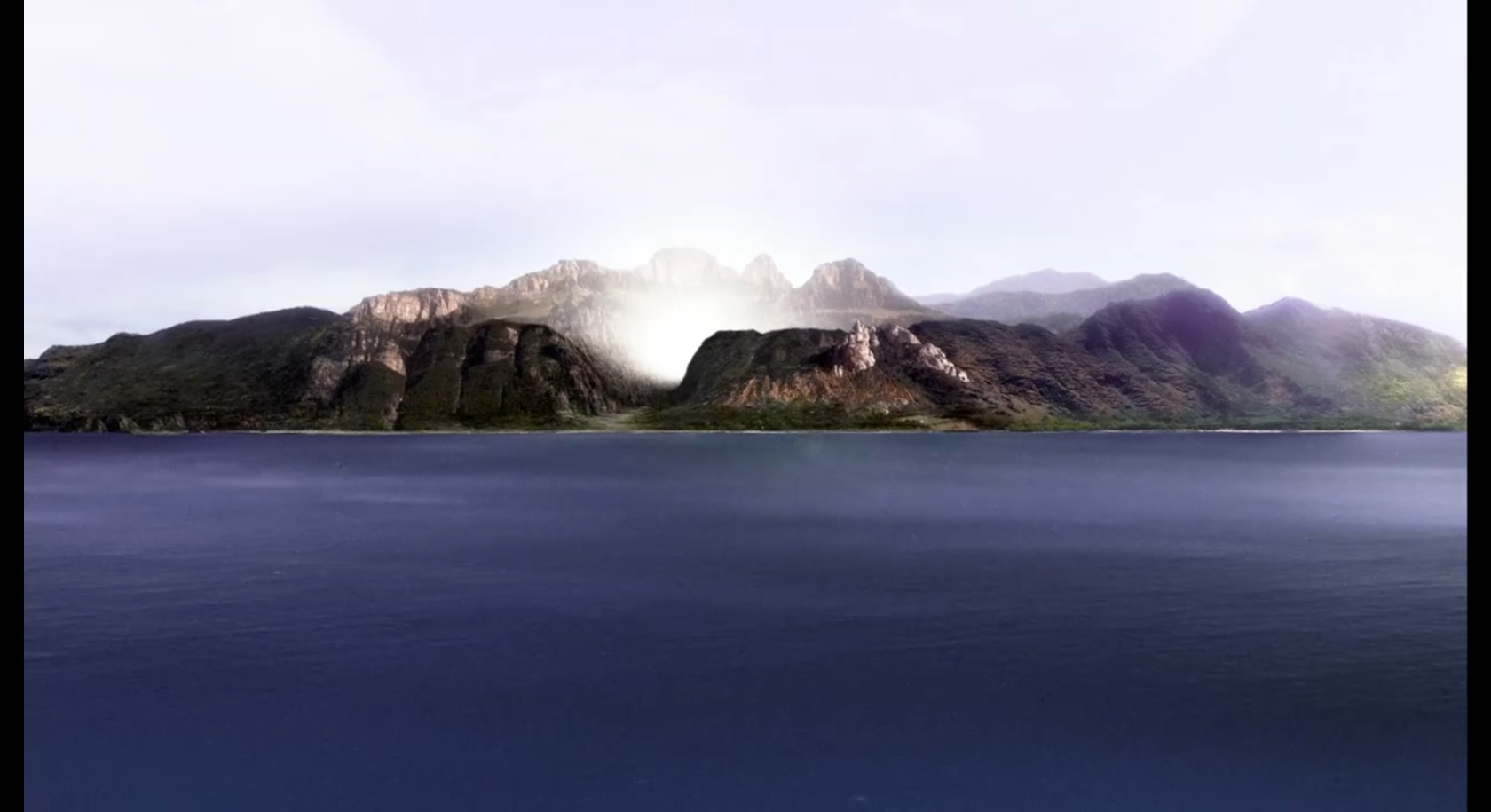
Frank gets a few frantic minutes of refueling (the helicopter is almost empty) before they take off again, at which point passengers Kate (holding Aaron), Hurley, Desmond, Jack, Sayid, and especially Sun look on in horror as Jin comes running out from below onto the deck. He's waving desperately at them when the freighter explodes. Sun screams. Frank swings them back to the island when ... the island disappears. It was there, then it's gone. It moved. Helicopter goes crash-boom into ocean.
Sawyer: You've heard all of Sawyer's activities, except that, before the helicopter arrived at the freighter, he heroically jumps off the ol' whirlybird so the rest of his friends and his lady-love Kate (holding Aaron) could overcome the fuel problem and make it to the freighter. He swims back to the island. He's on the island when it disappears.
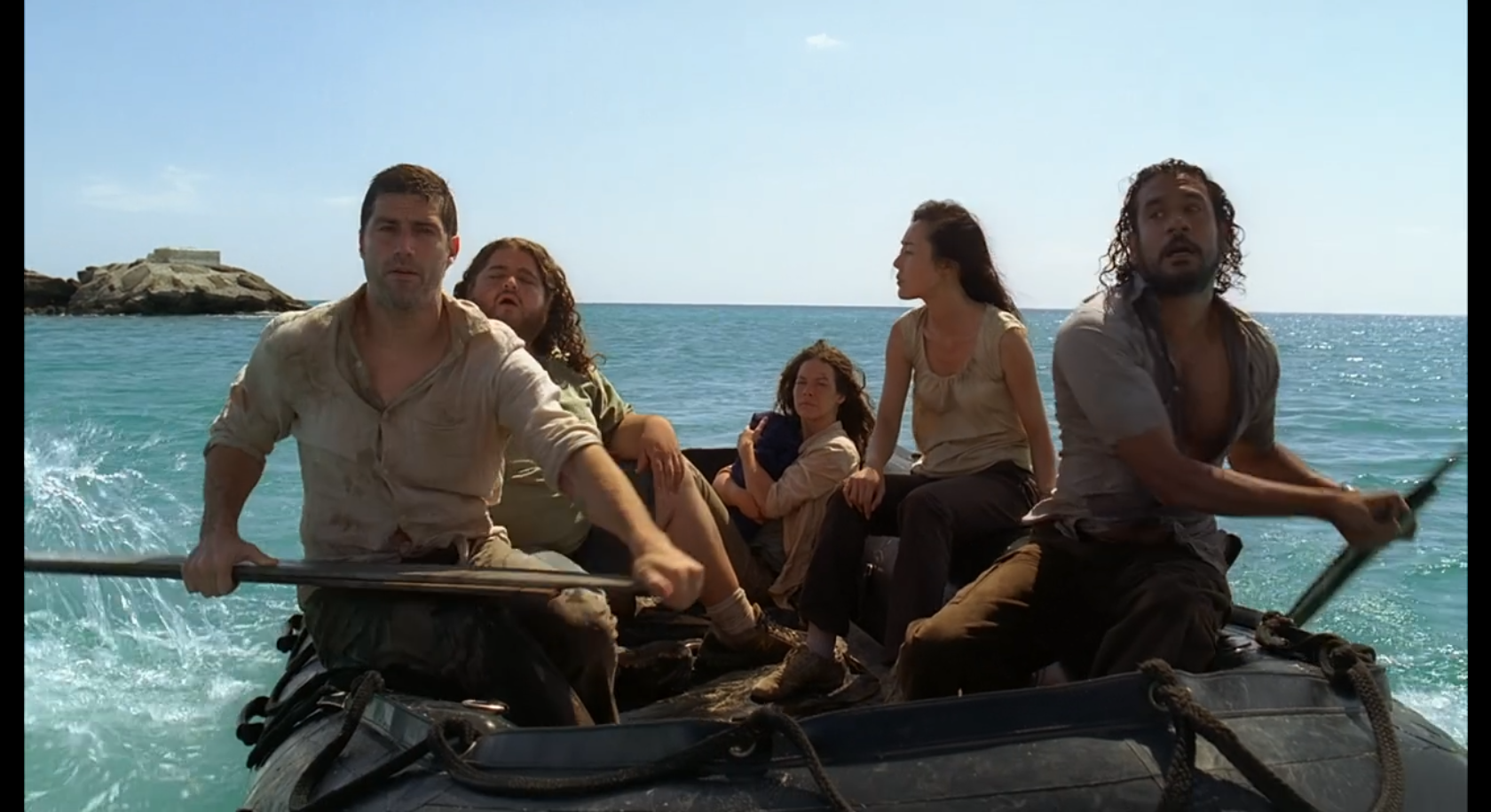
Sayid: Sayid begins the episode taking the freighter's speedboat/raft (let's call it the Polaris) from the freighter to the beach to start evacuating islanders. On the beach, he meets Kate (holding Aaron) returning from the jungle. Putting Juliet in charge of managing the Polaris rescue, and foisting Aaron upon Sun and Jin, Sayid and Kate run into the jungle to rescue the rescue party of Jack and Sawyer. The two are soon ambushed by Richard and the Others, but then—dogs and cats, living together!—they team up, helping the Others ambush the murder-soldiers and murder them all. Sayid and Keamy have probably the most awesome fight in all of the entire series run, which ends when Richard shoots Keamy, leaving Keamy incapacitated but not, as it turns out, dead. From there Sayid stays with the helicopter until it crashes, but, being Sayid, he's the one who is sharp enough to push the chopper's inflatable raft out the window in the seconds before impact, which saves them all.
Faraday: Faraday spends his time on the Polaris, ferrying Jin, Sun, Aaron, and a bunch of no-name Oceanic survivors to the freighter, and begging his friends Miles and Charlotte to come with him as soon as possible, which they decline to do. Faraday clearly knows the island is about to move. He's in the Polaris when the island disappears. This won't be clear until next season, but he's still close enough to the island to be considered "on the island," practically speaking, when it disappears.
Kate (holding Aaron, mostly): You already have heard all of Kate's activities, except that she makes it to chopper's inflatable raft, along with Aaron, who she holds. Yes, everyone survives, even the baby, which I'm chalking up to "the island won't let them die." Later, Kate (holding Aaron) is with the group on the raft when they are rescued by a passing ship.
Desmond: It's Desmond who finds the bomb in the freighter's hold, and he spends most of the episode working with Michael and Jin to disarm it. Later, he's with the group in the raft when the passing ship comes by ... and the ship belongs to Penny! His constant love! And she's on board! As we learned way back in Season 2, she has a monitoring station (how? why? this is never explored, so let's move past it). Turns out the call Desmond made to her allowed her to triangulate on his location. Weeks later, the Oceanic Six strategically "shipwreck" themselves in a raft off the coast of an island that will fit their story. Desmond stays with his girlfriend on her rad yacht. I don't blame him.
Frank: As a non-Oceanic, Frank doesn't have to explain his reappearance in society, so he stays with Des and Penny on Penny's rad yacht. I don't blame him.
Sun: Sun is emotionally devastated. I don't blame her. She goes on the raft, along with Jack, Kate (holding Aaron), Sayid, and ...
Hurley: Hurly goes on the raft, too, and is with the group when they make landfall and are "rescued" at a small Indonesian fishing village.
Michael: Michael is the one who keeps the bomb in the freighter hold from going off immediately upon Keamy's death, which he accomplishes by freezing the battery until his tank of liquid nitrogen runs out. He has really nice moments reuniting with Sun above deck and with Jin below. Michael stays with the bomb until the very end, when the figure of Christian Shephard appears to him and says "You can go now, Michael." Michael gives his last words: "Who are you?" The bomb explodes. The island finally allows Michael to die. RIP Michael.
Jin: Upon reaching the freighter, Jin joins Michael on bomb squad detail, and damn if it isn't nice to see those two old raftmates back together again. As the situation grows dire, Michael sends Jin away to escape with Sun. As covered previously, Michael didn't make Jin leave quite soon enough, so when the bomb explodes, Jin dies. Psyche! Jin survives the massive explosion. This seems like the hardest the island has ever had to work to make somebody not die. My theory—that the island sometimes moves people through space and time to prevent their deaths—gets a little bit more support, because otherwise, how? Anyway Jin will be on the island next season, and I'm crediting Michael with at least an assist on saving his life.
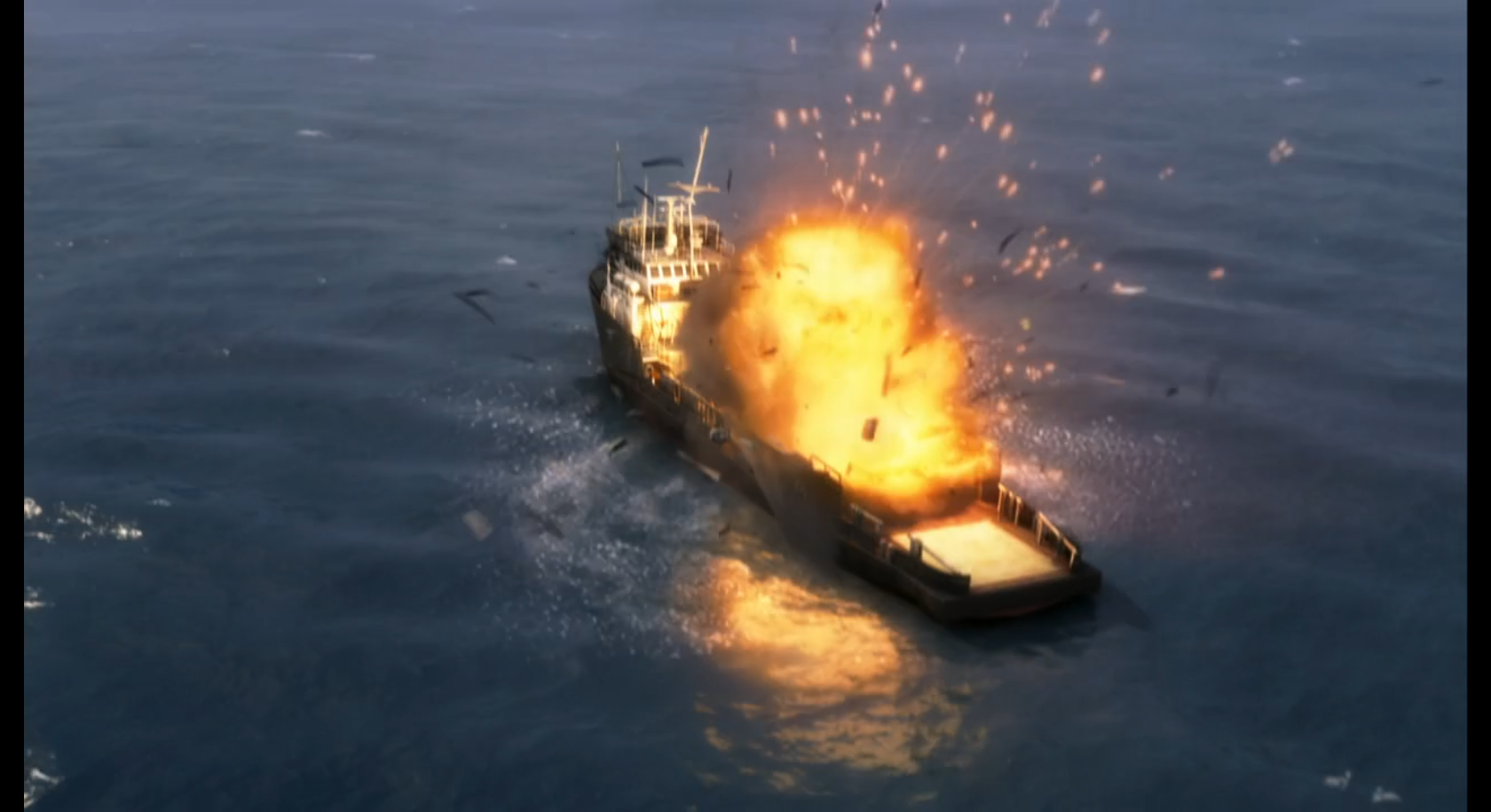
Juliet: Juliet spends her time on the beach managing the evacuation. She rather selflessly refuses to take a trip to the freighter until everyone else has gone, which is all the more impressive when we consider that getting off the island is her prime motivation and she has acted with ruthless efficiency against others in the past to achieve this end. (Unfortunately the chopper can only take characters with speaking parts, so we must assume all of these unnamed Oceanic survivors died in the freighter explosion and would have been better off staying on the beach; nevertheless Juliet's heart was in the right place.) Juliet has a great view of the explosion, so she sits on the beach and watches the black billowing cloud turn into a feathery plume, and gets really drunk on Dharma rum, which she eventually shares with Sawyer when he comes swimming up. Hmmm, this may be the start of a fine romance. Juliet is on the island when it disappears.
Charlotte: Charlotte stays on the island, intimating that this island is where she was born. She is on the island when it disappears.
Miles: Miles stays on the island, intimating that he already knew that this island is where Charlotte was born. This is probably because he can talk to ghosts, which reminds us that Miles can talk to ghosts, and also that there are ghosts. He is on the island when it disappears.
Rose: Rose wants to know who told Miles he could eat those peanuts? She is on the island when it disappears. So is Bernard, we assume. We don't see Bernard.
Claire: Claire's island whereabouts are unknown. She is on the island when it disappears.
The Adversary. The Adversary, who basically manipulated all these events, and more on that soon, is not seen this episode more than once, and maybe not at all.
And now: Hot, flash-forward action! I'll go scene-by-scene.
We open the episodes with a scene in which the Oceanic Six are being flown back to civilization (by cargo plane for some reason) and conspire together about a lie they've all agreed to. Later, at a press conference, they all sit at a table and lie their asses off, just like they planned, saying the plane crashed into the ocean and they were the only survivors (and also that Kate was pregnant and gave birth to Aaron, which doesn't really add up, but that's just par for the course when it comes to Kate). First-time viewers might not understand why they are lying, but most probably guess quite correctly that it's to keep the people they left behind safe from the powerful people seeking the island. After the press conference, Sayid is reunited with Nadia, and they smooch a lot, and Sayid probably doesn't bring up the fact that he fell in forever-love with a spoiled rich girl named Shannon for about 4 days.
Next, there's a scene where Sun uses her Oceanic insurance settlement money to take controlling interest in her father's multinational manufacturing corporation, Paik Heavy Industries, a megalith so big that it includes a major automobile manufacturer. This is a hilariously dumb plot point, because an auto company by itself is going to enjoy a considerably higher valuation than an airline, so how Oceanic settled with Sun for several times its own net value is a mystery. Sun's a really good negotiator, I suppose. The main thing that we learn here is that Sun wants revenge for Jin's death, and she blames two people for it, and her father is one of them. The other one is left mysterious for now (it's Ben).
There's a scene in which Hurley's family throws a surprise birthday party for him, and Kate (holding Aaron) and Sayid and Nadia are there. Aw, they're still friends. Hurley's dad gifts him with the sports car they worked on together when Hurley was little. (I believe this is the car Hurley was driving at the very start of the season, when he cracked up and took the cops on a chase.) Hurley's touched by the gift, until he notices that the odometer and trip counter display the numbers (4, 8, 15, 16, 23, 42). Yep, the island (or The Island?) is still controlling their lives. Hurley freaks out and runs away.
There's a scene set at Christian Shephard's long-delayed funeral, where Jack gives his dad a pretty shitty eulogy. This is egregious considering that they must have already had Christian's funeral—probably with Jack's funeral at the same time—so this event probably is something being done for Jack's sake. Anyway, Claire's mother is there; she introduces herself afterward and says (paraphrased), "Hi! Nobody here knows me, but I'm the woman your father had a secret Australian second family with. In fact—crazy coincidence—his daughter, your half-sister, was on Oceanic 815, her name was Claire, anyway, just wanted to tell you, byeeeee!" This utterly demolishes Jack, and sets him down the path to the pills and the hobo beard and the "we've got to go back!" And think about it from We've-Got-To-Go-Jack's perspective: He actually saw his father on the island at least once, and suppressed this experience so hard that he never told anybody about it. He then dedicated himself to saving all the people he led, and he saved almost none of them. One of the people he left behind was his own sister, and he failed to find out about their relation until it was too late, and now his girlfriend is raising his nephew, which is a ceaseless reminder to him of his failure. And now the ghost of his father, who told Jack "you don't have what it takes," has been appearing (probably many times) to him and (probably) told him he needs to go back to the island he dedicated himself to escaping, in order to probably (among other things) save his sister. Locke's prophecy has come true: Jack's belief in what he knows to be true has been shattered, and he's probably wondering what would have happened if he'd tried listening to his dad on-island. He'd perhaps have had an experience similar to ... Locke, who Jack now realizes was seemingly right about destiny. You'd need pills, too. The beard, which resembles a drowned ferret, remains unconscionable.
Speaking of that beard, next comes a scene that occurs directly after Jack yells "we've got to go back!" to Kate. She gives a furious reply that makes it clear that a) they've been back for three years, b) they've both been visited by the mysterious Jeremy Bentham, the mystery man whose death has caused Jack such concerns, and c) Bentham wants them all to go back, which Kate makes clear she will never do. Kate drives off. Jack Jacks.
There's a scene where Tall Human Walt (as distinct from Tall Ghost Walt) visits Hurley in the psyche ward. It's nice to see Walt again. This could have been a great place to reintroduce Walt into the main cast, and it's disappointing that they didn't take it. Anyway, the mysterious Jeremy Bentham apparently also thought Walt should join the main cast, because he paid Walt a visit. As we just learned, Jeremy Bentham is a man who thinks former Oceanics should go back. As we'll eventually see, Jeremy Bentham is a man accustomed to not getting what he wants.
There's a scene where Sayid kills a mystery goon who is stationed outside of Hurley's facility, then enters the grounds and collects Hurley. Sayid looks all slick and James Bondish. Hurley is playing chess—with himself, we assume, until he says "checkmate Mr. Eko." Both Hurley and Sayid have also met with "Jeremy Bentham," and I'm tired of pretending along with this show that we don't all already know that Jeremy Bentham is Locke.
There's a scene where girlboss Sun meets up with Charles Widmore and offers him a strategic alliance. He's confused as to why she wants to work with him, presumably wondering why she wouldn't blame him for Jin's death at least as much as she blames her father and Ben, given that it was Widmore who sent all those people to kill everybody. This is fair; I'm wondering that, too. In summary Sun is a land of contrasts.
There's a scene where Kate catches an intruder in toddler Aaron's room ... except the intruder is an apparition of Claire, who screams at Kate to not bring Aaron back to the island, then disappears. Kate then wakes up; it was a dream, or so it seems.
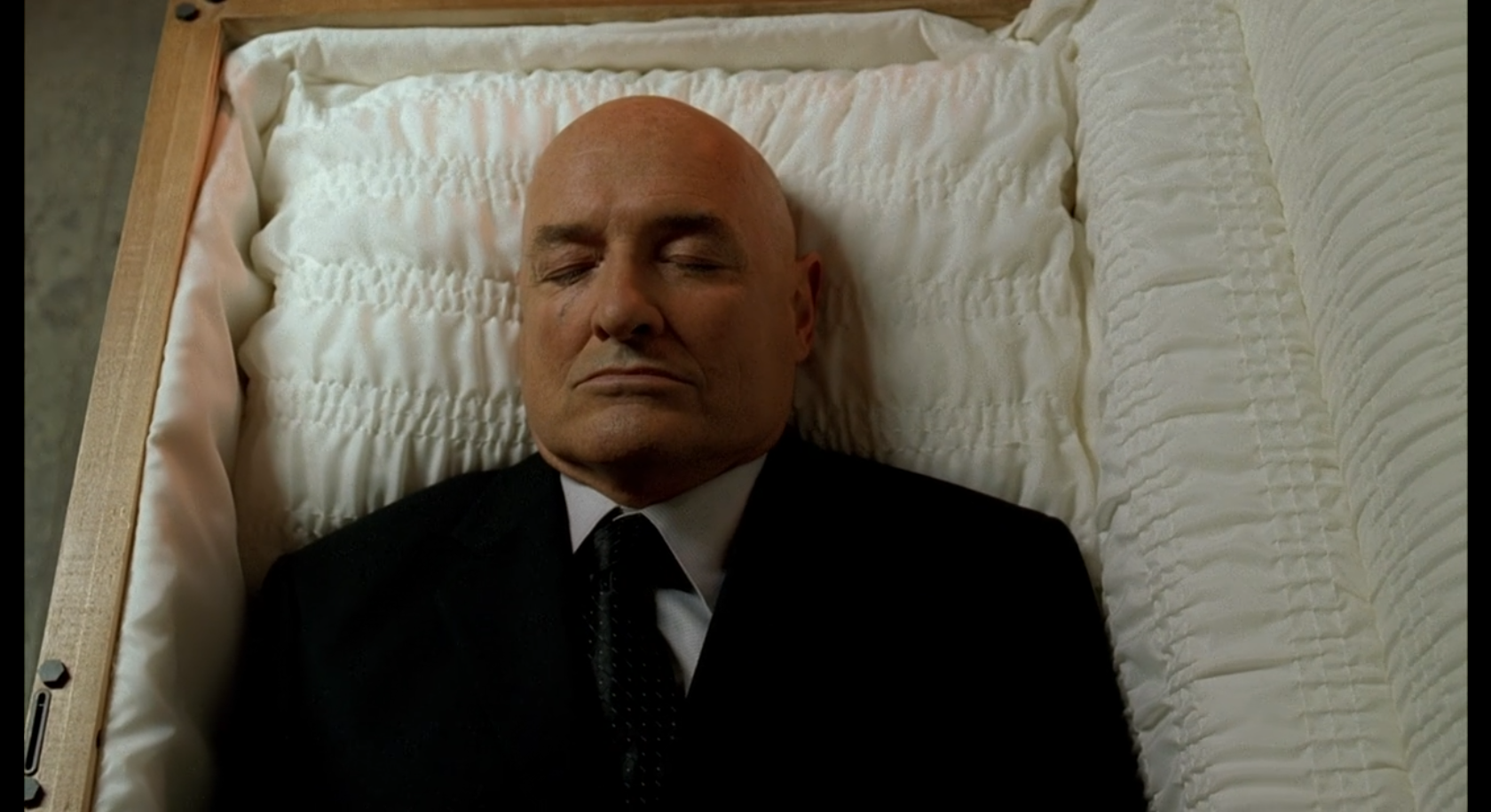
Final scene: We've-Got-To-Go-Jack as returned to the same funeral home we saw him visit at the end of last season—the one where Jeremy Bentham's body is on display. Jack breaks in, opens the coffin, and takes a real good look. Ben appears behind him, and an unholy alliance begins to form. Jack lets Ben know that Bentham told Jack that after the Oceanic Six left, some very bad things happened, and it is Jack's fault. Ben lets Jack know that it's not enough for Jack to come back; the island requires that they all return ... including—indicating the coffin—him.
The camera swings around to reveal the corpse of Jeremy Bentham. Yep, it's Locke. Yep, he's dead.
The Reframe is a reader-supported publication with a pay-what-you-want subscription structure. Free or paid, everyone gets the same newsletter, because those who can afford it pay. If you would like to support my work, and if you can afford to, consider upgrading to paid.
B E L I E F
We observed what we observed. What do we believe about what we believe?
1) Moving island?! This is item 1 of 1. It's all I'm talking about in this entry.
Yep, the island moves. This led people quite understandably to want to know why and how it moved. We'll get some answers eventually to this, sort of, which boils down to "it channels the water and the light" at the center of the island, but for now I want to focus on the fact that we are shown that the island moves—which is a pretty big answer when it comes to figuring out what the island is!
I believe that moving the island demonstrates key things about the way the island works, and the rather important point that the island and Earth are two separate things. I believe that the island has a physical orbit around Earth, but also a temporal one. I think that as it moves through the Earth's space, it also moves through Earth's time, which means that at any given time you can only intercept it at certain specific locations. I believe that the island vanishes to people on Earth the way people on the island who jump through time vanish to those who don't. I believe that, for the horrified survivors in the freighter helicopter, the island moved, not to another location relative to theirs (or at least not only to another location) but to another time relative to theirs.
However, I want to point out something that is easily missed: The island doesn't move because of the wheel, exactly. The wheel manipulates something within the island (the water, I presume, since channeling is something you do to water; you might think of the light as a constant and the water as a variable if you find that useful), and this manipulation causes the island to move. I believe that what we are being told is that the island's ability to move through space and time is an intrinsic quality. Think of all of space and time as a gem with an almost infinite number of facets, and the configuration of light through the water determining in which of those facets the island will exist.
You turn the wheel, it changes the channel of the water, and the island moves. We'll learn beyond a shadow of a doubt that it was The Adversary who got some people to install the wheel at some point. I believe we're being shown that The Adversary has been manipulating people to do things with the water and the light all along—which is very consistent with my belief that It is manipulating the Oceanic survivors and The Jacobian factions on and off the island, including Charles Widmore and Ben Linus and John Locke. And, I'd argue, the location of the island through time and space.
There are rules that govern where the island goes, and per the instruments in an off-island tracking station that charts those rules and movements that we'll see eventually, the island moves in what appears to be an orbit. We'll learn soon enough that Daniel Faraday worked it all out—at least (I believe) for a specific configuration of the water and the light—and gave that information to his mother, which is how the Dharma Initiative is able to figure out how to find it for all those years.
We'd been assuming that the island and the Earth had roughly the same chronological synchronicity. That assumption is so ingrained that even when Faraday's experiments showed that the two were out of sync and moving further out of sync, we still assume that both moved in the same direction, at roughly the same pace. But I think the evidence suggests otherwise.
We'll also learn that when you turn the wheel, people on the island move through time. Not all people move through time, though—only some do. Moreover, we'll learn that when people arrive at the island, they don't all go to the same point in the island's timeline. Some go to what audiences think of as "the present" while others go into what might be thought of as "the past"—the 1970s, to be precise. But what is "the present" and "the past" for a location that isn't necessarily chronologically synchronous with the Earth? What are "the 1970s" from the perspective of those on the island? I would say the 1970s are only the point in the island's own chronology where most people from the 1970s on Earth go when they go to the island, and that the 1970s is the point in the Earth's timeline to which those people usually return.
This leads me to wonder if everyone who was on Oceanic 815 went to the same "when" of the island. All the ones we're aware of did. But ... did some go else-when? The evidence suggests it's likely.
This leads me to wonder a lot of things about a lot of things.
What are the rules that govern who goes where and when? What are the rules that govern where the island goes when the wheel turns?
These are LOST's deep mysteries. They won't be directly or even indirectly answered.
When I started this whole project, I wrote:
Those who insist on focusing only on what is observed finally find themselves at the limits of their understanding, forced to decide whether the larger story they’re experiencing is ultimately unknowable, or is just a mistake crafted by a disinterested and distant god.
We're at that point—the point of unknowables and belief. Here's what I believe:
I believe that different people in different times have figured out how to predict where the island was, at least for a while. I believe that Daniel Faraday's method was only the most recent, and probably the most thorough, cataloguing. He may have even figured out the island's orbit for more than one configuration of water and light.
And I believe that each different configuration of the island contains not only multiple times relative to Earth, but multiple probabilities relative to it as well. So, for example, if you came to the island, there might be infinite ways that Charlie Pace might die. Or, for example, if the U.S. military brought a nuclear bomb to the island from "the 1950s" in the Earth's chronology to the point in the island's chronology where most people from "the 1950s" usually went when they came to the island, then that bomb might get set off in "the 1970s" to (successfully, I think) prevent a catastrophe, and it might also get set off in "2004" to (unsuccessfully, I think) prevent a different catastrophe. And, if the catastrophe was prevented, then that timeline might be preserved, while if it was not prevented, that timeline might be ended. I believe that people (all? some?) who are on the island at the time of the destruction of one entire possibility might be shunted from that possibility to another, just as they are shunted from one time or another, all while still returning to the same version of Earth that they left. Who or what shunts them? Are there also infinite possibilities operational on Earth, meaning that each Earth has infinite possible configurations relative to infinite versions of infinite islands, each of which contains infinite possibilities within itself, all of which interact with one another infinitely? Just how infinitesimal are the facets of reality's gem?
Great questions which will not even be posed within the show, much less answered!
We'll have to rely on belief.
I believe that, while the island was in one particular configuration of water and light in Season 1 and 2, its orbit throughout space and time and possibility was known only to Ben Linus and his faction, and this gave Ben Linus considerable power, because it allowed commerce to and from the island to be controlled by him alone. We might wonder who or what gave him this knowledge, and, in asking, I believe we'll have our answer: The Adversary. (Does Ben actually believe that if you move the island you can never return? It's not true, as it turns out, and we'll see that "flash-forward" Ben clearly expects to be able to return. Maybe he was lied to, or maybe he was lying, or maybe it's both. We know the wheel will eject you from the island; we will learn that the wheel was the escape Jacob's brother planned for himself, and it was within Jacob's brother that The Adversary dwelled for long years. I believe The Adversary told Ben something like "If I were to turn it, I would never return," and Ben drew his conclusions.)
I believe that when when Desmond turned the reset key, the island changed configurations of possibility, and entered an orbit through space and time and possibility that was known to (or discovered by) the Faraday faction, which I believe includes both Faraday's mother, Eloise Hawking, and his father, Charles Widmore, and Widmore's daughter, Penny—and which allowed/allows all of them to seek and find the island. With the turn of a key, a significant source of Ben Linus' power vanished, because his exclusive knowledge was no longer exclusive. I believe we've watched a ruthless and resourceful individual spend the last two seasons desperately trying to stave off the inevitable arrival of the Faraday faction(s?).
I believe that the light has significant spiritual qualities, and more on that some other time. But I also believe that on the physical plane, the light is what scientists call "negatively charged exotic matter." I think the island is a construct that allows the manipulation of that matter, for beings with the perception and the ability to do so.
I believe one entity that has the power to manipulate this matter is the force known as The Island, who has formed some sort of spiritual indwelling with a man named Jacob. I believe that this entity has an extremely fine-tuned ability to control the results of those manipulations—right down to which individual, upon arriving on the island, goes when. I believe It has Its own tool, capable of manipulating events not only on the island but off it, but designed primarily for observation. It, too, has something to do with light if not water. It's a lighthouse. We'll see it some day.
I believe the other entity that has the power to manipulate exotic matter is the entity known as The Adversary. And I believe that's precisely what It has been doing.
I think that's how the game they've been playing is played.
Pieces moved, pieces captured. Not just people but populations.
Not just decades but epochs.
Not just time but timelines.
But I believe only The Adversary thinks the game they are playing is a competition. The Island observes, and is fascinated by the progress of The Adversary's moves.
L O S T
Next Time: A Wrinkle In Time
The Reframe is totally free, supported voluntarily by its readership.
If you liked what you read, and only if you can afford to, please consider becoming a paid sponsor. If you'd like to be a patron of my work, there's a Founding Member level that comes with a free signed copy of one of my books and thanks by name in the acknowledgement section of any books I publish.
Looking for a tip jar but don't want to subscribe?
Venmo is here and Paypal is here.
A.R. Moxon is the author of the novel The Revisionaries, and the essay collection Very Fine People, which are available in most of the usual places, and some of the unusual places. You can get his books right here for example. He is also co-writer of Sugar Maple, a musical fiction podcast from Osiris Media which goes in your ears. He fears the feathered creatures with their sharp beaks and clutching talons.

Comments ()