
LOST 047: The Causal Dupe
The tragic final march of the Man of Faith. Unpacking the TV show LOST — Season 5: Episode 7
Welcome to LOSTmaster! Each month I, your LOSTmaster, take you through a section of LOST, while five specially-chosen contestants try to do my bidding, which is to try to read the whole thing and follow it. The spoileriest of spoiler warnings for those who dare enter my lair. Enter if you dare!
Previously, On LOST: Oceanic 815 crashed on LOST island, which is a nexus of cosmic power and spiritual energy, though nobody watching along would know that yet. It is also home to cosmic entities who are locked in an eons-spanning argument over the worthiness of human beings, but almost nobody knows about the cosmic entities yet, either. One person who does know a bit about the cosmic entities is Ben Linus, a slippery little fella who has been leading a faction of cosmic-entity-worshipping cultists that have been on the island for centuries, or possibly millennia. Another person who knows about the cosmic entities is a guy named John Locke. This is a former paraplegic box factory employee and would-be mystic who believes he is fated to become a faction-unifying island leader, and he's one of our main characters. Specifically, he's the one we'll be saying farewell to today. (Hey, I warned you there were spoilers.)
Locke believes that he is destined to become a faction-unifying island leaders because he was told so (repeatedly, I believe) by one of the entities. This entity has been commonly called "the smoke monster" by island dwellers, because of Its habit of manifesting as a monster made of black smoke, so fair play to them. I have been referring to this entity as "The Adversary," because It is the entity that has been arguing against the worthiness of humans. We don't know this yet, but soon enough now we shall discover that The Adversary is focused very intently and patiently on escaping the island, so that It can destroy the fabric of reality itself, which will create some disordered state of reality that It thinks of as "home." The other entity (who we have not yet seen) is preventing this eventuality by holding The Adversary on the island, and I believe that this means this other entity is the more powerful of the two—and, given that The Adversary appears to have the power to destroy the fabric of reality itself, that makes It quite powerful indeed. This second entity manifests itself in the physical presence of a living human being, who serves as the island protector, among other things. The current island protector is a man named Jacob, which is why most characters refer to It as "Jacob." I have been calling this entity "The Island." I have my reasons.
The Adversary can also manifest as human beings; specifically, It can appear as apparitions of the dead. In special circumstances, this can even be a physical manifestation. What are those special circumstances? Glad you asked. As far as I can observe, it needs to be somebody whose remains exist upon the island itself, and it seems to require (or at least be enhanced) if the person in question has been exposed to the cosmic/spiritual power at the heart of the island, and I believe it is at least enhanced if the person has come into physical contact with the island protector. The physical manifestation also appears to carry some permanence; unlike the apparitions, a physical manifestation can't be switched from one to another.
The survivors of the Oceanic 815 crash (and we the viewers) don't know about these entities or these powers yet. They/we just know there is a smoke monster and mysteries galore.
Oh, right—there were survivors of the Oceanic crash. They're the main characters of this show, in fact. Some of the Oceanic survivors, including John Locke, have been shifting around the island's timeline, because time travel is something that might happen to you if you are living on a nexus of cosmic power, especially if a weaselly little fella just turned a subterranean wheel connected to the nexus of cosmic/spiritual power. Six of the Oceanic survivors (laid-back millionaire Hurley, constipation-faced surgeon Jack, plucky fugitive Kate, infant baby Aaron, capable soldier Sayid, and business tycoon Sun) have escaped the island, and now John Locke has been told, by someone who claims to be speaking for Jacob (but who is in fact The Adversary in the guise of Jack's dead father), that he, John Locke, needs to return to earth (oh yeah, the Island is not on earth, not exactly) and convince these six to return to the island. Which, we discovered just last episode, at least three of them have done—though what John Locke might have said or done in order to convince them is still unknown. One thing that is known is that by the time the three (or more) return to the island, John Locke is dead. He's in a coffin and everything. Locke's coffin was loaded onto the plane carrying five of them (Hurley, Jack, Kate, Sayid, Sun, plus weaselly little fella Ben Linus) back to the island. Oh yeah: Ben Linus is also off the island and trying to return. He got teleported to Tunisia when he moved the island in order to save it from soldiers sent by his rival and predecessor, the ruthless billionaire Charles Widmore—and if you think I'm going to add to an already 1000-word-long previously section by explain this sentence any further, you've got another think coming.
It's that kind of show.
Most people who are aware of The Island and The Adversary believe they are following the will of Jacob, but most of them have been tricked and manipulated and corrupted by The Adversary. Ben Linus sure has. John Locke sure has. Many such cases! Almost nobody (including the viewers of this show) knows about the argument the two entities are having over the worthiness of humanity.
One person who does know about the argument that the two entities are having is a fella with pretty eyes named Ricardus, aka Richard Alpert, who we the viewers initially understood to be a sort of right-hand-man to Ben Linus, but who is actually (it is becoming clear) an ageless high priest of the island and trusted advisor to all the human factions there. We won't see him this episode, but it's important to mention him, because ...
... through various time-travel shenanigans, Ricardus has been tricked by The Adversary into telling John Locke that—along with going back to earth and convincing his six compatriots to return to the island—he, John Locke, needs to do one thing more.
He needs to die. And we know he will die.
In fact, last episode we learned that John Locke committed suicide.
Yikes! What a previously that was!
Let's crack on shall we?
Subscribing to The Reframe is free.
It's tough but fair. Subscribe now for free and never miss an essay. Or, if you really like these LOST recaps and want to support them with filthy lucre, the options are multifarious.
OBSERVATION & BELIEF
Just as the last episode serves as a sort of character culmination and rebirth of our series protagonist/hero/man of science Jack, so it is that this episode serves as a character culmination and rebirth of our other protagonist/antihero/man of faith, John Locke. And just like last time, this episode has lots of stuff in it; so, rather than my usual bifurcated Observation episode recap and analytical Belief sections, I'm going to mush them together in today's sandwich like so much peanut butter and so much more banana. This will let me immediately jump from what happened to what I believe it all means, rather than saving it all until the end—which is not how I usually prefer to do it, but when they make the whole episode out of what-the-fuck, I ask you, what choice is left to me? I'm only one man, as far as I know.
I'll probably go back to the usual structure next time, probably. Probably. OK? OK.
Time to let grow, let it grow, like it did so long ago.
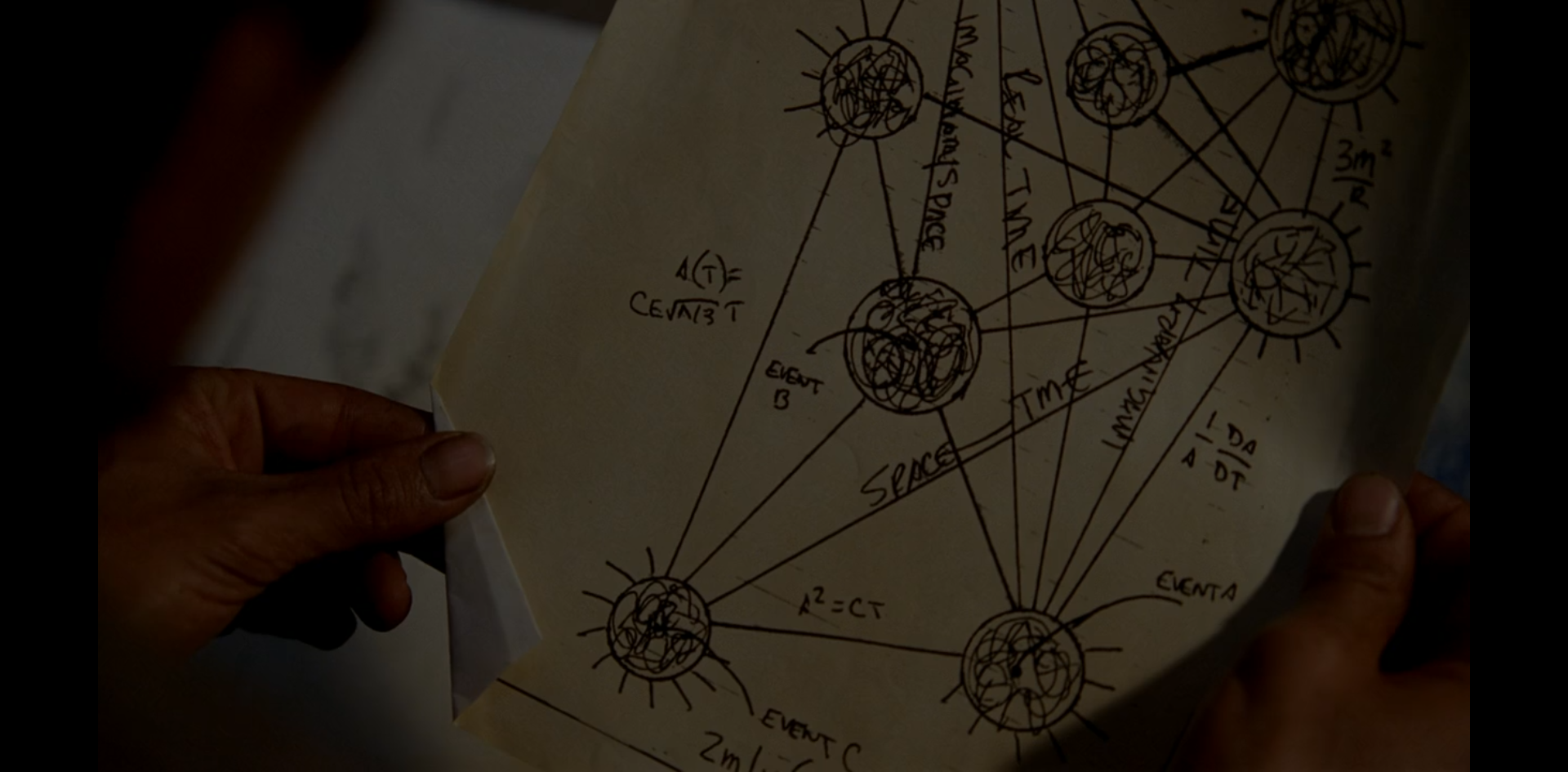
Episode 7: THE LIFE AND DEATH OF JEREMY BENTHAM (Locke): Much like last episode, we're going to start on the island at a point in the timeline after our off-island characters have already returned. We see Caesar enter a Dharma station and start rummaging around. On the desk, he finds a flashlight; under it, he finds a shotgun. In ancient file cabinets, he discovers what he came for: papers and records. We get a momentary glimpse of a Tolkien-style map describing one part of the island, which is tantalizing. Even more tantalizing, we see an old sketch of what appears to be multiple spheres, which are labeled things like "Event A" and "Event B," and connected by lines, some of which are labeled stuff like "Real Time" and "Imaginary Time" and "Real Space" and "Imaginary Space," and ho ho ho, my friends, ho ho ho. Much to say.
But first let's answer the question that is on your mind, which is "who in the crab-creeping crap is Caesar?" That's a great question! Quick answer: He was on Ajira 315, which is the airplane our main characters boarded in order to return to the island just last episode. Caesar said something unnecessary last episode to Jack, specifically so we'd remember him here. Anyway, Caesar is interrupted by Ilana, and while they both seem to be working together, they also clearly don't trust each other. Caesar tells Ilana about the flashlight, but not about Chekov's shotgun or the papers. I have some urgent things to say about those papers. But first let's answer the question that is on your mind, which is "who in the hippo-humping hell is Ilana?" That's a great question! Quick answer: She was also on Ajira 315, and we saw her last episode boarding the plane with Sayid in confusing custody.
OK anyway, back to the papers Caesar found. If you've been following along with me, you know I've frequently shared my belief that we are dealing with multiple realities, and that our heroes have very likely moved from one reality to another because of an event that occurred in Season 2, when time-displaced Scotsman Desmond turned the key on a "reset device" that was almost certainly a nuclear device and blew up the cosmic nexus of power real good ... after which everyone found themselves, somehow, still alive and still on the island. Well kids, there have been hints and inferences, but this is where I think the show directly tells us that. I think this paper was sketched by a time-displaced Faraday (if you're asking "who in the flamingo-flapping fuck is Faraday?" you really ought to stop asking questions and watch previous episodes), and I believe he was doing his best to map out his understanding of various versions of this island, and how they might be proximally located across time and space both real and imaginary, via various similar events, which the paper seem to suggest are constants across the various realities. If I'm right, then maybe in some future episode we'll see another similar event involving a nuclear explosion. Time will tell! Oh also, Faraday sketched spheres. I've been saying I believed the island is a sphere. Well this paper is one big reason why.
As for Ilana and Caesar, I've been sharing for a long time my belief that there are a lot of different factions all vying for the island, some of whom may work together or pretend to work together, but who all have agendas of their own—most of whom think they are Jacob-following good guys, and almost all of whom have probably been corrupted by The Adversary at some point and to some degree, and here we have another of many proof-points of that whole dynamic. As for the specifics of their individual agendas ... well, I wouldn't worry about it too much.
Anyway, Ilana wants Caesar to know that they've found somebody among their number who wasn't on the plane. As they walk out they also share that he isn't "one of the ones who disappeared," so now we know that some of the people on the plane disappeared, which will become very relevant next time. We also see that Ajira 315 landed on the island intact, because that's how Frank Lapidus rocks it.
The mystery chap is shrouded in a hood, sitting on the beach, looking at the group's campfire. It's John Locke. Of course it is.
Except ... it isn't. As attentive viewers suspected even on the first run of the show, and as will be revealed eventually, this is not Locke at all. This is The Adversary, and his grand plan is nearly entirely fulfilled. A lot of it was already fulfilled in the past. No wonder this John Locke is going to seem so calm, so confident, so utterly self-assured.
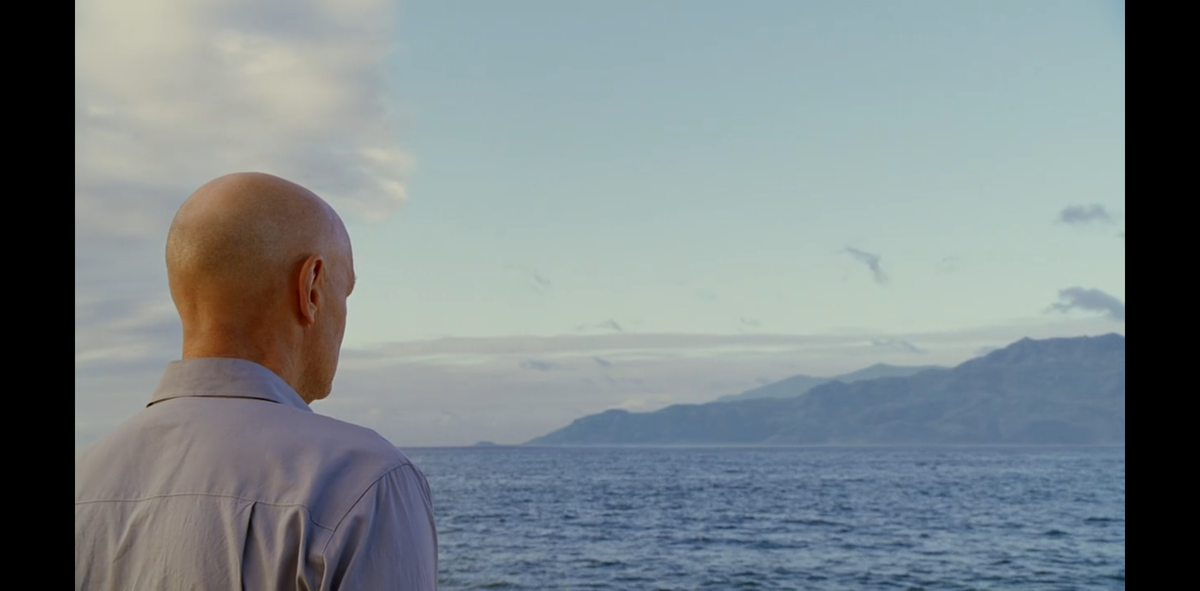
The next day, Locke stands in the surf looking out to the main island. Ilana approaches, and they establish that 1) John Locke remembers dying; 2) he is not dead anymore; 3) he has no idea how or why. Savoring a mango like only a resurrected man (or a millennia-spanning entity that hasn't had a true physical embodiment for centuries) could, Locke decides it's time to have a ...
Flashback! We return to the last time we've seen Locke alive, which is the scene of Locke turning the island-moving wheel that I refused to explain in the "previously on" section. As before, he's swallowed up by spiritual/cosmic island light. Unlike before, this jumps us to ...
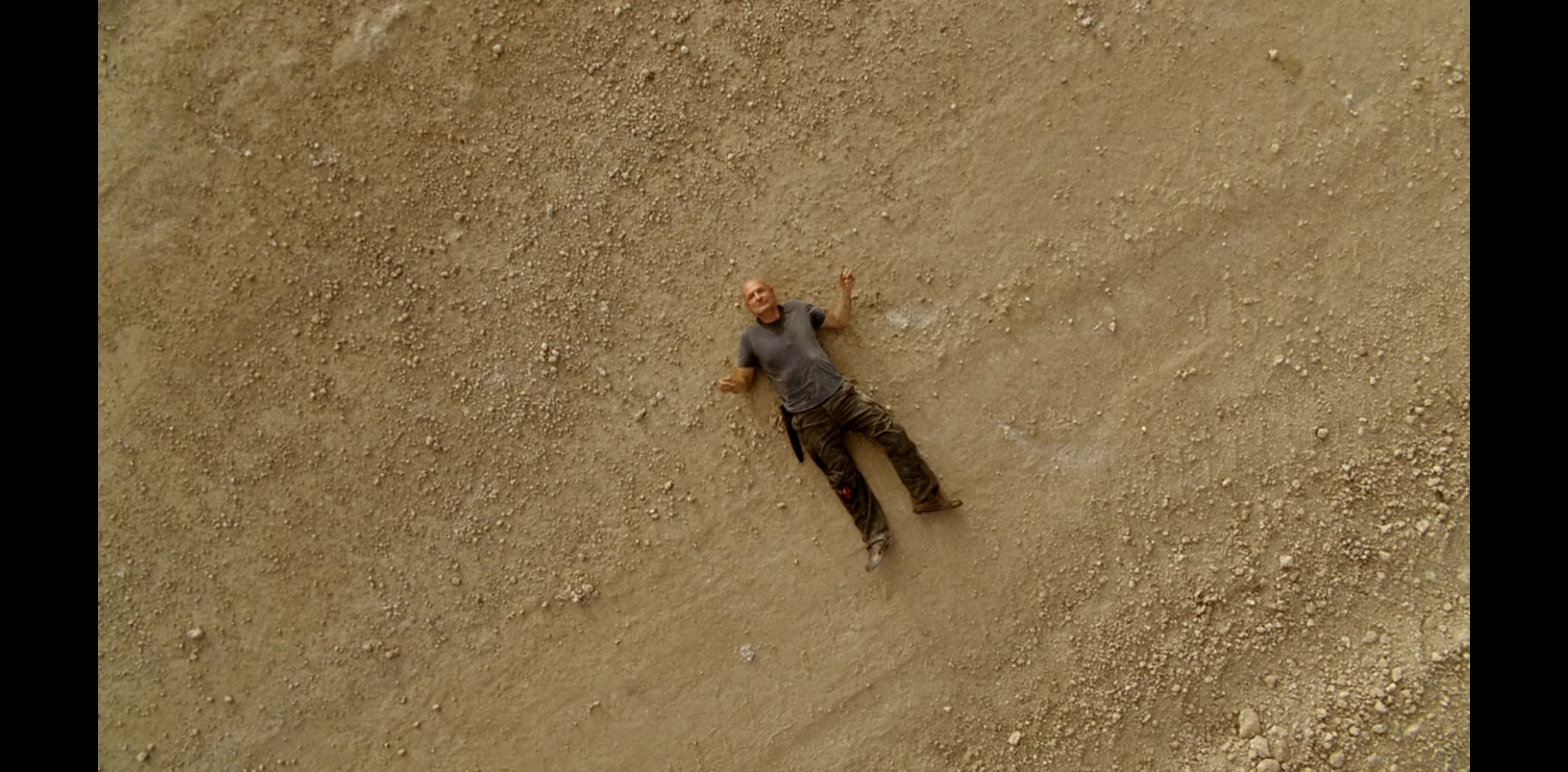
Off-Island 2007: ... where we will spend most of the rest of this episode. (And we're only five minutes in. Jesus Christ.) Locke finds himself in the middle of the Tunisian desert, just like Ben Linus did after turning the island-moving wheel. Unlike Ben Linus, Locke also brought along a severely broken leg, which isn't helping him out much. (It's also going to put him back in a wheelchair; a return to previous conditions Locke does not seem to relish.)
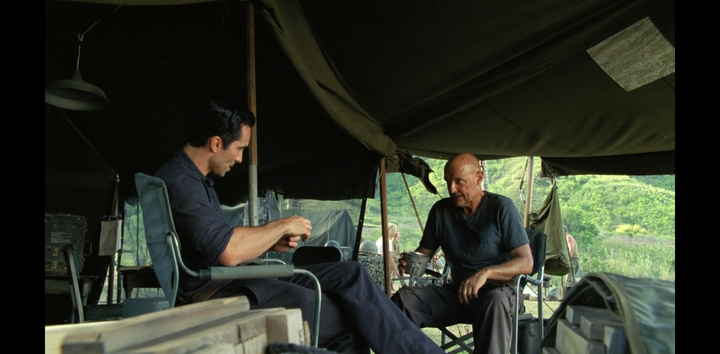
Luckily, there is a camera surveilling the area, and before long Locke finds himself none-too-gently transported to a hospital. He awakens in a hospital to find his leg set and cast in plaster, and Charles Widmore sitting by his bed. This seems like it would be bad news indeed, since Widmore is the fellow who ostensibly sent mercenaries to murder everyone on the island, Locke included—but, much as in his recent encounter with Desmond, Widmore proves to be a land of contrasts. He hasn't been trying to kill the Oceanic returnees, it seems; he's been watching over them. He sets Locke up with funds, intel, resources, transport, an alias (the heretofore oft-referenced "Jeremy Bentham") and a driver who will take Locke anywhere he needs to go, in order to bring all the Oceanic returnees (except apparently Aaron) back.
This is understandable. As we've recently learned, Widmore used to be a Jacobian acolyte on the island back in the 1950s and recently (relative to Locke's perspective) but 50 years ago (relative to Widmore's perspective) Locke marched into the Jacobian camp, claimed to be sent by Jacob as their leader, and then vanished. Now Widmore tells Locke something I had thought didn't come out until much later in Season 5, which is that sometime after that event in 1954, Charles Widmore himself became the Jacobian leader, until Ben Linus tricked him into exile from the island, which has caused Widmore to not exactly see eye-to-eye with the slippery little guy ever since. Widmore claims that the reason that he sent the murder-soliders to the islands was to have Ben removed, so "it could be your [Locke's] time [to lead]." This sort of thing is usually music to Locke's ears, but strangely enough, he's uncharacteristically skeptical—and good job, Locke, because Widmore is not being entirely straight with here; he pretends to have not known that Ben has left the island, which is something Widmore most certainly does know. I believe we will have to treat Widmore much as we treat Ben, then: a deeply untrustworthy narrator.
Widmore and Ben do have one point of agreement—namely, that all the Oceanic returnees (except apparently Aaron) have to go back to the island, especially John Locke. "There's a war coming, John," says Widmore, "and if you're not back on that island when it happens, the wrong side is going to win. The island needs you, John. It has for a long time." This sort of thing is also usually primo-grade Locke-nip. Strangely enough, Locke remains uncharacteristically skeptical about this entire proposition, too.
Locke's skepticism aside, I believe Widmore truly believes that Locke is special and crucial to the coming war. Imagine that you were a teenager in a cult on a magic island and a man showed up out of nowhere, claimed, with deep confidence and conviction, that he had been sent by the unseen God-man you believed in with all your heart, then named the date of his birth, then disappeared in a flash of light. Imagine he was born years later, on the date he named. Imagine that forty years after that, he fell six stories and lived. Imagine his spine was shattered and he walked again. Imagine that The Adversary had been talking to you about him and his destiny your whole life.
You'd believe that this was an important person. You'd take interest.
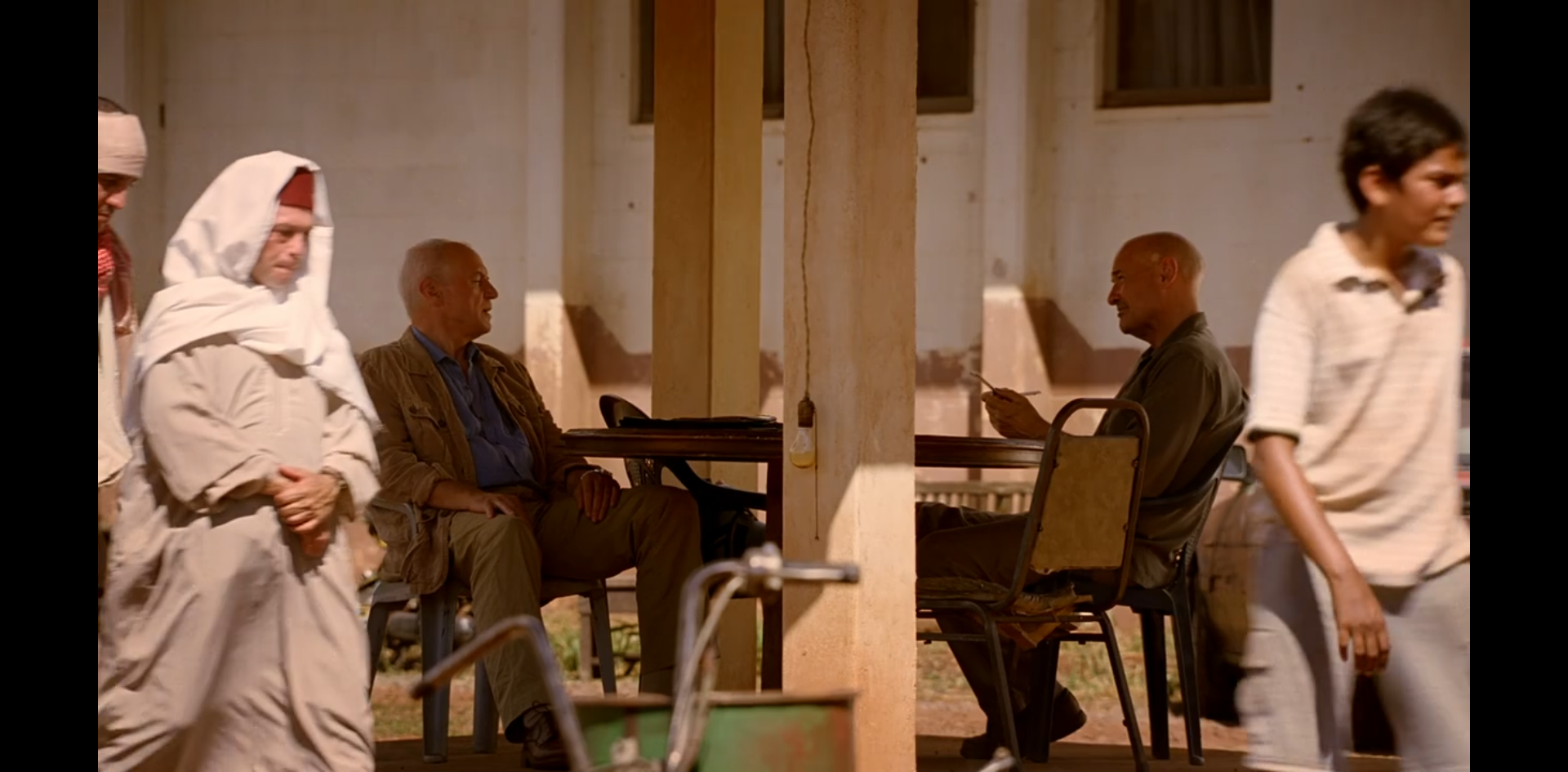
Off Locke goes with his driver—it's Matthew Abaddon, the "attorney" who freaked Hurley out in the Season 4 opener, the "orderly" who planted the idea of an Australian walkabout in Locke's mind back in the Season 4 finale. In reality, he is neither attorney nor orderly, or not primarily those. He's a highly-trusted associate of Charles Widmore, whose function is to, as he puts it "get people to where they need to go." Which, in case you didn't notice (the show certainly isn't going to highlight it for you), means that Widmore and Abaddon took a direct hand in John Locke's arrival on the island in the first place, and we might wonder who else they may have manipulated in similar fashion, and who else might have been engaged in such manipulations. We might start to think of all those comprehensive dossiers the Jacobians have, and the fact that Locke's dossier is particularly thick.
What follows makes up the bulk of the episode. It's a series of seeming failures, as Locke travels to the Oceanic Six and tries to collect them all, and collects precisely Poké-none of them. Meanwhile at every failure, Abaddon needles him about it with increasing intensity, which might be interesting to think about a little later.
Locke doesn't visit Sun, honorably enough. He promised Jin he wouldn't. We already discussed why this is interesting in a previous installment. (I do note that we don't see Locke touch any of them. Too bad. That would have helped my theory.)
Sayid is up first. Locke finds him building houses with an aide organization in the Dominican Republic. Sayid is, surprisingly enough, in a good place emotionally, despite having lost the love of his life (no, not Shannon—Nadia, the other love of his life) and spending years as an assassin for Ben Linus. He's given himself to service of others, and invites Locke to leave behind his striving for specialness. This is lovely, and makes the way Sayid will be used for the rest of the series rather aggravating to me.
Next is New York City and Walt. Locke isn't trying to bring him back to the island. He just wants to make sure he's alright. It's a sweet callback to their Season 1 bond. It's also a reminder that the writers, by most reports, couldn't figure out what to do with their very interesting Black characters, which is not sweet. Walt's still plenty interesting, too; he's been having dreams about Locke-as-Adversary. Personally I think it would have been a great moment to bring Malcom David Kelley back into the show. It's a LOST opportunity. Too bad.
Goin' out to Cali now. Locke visits Hurley in the Santa Clara institution. Hurley assumes Locke is a ghost, because Hurley be seeing ghosts. After clearing up the misunderstanding (hilariously, Hurley leaps away in fear when he realizes Locke isn't a ghost), Hurley notices Abaddon, understandably freaks out, and invites Locke to fuck off. Abaddon does know that he freaks Hurley out, by the way. Does he nevertheless position himself directly in Hurley's line of sight? He does. Does he do this with any of the other people Locke approaches? He does not. Then he needles Locke for the failure he caused. Hmm.
Next visit is Kate (and Aaron, sort of). Kate says no, and calls him out for how his obsessions keep him from any meaningful relationship. Speaking of which ...
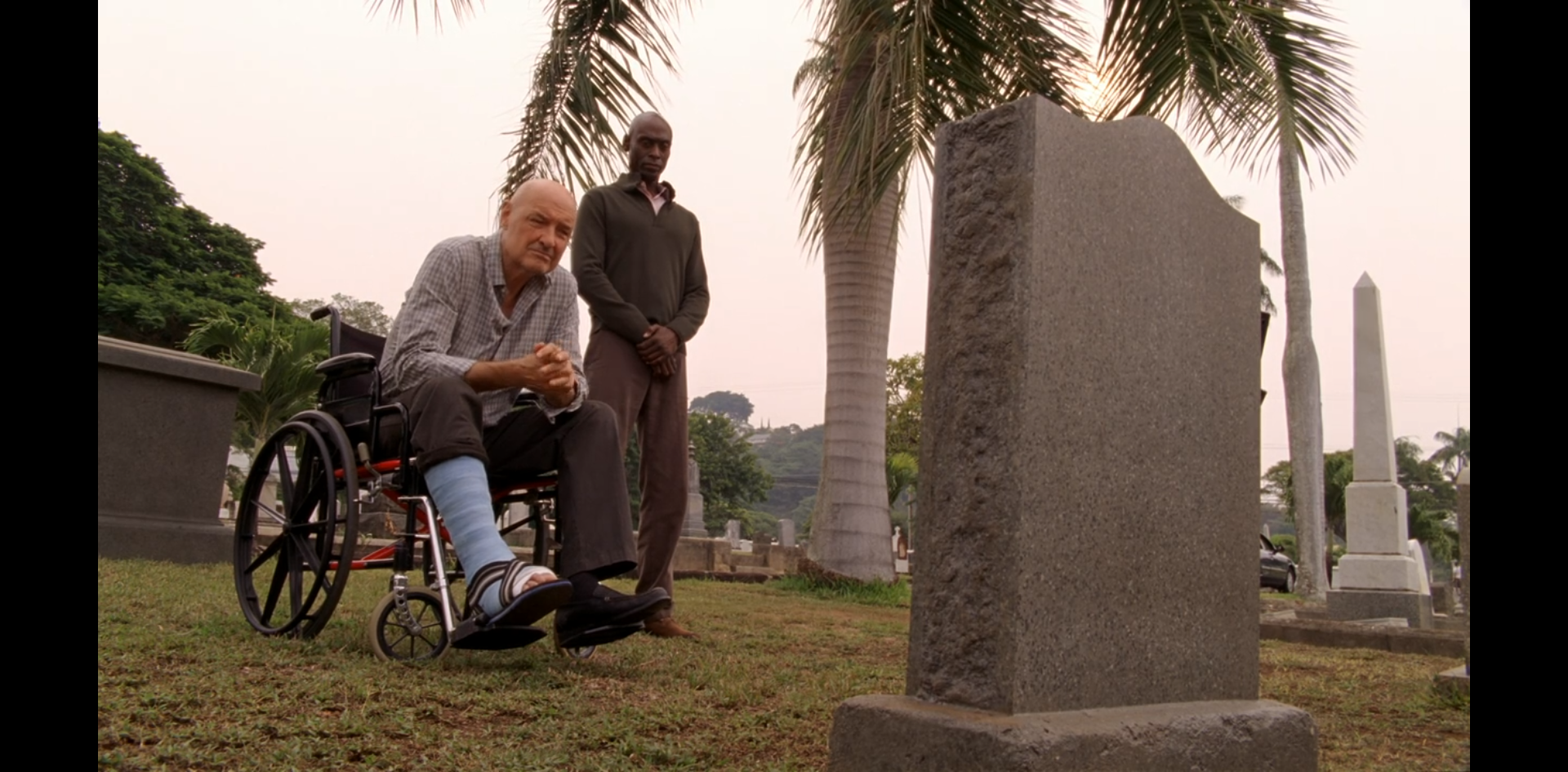
Next visit is Helen Norwood, who was Locke's fiancée before his obsession for belonging and meaning divided them. Specifically, the next visit is Helen's grave. She had a brain aneurysm, says Abaddon. Have we learned that island entities can strike people with illness (or remove it) from a distance? We certainly have. That might be interesting to think about a little later. Then again ... "Helen is where she is supposed to be," says the man who has just said that his job is getting people where they are supposed to be ... so the cause of Helen's demise might have been a little more direct and less mystical than I was just insinuating. Abaddon also plants an idea in Locke's mind: If he has been told his destiny is to die, then death may be the choice that allows him, a special man, a man of destiny, to fulfill that destiny.
On the way from the cemetery, Abaddon is murdered by an unseen sniper. Another fascinating Black character bites the dust. Goddammit LOST. A frantic Locke drives away, and, in the way of frantic drivers, gets into an accident. He awakens in a hospital to find he's being watched by none other than his final intended visit ... Jack "Of Course" Shephard. Boy oh boy. People sure do love to watch John Locke sleep in hospital beds this episode.
Jack has already grown his beard of suffering and addiction and is on the verge of his own suicide attempt, so we know he's already had his soul shredded by the knowledge that he abandoned his half-sister Claire on the island, the knowledge that his nephew Aaron is being Raised by Another, and has already been visited by the ghost of his father at least once and (I believe) many times. Jack, his resistance to the mystical forces of destiny that are reaching for him almost entirely gone, makes one last effort. Making the mother of all Jackfaces, he tells Locke that he isn't special, that he is in fact just a deluded old man who crashed on an island, and nothing more. As Jack stalks off, John Locke delivers the final blow. It's the message The Adversary-as-Christian-Shephard gave him, down in the chamber with the wheel.
"Your father says hello. His name is Christian. He didn't look dead to me."
And that pretty much breaks Jack for good, creates the end-of-his-rope Jack we see in the Season 3 finale. It's a neat bit of business. But Jack stalks off, and to Locke, it appears his failure is complete.
Holed up in a dingy motel, John Locke writes his suicide note, addressed to Jack. It's a choice for death, per Abaddon's suggestion; the only way Locke sees left to him to convince anyone to return and fulfill his destiny. Locke sets up a noose rigged from an extension cord. He's on the table about to carry it out, when he is interrupted by ... Benjamin Leaping Linus himself. Ben bursts down the flimsy door, and begs Locke to stop.
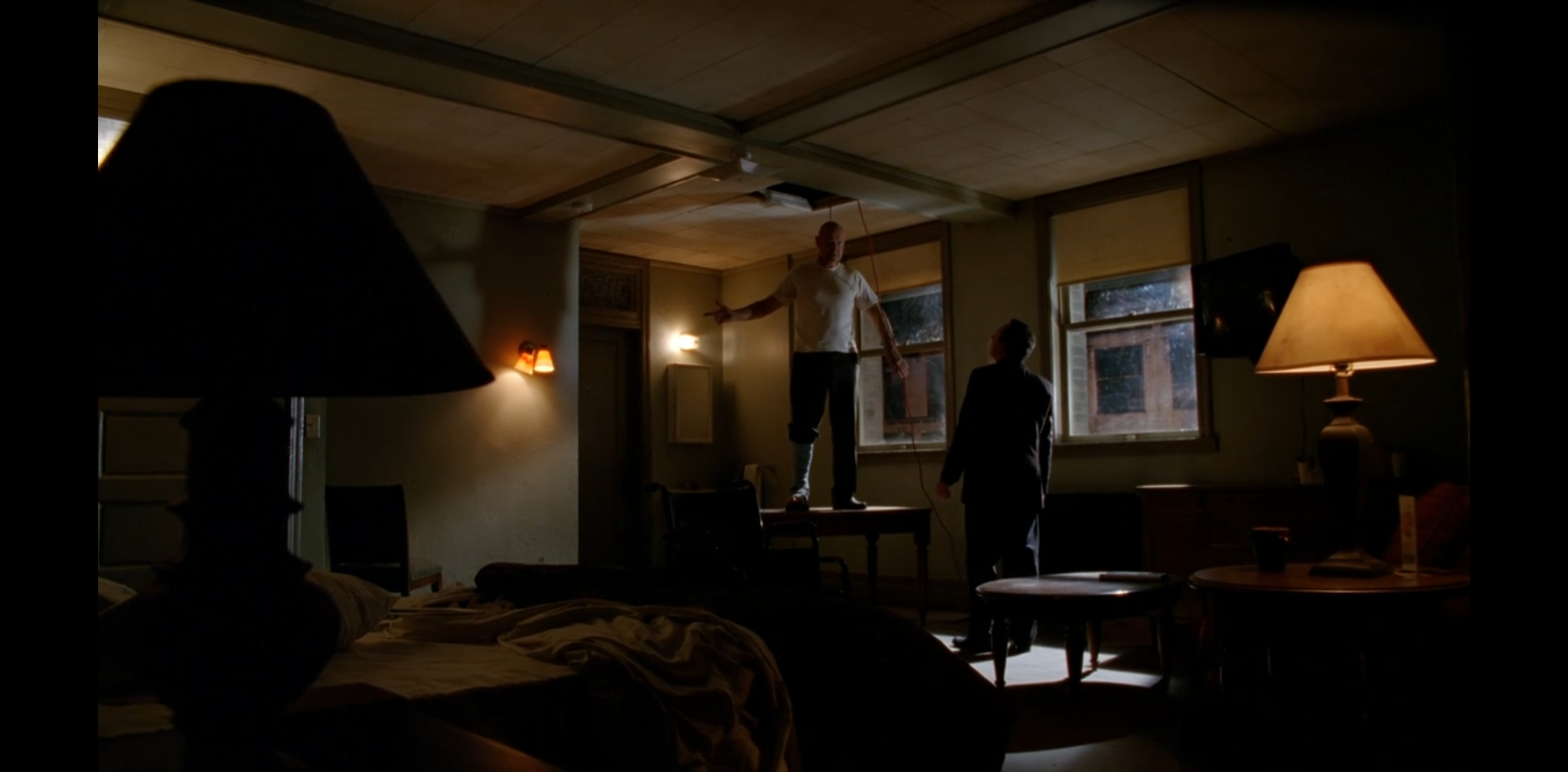
Like Widmore, Ben's also been watching all the Oceanics. Like Widmore, his claim is it is to keep them safe. Unlike Widmore, he admits to being the sniper that murdered Abaddon, and insists that it would have only been a matter of time before Abbadon himself would have killed Locke. He insists that Widmore was only using Locke as a way to get back to the island, and reminds him of all the murder soldiers and what have you. Like Widmore, Ben insists that he is motivated entirely by a desire to establish Locke's leadership of the island.
"You can't do this," Ben begs, dropping to his knees. "If anything happens to you ... John, you have no idea how important you are." He tells Locke that Jack, despite his protestations, has booked a ticket to Sydney ... Jack is trying to go back.
This last bit breaks through. Locke climbs down while Ben starts making plans with him on how to get everyone back to the island. Locke mentions that they should start with Eloise Hawking, because he was told (by The Adversary) that she knows how to get back.
At the mention of Eloise Hawking's name, Ben Linus immediately—immediately— murders John Locke—strangles him to death with the extension cord and strings his body up to make it look like a suicide. Ben fixes the broken door, cleans up all traces of his presence, gives Locke's corpse a farewell ("I'll miss you, John. I really will.") that is all the more chilling for being seemingly heartfelt, pockets Jin's wedding ring (the better to manipulate Sun), and departs.
This is it, by the way. Locke is dead and is going to stay dead. Any figure from now on who looks like John Locke will either be The Adversary in Locke's form, or Locke's being in an afterlife waiting room known colloquially as the Sideways. He's gone. It's a terribly sad end to this man who craved belonging and meaning so much that it led him to believe the wrong things and trust the wrong people.
Here's a question: Why did Ben Linus save Locke only to kill him? For that matter why did Widmore save him after trying to kill him, and why did Widmore send somebody to help Locke fulfill his destiny who actually seemed to be trying to sabotage the attempt?
Well, they were both lying. Let's not ever doubt that. We have one scene between these two men, and in that scene they are both very clear about their motivations: They each feel the island is theirs, they feel the other is an unworthy owner, and they intend to defeat the other in order to secure their own personal ownership of it. These guys believe the island is theirs. They believe they deserve to lead. They are ruthless in pursuit of that goal—a goal that has been complicated by some sort of edict that has seemingly been placed upon them, which does not allow them to harm one another. As above, so below; these two are playing their own game, and while there are other players in this game (including and especially Widmore's ex-wife Eloise Hawking), these two are presented as equally matched and similarly motivated, and certainly in no way motivated by securing the advancement and promotion of John Locke.
We know Ben has been communing with (and corrupted by) The Adversary, and I think we must presume the same was true of Widmore when he was on the island—which means that both of them have been told a great many things about destiny by an entity that can see across time and possibility, and provided with many proofs of those claims that have been engineered by those same entities. This means that these ruthless and acquisitive men believe a great many things that this entity would find convenient for ruthless men to believe are inevitabilities. And, since John Locke is a crucial element to these plans, I believe they would have been told a great many things about John Locke that would have been useful to The Adversary for them to believe about him.
I believe that Charles Widmore is working with his ex-wife, Eloise Hawking, who is motivated not by the acquisitive pursuit of the island, but by a desire to maintain the timeline. I believe that Hawking, as island leader in the 1970s with very particular and specific knowledge of destiny, shared some things with the Jacobian cult, and those things would be known to Ben. I believe she shared other things with Widmore, unknown to Ben. More on her and her motivations sometime quite soon, but for now let's say that I believe Ben, off-island and away from most of his resources, needed to understand how Locke was meant to get back to the island, and, because Hawking had kept her secrets, had no idea that Hawking was the key. He clearly needed Locke alive only until the precise moment he had this information, at which point he very clearly needed Locke dead—to remove the game piece Locke represented so that he could be that piece.
I believe that, for Ben Linus and Charles Widmore, John Locke is one of the key assets over which they contend. I believe both Ben and Widmore have been told that Locke is destined to be the leader of the island, not despite the fact that It knows this will make both men want to usurp and and defeat and even kill Locke if they have to, but precisely because It knows this, and wants them to want to kill him, because It needs John Locke dead, and It isn't allowed to kill him. Because It needs John Locke dead, so It can become John Locke.
Why does It need to become John Locke specifically? Glad you asked!
Imagine a man showed up out of nowhere, claimed, with deep confidence and conviction, that he had been sent by the unseen God-man you believed in with all your heart, then named the date of his birth, then disappeared in a flash of light. Imagine he was born years later, on the date he named. Imagine that forty years after that, he fell six stories and lived. Imagine his spine was shattered and he walked again.
Now ... imagine if he came back from the dead.
People who might otherwise know better would obey him, then.
It's time to talk about the bootstrap paradox.
The bootstrap paradox (also called an ontological paradox or causal loop) is a theoretical time-travel scenario where an object exists in an endless loop without ever being truly created. Think of Locke's compass. Time-jumping Locke is given it by Ricardus in 2007, who tells him to return it the next time Locke sees Ricardus. Time-jumping Locke does this a day later, in 1954. Ricardus holds that compass until 2007, when Adversary-as-Locke instructs him to give it to ... time-jumping Locke. Ricardus received it from Locke. Locke received it from Ricardus. Where did it come from? It didn't. It's an ouroboros. A snake that eats its tail.
Now, let's think about John Locke. A man who prophesied his own birth to ruthless and powerful individuals. A man who told ruthless men that he was their leader, because he had been told that he was by an ancient entity—the same entity who had the ear of these ruthless men. A man who, because of this, has had his life observed and engineered from the very start to the very end. Every prophesied inevitability coming to pass because ruthless and powerful men were making sure of it. Did his mother meet his father because he had told ruthless men that she would need to become pregnant nine months earlier? Let me ask ... was Anthony Cooper even Locke's father, or was he an operative, somebody acting on behalf of ruthless men, with the correct physiology and skill to betray Locke in such a way that Locke would have exactly the needed obsessions and weaknesses that would lead him to that dingy motel room? What hands shaped him? The same hands that killed him.
When was Locke created? He was born, yes, but when was he created? Was he born when he was born because years before that's when he said he would be born? When did he become who he is? He became who he said he was because he told people that is who he would become. He told those people that's who he would become because he was told so himself. When does he begin or end? He doesn't.
Locke was correct in saying that he had a destiny. He was the long con without being aware of it, which means that the long con he is was also on him. He is a human bootstrap paradox. An ouroboros. A snake that eats its tail. A causal dupe.
Locke's error is similar to that of Ben Linus and Charles Widmore. It's not that he doesn't have a destiny. It's not that he wasn't important. It's not in thinking that he is very special. All these things will be proved true, in time, in ways that will make this almost impossibly tragic ending less tragic.
His mistake was believing that because he had a destiny, because he was important, because he was special, he was unique. It was in needing to be special and important and special in ways that others weren't. That was his error, and he was born and raised from the start specifically to make it, by an entity who can see across time and possibility and the ruthless men It corrupted.
Final scene. Adversary-as-Locke is talking to Caesar, who appears to have established himself as the leader of the group newly arrived to the island. The conversation turns to those hurt in the crash, which leads them to a makeshift infirmary, upon which lies a sleeping Ben Linus.
"You know him?" asks Caesar.
"He's the man who killed me," says a man who looks just like John Locke.
Hoo-boy. Things are about to get awful crusty for that weaselly little fella.
End of Episode 7.
L O S T
Next Time: We're Getting the Band Back Together
The Reframe is totally free, supported voluntarily by its readership.
If you liked what you read, and only if you can afford to, please consider becoming a paid sponsor for as little as $1/month. If you'd like to be a patron of my work, there's a Founding Member level that comes with a free signed copy of my upcoming book, Fighting in the Dark, and thanks by name in the acknowledgement section of any future books I publish.
Patreon fan? Have at it.
Looking for a tip jar but don't want to subscribe?
Venmo is here and Paypal is here.
A.R. Moxon is the author of the novel The Revisionaries (2019) and the essay collections Very Fine People (2024) and Fighting in the Dark (2026), which are available in most of the usual places, and some of the unusual places. You can get his books right here for example. He knows you, rider, gonna miss him when you're gone.
Comments ()