
A Confrontation with Truth
What it means to live in a deeply sick country that worships killing. Diagnosis as the first step of any journey toward health.
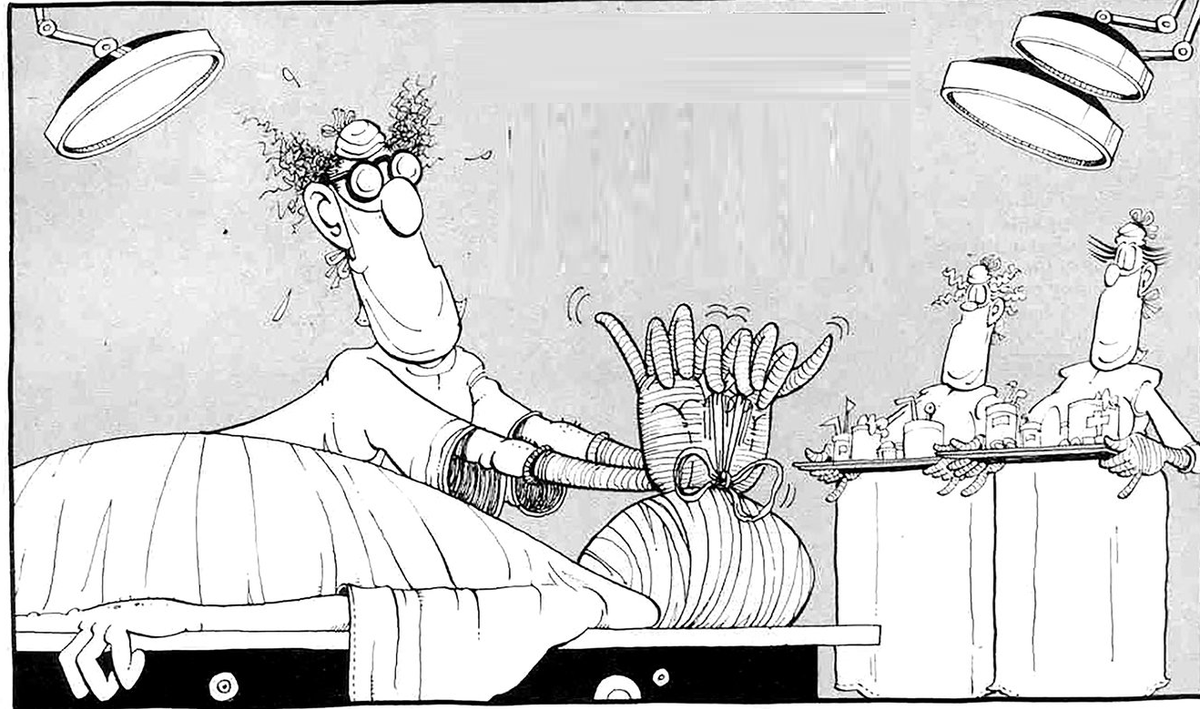
If you live where I live, which is the United States, your country has been at war overseas for the last many weeks, and also for your entire life. The latest iteration of this war is between a fanatical religious autocracy whose militaristic posture, nuclear ambitions, and zeal for apocalyptic outcomes threatens the future of human life on the planet, and Iran.
Yes, despite the best efforts of corporate media propaganda outlets to try to channel the U.S.'s latest needless adventures in overseas civilian-murder into more traditional narratives of American exceptionalism, it has not escaped the attention of most people that the current temporary U.S. president and longtime child rapist Don Trump is utterly deranged. Trump spent Easter taunting Muslims by praising Allah while threatening to demolish critical Iranian civilian infrastructure, and the next day he threatened to murder the entire Iranian civilization, "never to be brought back again." The threat is in itself a war crime, and if it had been acted upon would have vaulted Trump from one of history's more notable monsters to easily its greatest. Even though Iran's government has its own human rights abuses, which provide ample grist for critique, in the face of the vast magnitude of the U.S. government's unforgivable moral repugnance, the American war project has become a turd even the most diligent and obsequious propagandists have found challenging to polish. It probably doesn’t help that it came out recently that one of Trump's lackeys threatened to kill the Pope for making pronouncements against war and for peace.
And Trump's Secretary of War Crimes, Peter Hegseth, has spent a fair amount of his time celebrating militaristic genocide, and praying to his white nationalist version of Christian God in praise of militaristic murder. All of this genocide and glorification of genocide is done to enrich and empower the Republican regime's oligarchy, which is fueled by child rape and the most flagrant corruption imaginable. It's also done to satisfy the vile ignorances and bigotries of its far-right, mostly white, mostly Christian Republican voting base, whose support for all of this is willing, enthusiastic, and seemingly unbreakable. Also (for the Christians anyway), their support is tied to a belief in a prophecy they think is found in their holy book, whereby white Christian nationalists will be rewarded with eternal paradise and all others punished with eternal torment, once a genocidal apocalypse occurs in the Levant and surrounding regions, and white Christian nationalists really like the idea of everyone else being tortured forever, so they're working as hard as they can to create just such an apocalypse. At least one U.S. military commander told his troops that Trump has been "anointed by Jesus to light the signal fire in Iran to cause Armageddon and mark his return to Earth," so that's nice.
And our serial-child-raping temporary president has asked for $1.5 trillion for the military in the next budget, which he’ll almost certainly get, and he and Hegseth are talking about betraying our armed forces once again by using them as canon fodder in a pointless occupation, and reinstating the draft, and so forth, so we can be sure that all the killing will continue apace, and with sufficient flag-waving. And also Republicans everywhere are doing what they can to end whatever remains of democracy, so there can be little doubt that a fanatical religious autocracy is what the United States is. It's been waging war against its own civilian population, and now both that effort and its saber-rattling abroad has re-intensified—re-intesified, I say, because committing crimes of often bigoted violence against civilians both foreign and domestic is, from a U.S. perspective, extremely precedented.
It's unprecedented, though, for a president to promise to murder the entire civilian population of a country—to exterminate 93 million human beings, that is. It so happens that exterminating 93 million human beings or more is something that presidents of the United States have been able to do for damn near a century now. Presidents thus far haven't openly promised to exercise this unconscionable power for a number of reasons. In the case of these presidents, this may have in part involved basic human decency or at least self-preservation, given that taking such an action will very likely result in a planetary nuclear exchange that would leave the earth uninhabitable. However, all presidents have kept the imperial U.S. global military project going and growing, and all have been sure to remind us that whatever our empire does is good because it is us, and all have made sure to ground that goodness in the approval of a God that loves us most particularly.
This latest phase of U.S. war is going horribly, of course, because this gang of fascist goons are not only reprehensibly vile and cruel and bigoted, but also they're just as incompetent as you could expect a gang of fascist goons to be. They think that strength is only achieved by murdering, so they've ejected their soft power and isolated themselves from our former friends and allies, and they've fired top generals with experience in military strategy and tactics to make way for fascist goons who can be trusted to follow illegal orders. The goons think that their wealth and whiteness and maleness conveys automatic competence, so they never bothered to learn anything about anything, and they fired everyone who knew anything about anything, and dismantled all the programs that helped make anything work or might have created any advantage of any kind. They fired the knowledgeable for the offense of being knowledgeable. They dismantled the programs for the offense of being incomprehensible to them. The upshot of all their activity, other than all the war crimes and murder, is that the fascist goons have depleted all the military's resources and the country's options, and made themselves far more dependent on fossil fuels than they would have been, which makes the Strait of Hormuz, which Iran partially controls, even more strategically crucial than it otherwise would have been. This means that ships now have to pay Iran, who the U.S. says they attacked in order to weaken, billions of dollars to access the strait that the U.S. never bothered to discover was strategically crucial until the U.S. had already initiated a murderous war that had no mandate, no rationale, and no strategy for accomplishing objectives it never bothered to come up with.
This is all terrifying, and horrifying. The fascist goons that run the U.S. are declaring victory and calling it a big win. I don't think most people are buying this. I sense a general and extremely well-deserved skepticism emanating from almost all sides of the national discourse. (I do have to say almost because, well, Lindsay Graham.)
This is a hopeful thing peeking through the horrifying clouds. Mostly the war project in the U.S. has progressed over the decades in ways that have not disturbed the majority of the population into awareness of what it truly is, but all of this is so— as the French say—fucked up, that reality truly does seem to have permeated in the general consciousness, which means that a lot of people who might once have reflexively supported this effort are not on board. There's an opportunity here.
Opportunity? What opportunity?
The opportunity a symptom provides to a patient unaware they are ill.
The opportunity to confront the truth of sickness.
The opportunity to receive accurate diagnosis.
The opportunity to seek treatment.
Hey! Its not the end of the essay! It's just a quick reminder that The Reframe is me, A.R. Moxon, an independent writer. Some readers voluntarily support my work with a paid subscription. They pay what they want—as little as $1/month, which is more than the nothing they have to pay. It really helps.
If you'd like to be a patron of my work, there's a Founding Member level that comes with a free signed copy of my upcoming book, Fighting in the Dark.
I mentioned in the lede that the United States has been at war for my whole life, and yours too, unless you are quite old indeed. I say this because the U.S. really never stopped fighting World War II. The military bases are all over the world, the military kept growing, the hegemony kept spreading, and we kept calling ourselves the greatest country in the world, even as over the decades we starved foreign civilian populations to death to punish their governments for not supporting the interests of our billionaires, and we armed rebels we thought might be friendly to our billionaire hegemony so the rebels would overthrow elected leaders who did not support our billionaire hegemony, and then we armed other rebels to overthrow the regimes that the first rebels established once they were in power. And we bombed, and invaded, and lied about why we were bombing and invading, and lied about the lies. And most of this has been pretty bipartisan and mainstream and popularized, to the point that many of us (if not most of us) still think of our soon-to-be $1.5 trillion-a-year military is something that keeps us safe instead of a grotesque expenditure that starves the people and destabilizes the peace both domestically and globally, and the fact that this is what most of us still believe is why the maniac who is asking for the money will probably get the money with the support of not only his fascist party but the alleged opposition party, as well. Many of us, if not most of us, even celebrate all this wasteful expenditure and murder with rallies and flyovers at sports events, and movies, and TV shows, and and so on.
Anybody who supports such things, much less celebrates them, is deeply sick, I think—spiritually speaking, morally speaking, emotionally speaking, and probably even physically speaking to some degree, because abuse harms even the abuser, and the traumatizer creates wounds of trauma even for themselves. And the population of our country, by and large, still supports and celebrates such things, and at least a plurality of them celebrate the militarized police presence that have been waging racial and class war against the U.S.'s civilian population, and has in militaristic fashion been gobbling up all the local funds and resources we might invest in health and human thriving. So I observe that my country is deeply sick.
You probably know all this, though. Why do I say it?
I say it because I've been pondering how we might move from a cult of abuse to a culture of healing, and I think when you're dealing with sickness, diagnosis is where we have to start.
(Before I continue, I will repeat a much-needed caveat: Sickness is not a moral or spiritual failing, and our culture of abuse often treats sickness as a moral failing in order to further stigmatize sick people, so—even though there are physiological health issues that attend abusers and abusive behavior—unless otherwise noted, I am using sickness and healing in a moral and spiritual sense.)
I'm far from the only person to have seen the opportunity presented by this absolute shitshow that Republican christofascists have gotten us all into. It's sort of an unignorable thing, which appears to have a lot of people losing interest in aligning with Trump and his gang of murderous goons—for the first time, in many cases. As a result, there's an ongoing conversation over what to do about an incoming wave of regretful 3-time Trump voters. Perhaps conversation isn't the right word: argument is probably closer to the mark.
There's a camp that tends toward informing the regretful 3-time Trump voter about some rather blunt and direct and true things they might not know yet, about themselves, about what it means to support such a person as Don Trump, and about all the other things they've been wrong about.
There's a camp that believes that this sort of thing is counterproductive; that we ought to welcome these people, meet them where they are, and find common ground and points of agreement in hopes of enticing them toward further healing.
Which is the right approach?
Well ... which one is going to lead us from sickness to health?
The answer may shock you!
Essay continues soon. But first: Feel free to subscribe if you'd like to get weekly essays.
Or don't subscribe. I'm not the boss of you. But if you do subscribe, you get one of these essays pretty much every week.
If you're sick, you need healing. (That's the sort of trenchant insight that keeps 'em coming back to The Reframe week after week.)
Often all that is needed is rest and time, and the body heals itself. Rest and time are your friends in this case.
Sometimes, though, you've got a sickness that's doesn't get better by itself. In such cases, rest and time are not your friend; rather, they are what is going to give the disease opportunity to progress past the point of remedy. What's needed is accurate diagnosis followed by remedy. The more extreme the diagnosis, the more radical the remedy. The more extreme the sickness, the more likely that the costs of the remedy will be high, and the changes the remedy will require will be permanent.
What is needed is a confrontation with truth. What’s needed is a firm declaration that all is actually not well, that the path to health will likely be a narrow one, and involve radical change.
Do you want the doctor to be nice in that moment? It might be better if they were. It might make the diagnosis easier for the patient to hear. It might even make the patient more receptive to the remedy. It would certainly be a recognition of the patient's humanity, and a gesture toward empathy. I can imagine a doctor who came into the waiting room and said You see? I told you so, and you didn’t listen. This was preventable, but now it is here. If you would live, you had better listen closely now. Is that the best approach? It sure isn't what I'd like to hear in such a moment. Those particular words might not be the most effective. I might put it another way.
However, I can think of other things that I'd rather a doctor be in the moment of diagnosis than nice. I would prefer if they were honest, and thorough, and methodical, and comprehensive. I would like to know exactly what it is I have, and what the causes are, and what the remedy is going to involve, and what the consequences of failing to pursue the remedy are.
Let me add some more context to the scenario.
Imagine that doctor I-told-you-so has been warning me for decades about the inevitable effects upon my health of my high-risk behaviors, and the folly of my various beliefs in quack science and misinformation, and had observed the ways that I trusted those beliefs more than the advice of medical professionals, and had resisted any change to my behavior. Imagine that I have already had this disease before, and my engagement with the remedy was half-hearted, resulting in a tenuous remission. It might be that doctor I-told-you-so knows me very well, and understands that I have been resistant to reality, and that, now that grim reality has arrived in more unignorable ways, understands that what is needed more than blandishments is bluntness. In fact, it may be, given what the doctor knows about me, that this bluntness delivers a deeper kindness, one that niceness by itself can never reach. It may be that this bluntness meets the patient where they actually are, not where the patient thinks they are. It may be that this bluntness invites the patient to find points of agreement over grim truths rather than comforting delusions, not because the doctor opposes comfort, but because what the moment requires is a confrontation with truth about sickness.
If I'm sick, I'm sick whether I believe it or not. My skepticism doesn't change anything. My ignorance doesn't change anything. My refusal to be persuaded by the truth will not keep me from sickness; it will only keep me from remedy. But I won't be able to make a choice about truth unless I hear it.
Fundamentally, then, healing involves confrontation.
Now ... imagine if there had been a second doctor in the room during every appointment. Imagine if that second doctor undercut every single piece of advice and information doctor I-told-you-so provided, by lavishly congratulating me for coming to the appointment in the first place, and pointing out all the places where the quack science I believed was partially true, and reassuring me that my unhealthy behavior hadn't brought all the inevitable effects about yet, so it was all clear sailing for me. Imagine doctor all-is-well popped up during every appointment for every appointment of doctor I-told-you-so's career to offer encouragements of this kind to every patient. Imagine when doctor I-told-you-so complained, Doctor all-is-well met the patient where they were, and found common ground and points of agreement, in hopes of convincing them to confront the truth, not by delivering truth, but by offering encouragements and reasons to avoid confronting it.
At this point, doctor I-told-you-so would know they don't only have to overcome the resistance of their patient, but the very nice flatteries of doctor all-is-well, which has indeed made the patient feel better about themselves and their circumstance over the years. Doctor all-is-well may be well-meaning, but they have not served to facilitate the long-term health of patients; they have instead served to avoid necessary confrontations. It may be that doctor I-told-you-so has become so brittle and confrontational specifically because of the anti-confrontational influence of a second doctor so eager to align with the patient they forget to align with health, exhibiting a niceness that never actually achieves kindness, and that if doctor all-is-well were a little more focused on reality than comfort, than both together might be able to meet the patient where they actually are and deliver the grim truth leavened with a bit more comfort.
Imagine also that doctor I-told-you-so has learned through long experience that there are a great number of patients who come to appointments only to be told they are in good health, who respond to any diagnosis by blaming the doctor and refusing remedy. Imagine this doctor has learned that those who truly are seeking health will never be dissuaded from remedy by bluntness, while those who require flattery rarely progress to remedy of any kind. Imagine that doctor I-told-you-so has learned that bluntness is often a necessary tool of discernment, if doctors would avoid wasting their time on those who refuse to accept diagnosis. It might be that doctor I-told-you-so has learned its best to weed out patients who are serious about healing from those who just want to hear reassuring truths, because the patients are many but time is short.
Now, imagine one day it’s revealed that doctor all-is-well isn't a doctor at all. Imagine it comes out that doctor all-is-well is just another patient who put on a lab coat and has spent their unearned authority finding points of agreement with fellow patients that avoid all confrontation with truth. It might be enough to send doctor I-told you-so around the bend, bluntness-wise.
Here's my point: Our national diagnosis is supremacy, facilitating a suicidal alignment with an avaricious, authoritarian, oppressive, militarized spirit of domination and subjugation, and with a murder-worshipping empire that represents a clear and present danger not only to all those it directly intends to kill, but to the future of human existence on the planet. The disease is a recurrence, the diagnosis is terminal, and the progression is advanced.
This diagnosis is extreme. The remedy is going to have to be radical.
The remedy is going to need to involve the deconstruction of the empire and the ideologies that undergird it: our collective worship of capitalism and profit, of billionaires and other predators, of punishment, of military, of policing—all will have to be deconstructed and dismantled, and be replaced with a institutions born of a commitment to a pluralistic, diverse, open world dedicated not to individual domination but universal interconnected thriving. This remedy will involve many costs and changes even as it returns us to health, and many of these costs and changes will be permanent. There will have to be a purge of our Republican Nazis from every level of government. There will have to be an overthrow of the corrupt corporate leaders of the establishment Democratic party. There will need to be a general outlawing of billionaires. We'll need to deconstruct our military and our police and our prisons. We will need to build parks and transportation and housing. We will need to subsidize art and music and poetry and philosophy and literature. We will need to fund day cares and libraries and schools.
This may sound radical, to which I say: exactly, and good. We are dealing with a radical sickness, and we should pursue a radical remedy as if it were life itself—because it is. This sickness of supremacy must be removed from the very root. The diagnosis remains the diagnosis whether any given person is convinced or not. The remedy is the remedy even if some people remain skeptical. If a person hasn't yet been persuaded to seek remedy by a madman with a nuclear arsenal and an increased willingness to use it, I think we need to leave them to their skepticism and save our energies for finding people who are serious about health, and pursuing the remedy without the help or permission of those who are not. If we don't pursue the remedy despite the costs, everything we hope to safeguard by avoiding those costs will eventually collapse anyway, because supremacy is founded upon unsustainable lies, and unsustainable things do not sustain. I have observed that a little blunt truth in diagnosis save time in discerning who is interested in seeking health by pursuing remedy.
It's good to deliver this diagnosis with kindness, and I would certainly recommend finding persuasive ways of telling the truth, but either way the diagnosis must be delivered; to fail to deliver it is no kindness to any of us. Those who believe that all that is needed to secure health is to manage a couple of the worse symptoms like Trump and Hegseth will need to learn better, because treating symptoms without touching the cause leads at best to temporary remission and worse recurrence. Those who believe that our nation's current ills are new developments will need to learn better, because a remedy that does not consider our nation's history of sickness will start wrong and go wronger. Those who believe that a return to the status quo will lead to health will need to learn better, because that status quo is what led us here. They won't learn better if they're not told better.
And the stakes at play are not for the recalcitrant patient alone. The stakes are for all to share. This analogy of doctors breaks down, of course, like any analogy does. This isn't an individual sickness, it's a cultural one, collective and shared. The sickness affects us all, not just those most captured by it. The remedy is up to us all, not just to those who would avoid pursuing it. For the analogy to be perfect, the patient's recalcitrance would also result in death for all other patients and the doctor, too—and might even put the doctor and the other patients in more immediate danger than the patient.
For this reason, I have an even harder time scolding our most knowledgeable doctors for losing patience with our most recalcitrant patients and their accommodators, especially patients that seem to want only to treat their own present symptoms so they can return unchanged to a life that threatens us all, and be praised for it.
So which approach is right? Confrontation or cajolery?
Perhaps it isn't an either/or. I think it is a case of putting first things first.
I think persuasion may have its place. I’m not against it. But for those who would seek health, confrontation with truth is not optional, so any cajolery deployed to avoid confrontation will align with continuance of sickness.
Doctors might find ways to deliver this diagnosis politely, and in more inviting ways, which make patients more likely to hear the full diagnosis and seek the remedy despite the disruptions and costs. We should all do this, if we can. You might be more of a doctor you're-doing-great. Welcome! If that's your energy, then use that energy to bring patients in, and help them hear the diagnosis, and learn the remedy. But make sure you actually are a doctor, and not just somebody newly diagnosed yourself, seeking shared comfort in shared delusions (and yes, also, on the flip side of that coin, do make sure you’re not a newly-diagnosed patient who is just yelling at other patients to sooth yourself with superiority rather than learning about your own remedy). Don’t ever get in the way of confrontations with truth; don't interfere with the diagnosis, and don’t water down the remedy, or we'll just find ourselves back where we started, yet again. Make those who are sick comfortable? Yes, good. But make them comfortable with what is true and what needs to be true. Don’t tell comfortable lies about maintaining what already is.
As we encounter those who are shocked into sudden awareness by unprecedented outrage, we must be ready, which means that we must be honest, and thorough, and methodical, and comprehensive.
We do so, not because we want to be superior to others, but because we would turn our cult of abuse into a culture of healing.
And healing, before it can be anything else, involves confrontation.
The Reframe is totally free, supported voluntarily by its readership.
If you liked what you read, and only if you can afford to, please consider becoming a paid sponsor for as little as $1/month. If you'd like to be a patron of my work, there's a Founding Member level that comes with a free signed copy of my upcoming book, Fighting in the Dark, and thanks by name in the acknowledgement section of any books I publish.
Looking for a tip jar but don't want to subscribe?
Venmo is here and Paypal is here.
A.R. Moxon is the author of the novel The Revisionaries and the essay collection Very Fine People, which are available in most of the usual places, and some of the unusual places. You can get his books right here for example. His upcoming essay collection is Fighting in the Dark. His eyes were clear and pure, but his mind was so deranged.

Comments ()