
One Thing You Can Never Say Is You Haven't Been Told
You can't meet people where they are unless they know where they are. You can't be sure they know if they aren't told.
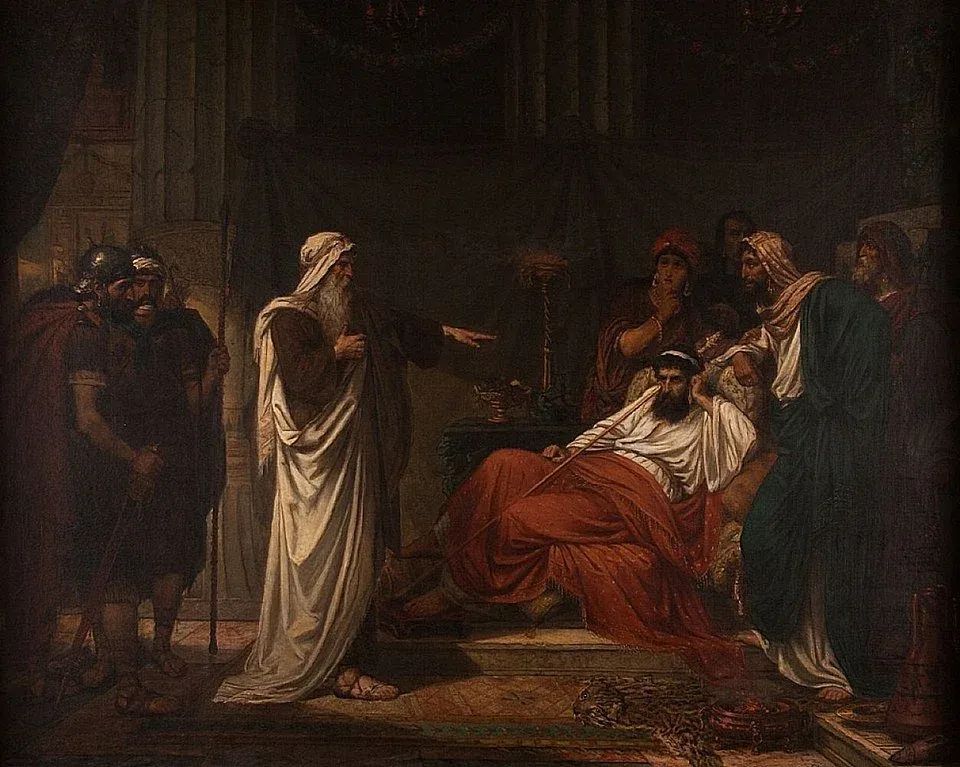
There came a day when the great emperor fell ill with fever, and none of his doctors could revive him. Now the emperor’s reach extended to the corners of the known world, and his wealth was incomprehensibly vast, so the call went out across the empire, promising great reward for any who could find a cure. And so it came to pass that one week later, on the exact same day and at the exact same time, two magicians from opposite and obscure corners of the realm at last presented themselves to the court, and after providing proofs of their skill to the council of viziers, they were hurried to the imperial throne room, where the emperor languished in a bed beside his throne, with his many children attending him, for he was faltering and nearly dead.
“A third of all my fortune to whichever of you might heal me,” the emperor whispered.
“Oh thou mighty emperor,” said the first wizard. “In my hand I hold this berry and this root, which, if prepared with my skill and enhanced with my magic, will take your fever and spread it among your people instead.”
“Best of wizards!” the emperor weakly exclaimed. “Prepare your concoction with all haste!”
“Oh thou dying emperor,” the second wizard said, “This hasty fellow and his methods are known to me. His root and berry will indeed work—but only for a season. I have spent my life dedicated to healing your ailment, which is a hoarder’s fever. You have taken your people’s wealth and locked it away for yourself in great vaults. Come, majesty. You have many children, your enemies are defeated, and your legacy is secure. Return even a tenth of your gains to your people and the fever will depart. Send your fever to them and it will spread to all and ruin all.”
The emperor’s brow darkened. “Traitor and liar!” he wheezed. “The wealth of a land is a king’s wealth by law and divine mandate. Have this false prophet removed and executed at once!”
And so it came to pass. One wizard was hanged, and the other enriched. The great emperor was restored to health, and a week of revels were announced throughout the land. Yet when the revels ended, the people saw that many among them had perished, for the land had been gripped with a terrible plague.
Now the emperor had a dozen daughters and a dozen sons, and when they saw this, most of them desired no parlay. “Who are we to concern ourselves? These are matters for emperors, and emperors will do as they will,” they said. “Princes and princesses like ourselves would do best to stay out of it.”
Four who remained discussed the matter among themselves.
“The people live at our father’s pleasure,” said the oldest prince. “They should be glad to die so that he might live. Their groans are sweet to my ears.”
“The people have always suffered illness,” said the oldest princess. “For they are base and filthy in their ways, and given to dissolution. We cannot know that this plague was sent to them from our father as the wizard claimed. Likely they have earned suffering.”
“Even if it was sent from him, what is that to me?” said the youngest prince. “It was our father’s decision and none of mine. What am I to the people, or they to me? They live in the country. We live in the palace. I share no blame for this plague.”
But the youngest daughter was troubled in her heart. “We too are people no matter where we live,” she said. “And in the end, disease will reach into palace and hovel alike.”
The youngest daughter was castigated by her siblings, who threatened to expose her perfidy to their father, and she lapsed to silence, and quieted her concerns. And so the siblings agreed to say nothing, for—while none of them mentioned it—none of them wished to see their inheritance further diluted among the people.
After some time, the plague had ravaged the land and the empire had gravely weakened, allowing bandits and raiders to capture the treasury vaults. The youngest daughter, who had herself begun to flush with fever, came from the palace and appealed to the people to come and help her save the royal family.
“I’m sorry,” she said to them. “I’m so sorry.”
But the people had learned how the fever had come to their land, and none who remained would speak to her. Instead, they turned their backs and closed their doors. “We few who are left have little desire to catch your fever,” they said.
“My siblings are dead and dying,” the princess mourned. “We didn’t know this would happen. Where is your mercy?”
“What mercy is left us we share among ourselves,” they replied. “Most of our mercy was killed by the emperor along with our parents and spouses and children, and now that he has used us up, the emperor will kill you in the same way. Why do you mourn so to come to this end? Do princesses not also live at their emperor’s pleasure? Should you not also be glad to die so that he might live?”
Hey! Its not the end of the essay! It's just a quick reminder that The Reframe is me, A.R. Moxon, an independent writer. Some readers voluntarily support my work with a paid subscription. They pay what they want—as little as $1/month, which is more than the nothing they have to pay. It really helps.
If you'd like to be a patron of my work, there's a Founding Member level that comes with a free signed copy of my upcoming book, Fighting in the Dark.
There was a young woman who became a sort of main character of TikTok the other month. She’s a “content creator,” which is the rather queasy term TikTok video makers use to refer generally to anybody who makes stuff for the web, and her account has been dedicated in recent months to talking about having been in the white supremacist MAGA cult and voting for Donald Trump three times, but turning away from it and trying to return to our shared humanity. She made a video about how hard this has been for her, because she has been ostracized from her family and her friends, but she has not been welcomed by those who oppose Trump, either. Quite the opposite, in fact—she’s been castigated and shamed, mistrusted and criticized. And this left her feeling as if she has nowhere to go.
This led to many response videos about why this woman is going to need to accept this state of affairs and not expect to be the special focus of anyone’s generosity of spirit. And those led to many other response videos talking about how we would do well to meet people where they are and encourage them toward healing with gentleness rather than discourage them from it with anger and shame. And that led to a round of response videos that … well, we could be here all day, but you know how social media is. And this whole dust-up went by many weeks ago, and now it’s gone, so I can’t find a link anymore for you, and I fear that maybe I got a couple details wrong. But you know this story even if you missed this particular iteration. It’s what’s in the old national conversation. People are turning away from MAGA, or claiming to. What ought we do about it? What will happen to this TikTok creator?
If you’ve been following along, you know I’ve been writing about our nation’s culture of abuse, and pondering how we might oppose abusiveness without becoming abusive ourselves. This led me to the conclusion that we must create a new culture of healing, which has led me to a season of pondering this idea of healing requiring a confrontation with truth. The simple idea here is that healing is going to involve a reckoning. There’s the reckoning with the diagnosis—accepting first of all that you even are sick, and then accepting that the person making the diagnosis has skills of discernment to provide you with the correct analysis. And then there’s the reckoning with the treatment, which will probably involve radical change and a journey through discomfort and pain—and all the more so the more invasive and harmful the disease is.
Now: I agree with these various response videos to varying degrees. Real both-sides stuff from me, I know.
I think we’d mostly hope that people in the white supremacist MAGA cult that is dividing and destroying our country would stop being in that cult—if for no other reason than because it will weaken the cult and its ability to harm others. Would it also be good if these people who are caught up in such a deep spiritual sickness found themselves on a healing path? I think it would. Might we think of how we could encourage people to walk that path? I think we might.
On the other hand, I know that we are dealing with an entrenched and empowered human spirit of supremacy with popular, traditional, and institutional roots extending to the founding of this nation and well before that. And I know that this spirit seeks to abuse others in order to privilege itself, and make others pay the full cost of that abuse, including the blame for having done so. And I know that this instinct for blamelessness creates within our society an instinct to prioritize the comfort and reputations of abusers over the health and lives of those they abuse, which makes people (me included) very wary and skeptical of calls to “heal” regretful MAGA, especially when this healing seems designed to protect the privilege of the privileged, or maintain the comfort of the comfortable, or keep people away from needed reckonings and necessary confrontations with truth about what we have inherited and what we are aligned with, away from the radical treatments that would bring radical healing.
It all gets me ruminating about the meaning of the phrase “meet people where they are.”
There’s where you are.
And then there’s where you think you are.
Two separate things.
They do converge on occasion. Sometimes you really are where you think you are. Other times you think you’re in one place and you’re in another—you’re lost, in other words.
My observation over these distressing years is that the closer people get to traditional narratives of American privilege and supremacy, the greater the divergence exists between where they think they are and where they actually are, and the greater the vociferousness with which they will defend the idea of where they think they are against any person or thing that would inform them of their true location. In fact, the greater divergence between where somebody actually is and where somebody thinks they are, the more they seem to resist any information abut where they are, even to the point where they start resisting information as a general rule; until information itself seems to trigger in them a deep atavistic instinct of flight or fight—and the more lost a person is, the more likely they are to choose fight. This is why I say that truth is a confrontation in matters of sickness and health: Any truth is confrontational to those dedicated to maintaining a life and identity based on terrible unsustainable and destructive foundational lies. And repair is confrontational, too, as is evidence, as is sustainability, as are basic displays of kindness and empathy and solidarity and decency. So, while we may do well to think about how we confront others, we should never be afraid to confront. In fact, if we are aligned with making a world of healing, we should hope to be confrontational people.
And I also observe the inverse: The more a person has been directly targeted for the harms of our culture of abuse; the more they have been forced to pay the cost that drives traditional American privilege; the more they have inherited the ongoing effects of these generations of theft, then the less lost they tend to be—the closer to an awareness of where they actually are, and what the sickness is that grips us, and what the causes are. Some of these victims of institutional abuse have used the word “woke” as a way of indicating their awareness of the systemic nature of that abuse—until the word “woke” was stolen away by people dedicated to unawareness, as a way of saying “awareness and conviction are annoying and dangerous and violent threats, and people of awareness and conviction are even moreso.” Thus, the lost now use “woke” as an invocation to resist being found.
There’s where we think we are. Then there’s where we are.
Where are we?
Well, our national apparatuses of media and industry and correction, and all three branches of our federal government, and many state and local governments, and all of our military and policing, have been captured by white supremacist militaristic genocidal eugenicist apocalyptic bigoted Christian billionaires who want to control all of our bodies and our lives in order to grow their already vast power and wealth to even more unimaginable levels, which they intend to spend on global ethnic cleansing of all racial, religious, gender, sexual, and genetic elements of human diversity they find undesirable. And they are supported by a vast sea of people who were indoctrinated into a grotesque and perverse religious belief in their own moral, genetic, cultural, and intellectual superiority, which leads them to value the bigotries they associate with their identity more than their own survival. So it is that we have a pointless war in Iran, and threats to murder that entire civilization. And we have legislatures passing bills designed to murder and menace and harm trans people. And we have the deliberate demolition of our democracy, which has really ramped up in recent weeks with judicial rulings that are, for anyone with discernment, deliberately engineered to bring back traditions of American racial apartheid. And we have a recent proclamation from the U.S. president that anyone who is opposed to fascism is a terrorist. That’s just a sampler platter of the surreal daily barrage of unacceptable cruelty and corruption and hypocrisy to which all people of awareness and discernment are subjected each day, and tens of millions of people remain zealously aligned with all of it no matter how suicidally reckless it becomes, no matter how many bodies pile up, no matter how badly they are hurt as well, no matter how many lies they have to tell themselves to maintain their ignorance, no matter how many hypocrisies they have to metabolize to maintain their complacency.
That’s where we are—where we actually are, all of us, privileged and marginalized, aware and ignorant, convicted and complacent alike. We’re all on the same planet here. All in the same boat, even if some of us are in the luxury suite while others are in steerage.
One thing I’ve pointed out before is that healing doesn’t happen until the harming is stopped. Supremacy is an unnatural fever that makes those least infected do the suffering and dying for those who are most infected … but which eventually comes for us all. So supremacy is what’s going to have to be stopped—and stopped in a way it never has been before, at a radical transformational institutional and cultural level—before we can truly have a culture of healing, and those who aren’t aligned with stopping it aren’t aligned with healing.
And yet … cultures are comprised of individuals, and individual healing can begin at any time, and the sooner the better is what I say.
So, should we meet people where they are? Or meet people where they think they are?
I think it’s good to do the former. All too often, I think what’s being suggested is the latter. All too often, I think what’s being suggested is flattery and complicity which relieves both the flatterer and the flattered of any awareness of the diagnosis or conviction to engage in the radical treatment that would bring healing. I think what's being offered is praise and forgiveness for those who have yet to do anything praiseworthy and have yet to apologize. And that is what I would avoid.
It strikes me that even though there is a reality that we all do share, and so in that sense we are all in the same place, there is a wide disparity in how we align with that reality, which means that we are all in different places, too.
There are people who openly and enthusiastically embrace the abuses of corruption and cruelty and bigotry that are supremacy’s natural outputs, and revel in their unnatural privilege as if it were a natural right.
There are people who deny the abuses with words, but whose actions reveal their support. Some are lying to others, some seem to be lying even to themselves.
There are people who don’t think about it much and don’t really care much, and treat their own indifference as pragmatic virtue.
And—maybe, hopefully—there are people of privilege who are aware of the deep moral sickness they have inherited, and are convicted that healing is needed, and are willing to take the radical healing path, to dismantle systems of abuse, to build systems of healing, and to pay the cost, which is their privilege and their blamelessness.
And—increasingly, unfortunately—there are some who pretend to be people of awareness and conviction in order to maintain and enforce their own blamelessness, so that they can continue avoiding paying the costs of responsibility.
Finally, there are people for whom denial is not a choice and awareness is not optional, because they suffer the effects first and most enduringly, and they suffer them most harshly, and are afforded no privileges, and pay the highest costs, and are therefore wary and skeptical of the rest for very good reasons.
But here’s a question: which of these types of people are you?
Which am I?
I think the answer can be found in how we respond to the reckoning of diagnosis and the discomfort of the treatment. I think the answer can be found in how we respond to confrontations with truth.
I ask again: Should we meet people where they actually are? Are we bold enough to do that? It’s an interesting question. I think we should, as long as they are actually willing to learn where they actually are. If they will only meet us in a place where we will agree with them that their bigotries have justification, their awareness needs no expansion, and their conviction needs no progression, then I would say we can’t meet them where they are, because even if we show up where they are, they won’t be there, and if we go to where they think they are, we won’t be where we need to be. We can acknowledge to them where they say they are, and show them where they are, and point out the gap—and I think we should do that, as long as they aren’t acting in bad faith—but we can’t make them move.
Here’s an even more interesting question, at least to me: Have you yet met yourself where you are? Are you brave enough to do that?
It’s the question I ask myself.
As you probably expected, this makes me think of The Sopranos.
Essay continues soon. But first: Feel free to subscribe if you'd like to get weekly essays.
Or don't subscribe. I'm not the boss of you. But if you do subscribe, you get one of these essays pretty much every week.
The Sopranos is a TV show you’ve probably heard of; it was a big deal. It’s about a mob boss in therapy, and his ups and downs and intrigues, and all the ways his various traumas affect him and his family and his “family,” among other things (including gabagool). It is, in my opinion, very good. The mob boss’ name is Tony if you haven’t heard. Tony’s long-suffering wife is named Carmella, and in the scene I want to highlight, she is inspired go to a therapist herself.
Watch:
Tony has been seeing a therapist who comes, by the end of the series, to realize that all she has done is furnish a monstrous criminal with the language and skills to be a more effective monstrous criminal. Carmella is expecting much of the same treatment—she even tries to negotiate her way out of the therapy she’s receiving by using the language of therapy itself—but she receives something that very rarely occurs in the show: A confrontation with the truth. This confrontation is delivered calmly but starkly. It acknowledges where she thinks she is, by way of rejecting it and showing, in no uncertain terms, where she actually is. It gives her somewhere else to go, and even leaves the door open for redemption, but it’s clear-eyed about the fact that the other place to go involves radical change and radical cost. It’s also clear-eyed about the much higher cost of not changing.
Carmella believes she is mourning a world she inherited—which is true, to an extent. She is the product of her environment, the same as anyone else. The doctor shows her the deeper truth, which is that she is mourning the inheritance she has chosen. He presents her a different choice, and leaves her with space to decide what to do with that choice.
If you watch the series, you’ll see that Carmella makes her choice, and sinks back into ignorance about where she actually is, sinks back into complacency about what her choice is. She’s there at the end, when the screen suddenly cuts to black, whatever that might mean.
So that is how one fictional doctor treated one regretful woman living in a sick environment. Should he have done differently? Should he have been a bit softer, a bit more patient with his patient? It’s a question worth pondering. As mentioned, Tony has been receiving a different and gentler sort of therapy, but it will have largely the same result. But both methods could be seen as a failure, if we believe that extricating a person from organized crime is the goal of psychiatry.
I return to the inescapable: Carmella has been told what the problem is, and what her choice is.
This is important, if we'd seek confrontations with truth. If you're not told, you might not know. But once you're told—however you're told, whatever words, whatever tone—there's one thing you can never say: That you've never been told.
The question of how we should treat regretful MAGA is an interesting one. I think the answer really depends on where you are and who they are to you, and where they are relative to you.
Most of the conversation I see on the topic (and most other topics for that matter) is centered around proscribing one best way to engage. Some want to be inviting and gentle. Some demand shunning and shaming. And then there's a lot of less dogmatic in-between. Almost all of the conversation turns around the questionable idea that there is a single response.
A doctor is one who is deeply knowledgeable about sickness and healing. A doctor can be a patient, but being a patient does not make you a doctor.
A patient is someone who is sick and accepts the reckoning of diagnosis and treatment. A sick person who is sick but refuses the reckoning is not a patient. And a person who is not sick doesn’t need treatment.
I think a patient might talk in a different way to a fellow patient than a doctor, and a different way still to a fellow patient who is further along the path of healing than to a fellow patient who is just starting out, or who is refusing treatment.
I think a doctor might talk in a different way to a patient who is receiving treatment than one who is refusing it, and still another way to another doctor.
In the same way …
I think somebody who has been experiencing the persistent ongoing inherited generational abuses of supremacy might be deeply skeptical of anyone who is only recently regretful about their involvement with our traditional supremacist culture of abuse, especially if their regret was only triggered by damage recently done to them and the healing they were seeking seems to be only healing for themselves. And so such people may well respond with coldness and skepticism, or hostility and argumentation, or even shunning and shaming. I'm reminded that those who don't know where they are are most likely to fight when confronted, and I conclude that for some, confrontations with truth require more armor than for others.
And I think a lot of people are uncomfortable with that result. But it is going to be a result, and often for very good reason.
Maybe you’re like me. Maybe you’re a person who inherited privilege rather than theft. Maybe you’re uncomfortable with this fact. Maybe you’re so uncomfortable with this fact that you decide to spend your time scolding people to be a little bit more gentle and open and enticing, ignoring the fact that you are often scolding people who know far better than you where we all actually are, ignoring the fact that they have learned exactly what boundaries they must set and enforce to keep themselves as safe as they can.
Or maybe you’re privileged like me, and like me you’ve become aware and convicted about the need for radical change to end our supremacist culture of abuse, but like me you still are too often caught up with a desire to not have to pay the costs of responsibility and blame for what you’ve inherited, so you scold anyone who isn’t as far along as you are, putting them down not just because you are skeptical of their intentions, but to establish them as the people who must pay costs from which you exempt yourself. I see this happen a lot along vectors of voting. You didn’t vote last time, so you are to blame. You did vote last time, so you are to blame. And so forth. Many such cases on many such topics. All still engaged in the old supremacist game of blame management.
These sorts of things strike me as akin to an unknowledgeable patient forgetting that they are not a knowledgeable one, and have not done the study required to yet be considered a doctor.
Well, I’m not a doctor. I’m a patient of very mild knowledge. I’m learning and sharing what I learn.
Sometimes what I’ve learned has been delivered in a very gentle voice. Sometimes it’s come from a very angry voice. The gentle voice is easier to hear, and I appreciate the patience it often requires, but I’ve learned sometimes the angry voice teaches me deeper lessons more quickly—and I will learn them, if I truly am regretful of my inheritance of supremacy, if I truly do repudiate the gains of our culture of abuse, if I truly am dedicated to making a culture of healing. And if harshness causes me to turn away from healing, then I wasn't sincere, and people whose very lives can depend on detecting insincerity in privileged people to keep themselves safe will know it and protect themselves.
Am I inviting you into hostility toward regretful MAGA? Am I inviting you to yell at them and shame them? I am not. I’m inviting you to use discernment about whether you are dealing with real or feigned regret, and to be very intentional about realizing who you are and where you are. I’m inviting you—and myself—into the discomfort of our own necessary radical treatment. I’m inviting you to recognize that there might be a place for that hostility, even if it’s not usually your place to deliver it. An honest and truthful hostility is bracing, but clarifying. Will it push away some? It will. And then we'll know. And the rest of us can continue the difficult work of radical change unencumbered by the distraction.
I would say that if you feel the need to set a boundary in order to keep yourself safe, you should do that.
I would say that if you feel the urge to be hostile, you should understand whether you are doing it for a reason aligned with healing, or simply to enhance your own comfort.
I would say that if you feel the urge to come alongside somebody who is regretful or even wavering MAGA, then you should do that. If you want to be gentle, I think that can help, but more important than gentleness, you must be honest with them about where they are—and before you do that, I think you should be sure you’re being honest with yourself about where you are. If what you're bringing isn’t a confrontation with truth, it won’t align with healing.
What should you say? In so many words, tell them what I tell myself.
I can see you are regretful. It's good that you are. There's a lot to regret. We are deeply sick as a culture.
The diagnosis is supremacy—an abusive human spirit that seeks and causes genocide and slavery. We are all infected with it, but we haven’t all been harmed in the same way, or to the same degree.
Some among us have been grieving the world they inherited, the theft of what is theirs—but we have not been robbed in the same way.
We are grieving the harm caused by the inheritance that we chose.
Now you have been abused by this culture of abuse we inherited and chose, and that has brought you to the edge of awareness. I'm there at the edge of awareness as well, maybe just a little closer. I've been there for a short time; only a decade or so.
This isn’t always going to be easy, and it’s going to cost us. We inherited a societal sickness that infected us but made others sick. To heal ourselves, we must first seek to heal not ourselves but others.
You have likely been abused in your life, and that is not your fault. And yet what is being done to you is being done first and worst to others, as an automatic function of our society. We inherited that, and we bear responsibility for that. And you have aligned yourself with that for long years, and there is responsibility there, too—a responsibility and a cost. You will not be welcomed by everyone. You won’t be forgiven by everyone. You won’t even be liked by everyone. If you are doing this to maintain your influence, or become the hero, or to gain cheap forgiveness, or to avoid the cost of awareness and conviction and blame, then you won’t last on this healing path.
Healing will involve many pains and many costs, and it will require radical transformation of our beliefs and our lives.
But healing is what we need.
And healing is its own reward. Don't look for any other.
One thing we can never say is we haven’t been told.
The Reframe is totally free, supported voluntarily by its readership.
If you liked what you read, and only if you can afford to, please consider becoming a paid sponsor for as little as $1/month. If you'd like to be a patron of my work, there's a Founding Member level that comes with a free signed copy of my upcoming book, Fighting in the Dark, and thanks by name in the acknowledgement section of any books I publish.
Looking for a tip jar but don't want to subscribe?
Venmo is here and Paypal is here.
A.R. Moxon is the author of the novel The Revisionaries and the essay collection Very Fine People, which are available in most of the usual places, and some of the unusual places. You can get his books right here for example. His upcoming essay collection is Fighting in the Dark. He sank beneath your wisdom like a stone.



Comments ()