
Are You Brave Enough for Nonviolence?
People who care, people who don't. Un-realism and ignore-ance. If you aren’t comfortable now, why were you comfortable before?
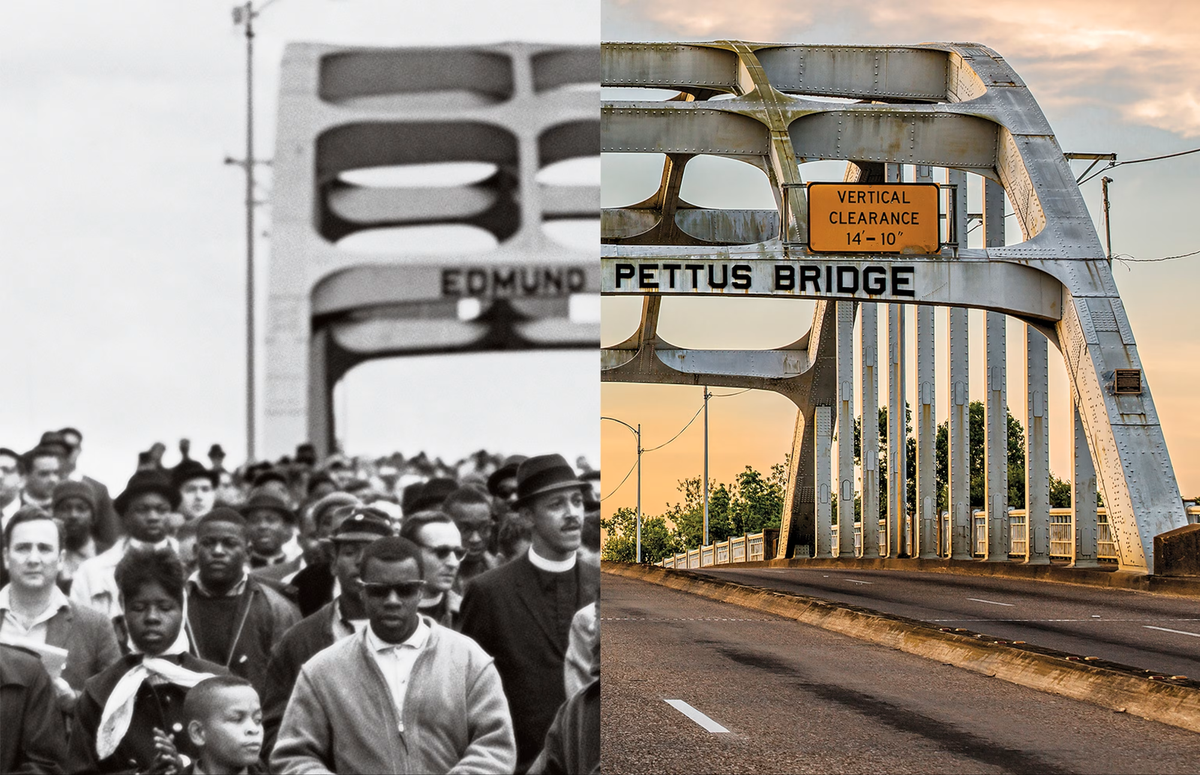
Let’s keep it going. This year I’ve been talking about what to do with a cult of abuse that has metastasized into a culture of abuse, by capturing the institutional levers of power and culture. My answer: let's create a culture of healing.
And I want to be careful (as I usually try to be but as I was not in last week’s essay) to stress that, while we will observe its effects in individuals, what we’re dealing with here is a cultural sickness that has a deep moral aspect. I stress this because it’s always dangerous to speak of healing and sickness when we are thinking in moral terms, because—as a function of our cultural moral unwellness—we tend to treat physical sickness and disability as moral failings, which they are not, and physical wellness as a result of good moral choices, which it is not. Additionally, there is a risk that, in speaking of moral unwellness in terms of sickness and healing, we will pathologize the moral choices people make—choosing to engage in or support the abuse of others in order to satisfy a twisted desire to secure advantages of wealth and identity—and in so doing, we can participate in the exact kind of cost-free exoneration such people seek and demand.
Still, at the same time, when I look at the traditional spirit of supremacy that has gripped my country, I admit I can't see anything but a deep sickness. And I cannot help but yearn for healing, and wonder how healing might be effected.
My answer right now is not the way we’ve been going about it, that’s for sure. This is an answer that contemplates negative space rather than positive space, perhaps, but it’s a starting point all the same.
OK. How have we been going about it? Far too many of us have been going about it by trying to work with supremacists on solving the problem of supremacy. It’s hard to find a solution with somebody who wants the problem; nevertheless, that’s what I mostly see from those who are most empowered to seek solutions. Maybe you’ve heard that what Americans want more than anything is bipartisan solutions with ideas coming from "both sides." Maybe you’ve heard that we ought to become “more culturally normal” in a way that defines “normal” the same way bigots do. Maybe you’ve heard that we need to unify, without much talk about what we would unify to accomplish, or who would or wouldn’t be allowed to participate in this unity. Maybe you’ve heard that we need to not focus so much on the human rights of this group of people, or this one, or that one, so that we can win. Or—stop me if you’ve heard this one before—maybe you’ve heard from our leaders about how we need a strong Republican Party. Well, we sure got one. I haven’t noticed much healing. I’ve mostly noticed a renewed commitment to un-realism and ignore-ance.
Un-realism and ignore-ance. There’s a thing that supremacists do, I’ve noticed, which is to take a laudable outcome that they clearly oppose—equal representation for all under the law, for example—and treat it as if it is an accomplished fact, rather than a yet-to-be-achieved goal. Having established this premise, they utilize it in insidious ways to destroy any laws, practices, and norms—voting rights protections, for example—that have been established to help achieve this goal, a destruction enacted under the risible justification that laws which acknowledge the existence of discrimination actually create discrimination. This allows supremacists to subject any group they marginalize—Black people, for instance—to the full force and effect of existing supremacist institutions and laws and norms and practices, so that supremacy can do its often silent and submerged discriminatory work. And this allows supremacists to cast all the blame for the adverse effects of that work upon that marginalized group as if it were a deserved result of a bad choice by a demonized minority, and a rationale for increasing the existing abuse and discrimination. And in the public square, far too much of our media and far too much of its audience treats this meretricious premise and its risible justifications as true and valid, or at least credible. And when it is put to a vote, far too many of our leaders do the same, and vote for bills based on the same premises, and work with people who have shown that they do not want the equitable outcomes they claim to want, and vote to approve judges who will rule in the same supremacy-accommodating way, who ignore the reality of what is in order to block any remedy in the name of remedy. And far too many of us vote for such un-realistic leaders in the name of being realistic.
Shorter version: Supremacists, under auspices of wanting to treat all people as equals under the law (which we should), demand that we treat all people as if they already are being treated as equals (which they are not) in order to further increase and accelerate inequality, and to treat any attempt to establish the equality they oppose as opposition to equality. And, increasingly, our institutions (and far too many of us) accommodate this topsy-turvy point of view of ignore-ance.
Some people are being abused, and others are doing the abusing. If we would seek equality, we have to acknowledge the inequality that exists in reality. If we would increase inequality, we ignore it. If we would seek the healthy outcome of equity, we would seek different treatments for people based on who they are and what ails them. This is paradoxical for those who want to see a paradox, but this is rather obvious for those who want to create a culture of healing. You don’t treat a healthy brain for liver cancer. You don’t give radiation to somebody in remission. You seek an understanding of where people are and what their present situation is, and then apply the correct remedy. People who are abused need to stop being abused. People who are doing the abusing need to have the ability to abuse removed from them. Healing cannot progress while the wounding is ongoing.
I realize this simplifies matters significantly. Voting rights is just one example I could have used to illustrate the anti-reality effects supremacy engenders. And, of course, within the categories “people who abuse” and “people doing the abusing” there are any number of subsets and overlaps, and there are many other categories to consider. One of the reasons I’ve been at this all year is that there are endless facets to this dark gem of supremacy, and while each facet delivers some new insight, each one reflects and refracts all others from different angles. There’s a temptation when contemplating a facet to try to talk about other facets. Sometimes that’s helpful; sometimes not. Sometimes it helps to look at the whole gem rather than deal with a single facet, and when one does that, there’s a great temptation to try to also name each facet in turn, or to point out which facet has been left out. Sometimes that’s helpful; sometimes not. As I said, this is complicated business.
But I think sometimes simplification helps, if you know it is a simplification and can acknowledge the limitations. Sometimes, you just need to look at a single facet and use what you’ve learned from studying the others and the whole to learn that facet’s lessons.
Here’s a facet that might take a few essays to contemplate: people who care and people who don’t.
Hey! Its not the end of the essay! It's just a quick reminder that The Reframe is me, A.R. Moxon, an independent writer. Some readers voluntarily support my work with a paid subscription. They pay what they want—as little as $1/month, which is more than the nothing they have to pay. It really helps.
If you'd like to be a patron of my work, there's a Founding Member level that comes with a free signed copy of my upcoming book, Fighting in the Dark.
There are people who care. There are people who openly and enthusiastically embrace the deep traditional unsustainable lies of supremacy, who revel in their unnatural privileges as if they were natural rights, and who celebrate a vision of genocide and enslavement, of their total domination over all others, and of their power to crush human diversity wherever they see it. And there are people who deny the abuses with words, but whose actions reveal their true support—some of whom are only lying to others, but others of whom seem to be lying even to themselves. But … there are also people who openly and enthusiastically embrace the great foundational truth of a generative, sustaining, diverse, connected global neighborhood, and the vision of a world of progress and justice and equality and art and the thriving and expansion of human knowledge, where problems are solved and obstacles overcome. And some of these people are only recently aware beneficiaries of an inherited supremacist tradition, while others have inherited only supremacy's abuses and are deeply and personally knowledgeable about them.
These are the people who care. They aren’t all the same.
And there are people who don’t care. There are people who don’t think about all this very much and don’t really care much. Some of these are people who are just struggling to survive, for whom any larger questions seem like luxuries when placed beside questions of basic human need (which is—let’s look at a different facet for a moment—not to say that all who struggle in such a way are ignorant; in truth, some who struggle in such a way have the most intimate knowledge). And, as this lack of resources to meet basic human needs is deliberately manufactured by institutions that benefit from ignorance, the outcome is ignorance. Others are ignorant because they were born into ignorance and—because of institutional and cultural un-realism and ignore-ance, have been given little opportunity to learn. Some of these suffer only from lack of education, others suffer from a deliberate campaign of propaganda, and, though lack of education and propaganda are both deliberately manufactured, the outcome is an ignorance that doesn’t even know about its own ignorance. But … there are also people who dimly sense the advantages of the existing imbalance, and seek only their own momentary comfort, who treat their own indifference as pragmatic virtue, as realism, as what “normal” is, and those who benefit from un-realism and ignore-ance are quite happy to reward such people for their unconcern. (Back in my day, which was the 1990s, this was a sort of received knowledge, that all sides of any issue were equally dumb and only scolds and losers cared about politics; cool people just watched it all with ironic detachment and called it all out as bullshit. And now the Voting Rights Act is rubble. Here we are.)
These are the people who don’t care. They aren’t all the same.
I think people who don't care comprise a vast majority, though I've seen a rise lately in people who care, for better and for worse.
Looky-looky. Even a single facet isn’t that simple.
Is it enough for people who don’t care to simply become people who do care? Not really, even though we would do well to convert people who don’t care into greater conviction. What will they care about? is a relevant question. Sometimes complacency is better.
Is it enough to simply say that those who are ignorant are a waste of time and energy, and must be left to themselves? Not really, even though there are some whose ignorance is cultivated specifically to waste time and energy, and others whose ignorance is so dense and so embedded into their self-identities that to give them truth might be unsafe to the giver. Why are they ignorant? is a relevant question, as is Are they responsive to truth?
If you want to see who is responsive, you've got to offer something to respond to.
Let’s shine a light through this facet. Something that illuminates it.
Let’s call this light violence.
Essay continues soon. But first: Feel free to subscribe if you'd like to get weekly essays.
Or don't subscribe. I'm not the boss of you. But if you do subscribe, you get one of these essays pretty much every week.
Violence and nonviolence are matters that frequently come up when we talk about how to change a culture of abuse into a culture of healing. People tend to ask this question: “Yes, but how do we do that without becoming abusive ourselves?”
I've asked it, for example.
It’s an interesting question for what it reveals. It’s not a bad question. I think changing a culture of abuse into a culture of healing would be a revolutionary change, and I don’t just want a revolutionary change, I think we need one, in much the same way that a cancer patient is going to need a revolutionary treatment. And I sure don’t want to become abusive myself, and I think history does have a record of revolutionary movements that descend into abuse. Revolutions often (not always but often) do involve violence in some way. All of them involve disruption and discomfort. So do all radical treatments that lead to health.
So it’s not a bad question. We might even consider it a vital question.
But it’s certainly an interesting question.
It’s a question that sometimes (not usually, but sometimes) is being asked in a serious way, as a way to find a solution to a perceived obstacle.
Yet also …
It’s a question that often (not always, but often) seems to assume that the very attempt to enact revolutionary change itself represents violence—which is the supremacist view on such things.
It’s also a question that often (not always, but often) seems to ignore the observable fact that the situation that has led us to need revolutionary change is itself already extremely violent.
It’s also a question that often (not always, but often) seems to assume that violence that abuses and violence that ends abuse are equally abusive acts, and that only the latter type of violence even is violence, while the former is order.
It’s also a question that often (not always, but often) seems to be asked not out of a sincere desire to find the answer, but rather to stop all questions. Often-not-always-but-often, when I hear that question, what I detect is the unspoken we cannot, and therefore we should not try.
Because of this, I tend to approach this rather vital question with care.
It makes me think of a specific type of person-who-doesn’t-care. Not the propagandized one. Not the one whose education was stolen from them. The one with the extremely sensitive apparatus for detecting disruptions to their own comfort. The one who has an awareness of structural inequality and injustice and the attendant abuses, but who believes that it is realistic and pragmatic and clear-minded and even virtuous to not care so much, because caring makes people uncomfortable, and you have to convince people—not me, you understand, but other people. The ones who will tell you they support equality and justice to a point, and that point just happens to be “until they aren’t comfortable anymore.”
Have you heard this one before? “I support ...” but I’m just not comfortable with ….” You can fill in the blanks, I bet. I bet you’ve noticed that anything will do to fill those blanks. When you don’t want to give a shit, you don’t really give a shit why you don’t give a shit. But the light we're shining through right now is violence, so let's talk about that popularized violence of supremacy that is police brutality.
Let’s fill in some blanks.
“I support Black Lives Matter, but only if it stays nonviolent. I’m not comfortable with violence.”
You’re not comfortable with the violence? Good observation. It’s very normal to not be comfortable with violence. That’s a healthy response to violence. I, too, am not comfortable with it. Black Lives Matter isn’t comfortable with violence, in case you didn’t know—which I mention, rhetorical-amalgam-of-real-people-I've-talked-to, because you don't seem to know. That was the point of Black Lives Matter. It was an organized and largely nonviolent expression of discomfort with a centuries-long tradition of empowered institutionalized white violence against Black bodies.
Here’s my question back to those who only got uncomfortable with violence during the unrest of the protests: If you aren’t comfortable now, why were you comfortable before? Is it really violence that you aren’t comfortable with? If so, why did your discomfort just start today?
I detect the old supremacist tricks of un-realism and ignore-ance acting as if violence of brutality and violence of neglect isn’t already here and longstanding and ongoing. In the same way that supremacists pretend that everyone is equal under the law to demolish equality under the law under the false premise that they are motivated by a desire for equality, supremacists pretend that they are peaceful in order to brutalize the protests against their brutality, under the false premise that doing so brings not escalating violence, but peace. And each risible supremacist rationale is accommodated with public ignore-ance and un-realism in pretty much the exact same way, by people who know better but decide it is more morally good—more peaceful, more realistic—to never care about such things past the point of either their own discomfort or that of some imagined other.
I listened to an episode of the podcast Hidden Brain the other day about the idea of nonviolence as effective strategy. This was something that was recommended to me, not something I sought out, because Hidden Brain is broadcast on NPR, and NPR is a platform that I’ve learned to be wary of for the ways it accommodates supremacism’s ignore-ance and un-realism, shellacking supremacy's bullshit with its patina of dispassionate and erudite unbiased high-mindedness. And there was a bit of that, but I offer the caveat only to underscore that I listened as a skeptic, and despite this, the episode was in my opinion pretty good. It recognizes the inherent ongoing and persistent violence that oppressive regimes represent, which I appreciate. It talks about nonviolence and violence as different strategies for bringing about revolutionary change against oppressive regimes and systems. It begins, as NPR-broadcast podcasts often do, with a story: An existing academic consensus that violence is actually the more effective strategy for revolution was put to the test by political scientist Erica Chenoweth, who had assumed the consensus to be true, but whose study of more than 100 years of revolutions and insurrections uncovered evidence that nonviolence is the more effective path.
Often that is where these sorts of things end. Nonviolence is the way forward, people, now everyone be nonviolent, the end. Thankfully, this episode continued into the reasons why nonviolence is the more successful strategy. "Successful" specifically because revolutionary change requires public support, especially from the masses of people who only see violence in response to oppression as real violence, because it is the only violence that disturbs their comfort. This is a tightrope for those who fight for their own rights. Because a nonviolent protest confronts the lies of supremacy with the truth of human dignity, supremacy will always treat truth as an enemy. Thus, paradoxically, a nonviolent movement inevitably results in further violence, and comfortable people who see complacency as virtue and are usually willing to let others pay the cost of the violence their complacency enables are quick to label a nonviolent movement as a violent one.
So, for oppressed minorities seeking revolutionary change that is for them literally life or death, there is a requirement that they be rigidly diligent and disciplined in performative nonviolence, so that the violence the regime manufactures can only possibly be interpreted as coming from the regime. For oppressed minority groups seeking public approval, the threshold of approval has to be almost impossibly high before they can ever hope to actually start fighting back against those who brutalize them. For the sake of the comfort of unoppressed majorities, they have to present the spectacle of themselves being brutalized while nonviolent in order to secure support from normally uncaring people for their right to live.
This means that those of us who support movements for liberation from oppressive regimes only when we do not perceive violence are not being pacifistic or non-violent. If we were truly nonviolent, we'd be joining the movements ourselves and risking ourselves. If we hold our support contingent, we are instead asking other people to perform their oppression to our liking; to take a beating for our own comfort, and then deciding whether or not we liked the performance enough to continue extending our support. Those of us who do this (not all of us, but far too many) are joining a long tradition, though not a proud one.
Again I ask: is it violence what you’re uncomfortable with?
Or are you just asking other people to take your punches for you?
And I know that most of us are so indoctrinated in un-realism and ignore-ance, that by even saying all these things, people will think that I'm advocating for violence and against nonviolence, rather than just asking for an honest reckoning with what nonviolence is.
There’s plenty more to say. I’ll save it for another day.
Let me end for now with a couple of thoughts in summation.
1) What we desperately need is revolutionary change, and we might do well to realize that avoiding violence is not really an option whether we get revolutionary change or not; firstly, extreme violence has already been here in the U.S. for long centuries, an enduring ongoing national tradition, and without revolutionary change that violence will only increase and escalate; secondly, people dedicated to supremacy and opposed to revolutionary change are always going to ensure escalating violence, no matter how diligent and discipled any nonviolent movement that works for revolutionary change manages to be.
And our culture of abuse’s topsy-turvy framing of ignore-ance and un-realism will cast any observation of this kind as incitement to violence rather than an observation of clear truth, but that doesn’t mean that you have to accept that framing. Let me say: I do not seek or encourage violence here. I observe it where it already exists, and I anticipate it where it has been promised, and I observe its causes, and my support for needed revolutionary change is not contingent on my comfort.
Healing is what we need. Healing often requires discomfort. Those who won't enter into it won't enter into healing.
You're not comfortable? Might be a good thing. Use your discernment. Check its nature.
2) I want to talk about audience.
My daughter graduated from college two weeks ago, and the commencement speaker was a prominent alum, an artist of some note. He talked about finding your audience, and how in earlier years he had bridled against the idea, until he realized that audience wasn't the group whose favor you curried. Instead, audience is the community you are in conversation with—or, rather, the community whose ongoing conversation you join. It's not that others can't find your work or engage with it; it's just specifically where you are speaking, and to whom.
I like that. I've been ruminating ever since about who my audience is in this sense of the word—for the work I do here, anyway—and I think I know. It's people of privilege, who have entered awareness and conviction and are finding their way toward being people of repair. People a lot like myself, in other words. It's not to say my work isn't for others. If somebody else finds something in it, I'm glad, but I suspect for those who aren't similarly and unnaturally privileged, my revelations probably often seem rather academic and obvious, and I wouldn't presume to lecture. As for those who aren't yet willing to engage, I am probably not the voice. There are others who excel at the thrust and parry of debate. Maybe there's some value to that, but it is not my skill and not my thing.
The Hidden Brain podcast transitions from its segment on nonviolence as strategy to a segment on the idea of bravery and how bravery is developed as part of a self-image. Bravery, it concludes, is the sort of thing that you have to think yourself into, by thinking of yourself as someone who cares and understands what it is you care about. Hidden Brain doesn't make this explicit, but the transition from the one topic to another suggests an awareness that radical societal change requires radical support, which will eventually require radical discomfort and maybe even radical bravery. If you won't even sacrifice your comfort to your principles, you won't sacrifice greater things, that's for sure.
And that makes me realize what I’m trying to say in the conversation that's already happening in this community I am in. I'm trying to get myself ready for discomfort and then to move past discomfort into things like bravery. I start with myself, and the work I do on myself, then I share what I have learned, in the hopes that it helps. If you find that helpful, you're my audience.
Nonviolence may well be the most effective strategy for bringing about revolutionary change. It may be absolutely vital to the radical change we'll need if we are ever to have a culture of healing. I think it would be better by far to not be oriented toward violence. I would love to see radical change come about in peaceful ways, and I hope you would, too. And some (but not all) of the practitioners of nonviolence are some (but not all) of my greatest heroes and my greatest examples.
But do you demand nonviolence of others? If so, I'll ask you what I ask myself: are you willing to participate in nonviolence? Because if you only demand it from others, you're not nonviolent. You're just hiding behind the bully and giving the victim a thumbs up while they get pounded. That's a violent position if I ever saw one.
Do you demand nonviolence?
Are you brave enough for that?
The Reframe is totally free, supported voluntarily by its readership.
If you liked what you read, and only if you can afford to, please consider becoming a paid sponsor for as little as $1/month. If you'd like to be a patron of my work, there's a Founding Member level that comes with a free signed copy of my upcoming book, Fighting in the Dark, and thanks by name in the acknowledgement section of any books I publish.
Looking for a tip jar but don't want to subscribe?
Venmo is here and Paypal is here.
A.R. Moxon is the author of the novel The Revisionaries and the essay collection Very Fine People, which are available in most of the usual places, and some of the unusual places. You can get his books right here for example. His upcoming essay collection is Fighting in the Dark. Some may come and some may go; he will surely pass.


Comments ()