
Are You Pulling, Or Are You The Rope?
Audiences and authority, comfort and discomfort. The choice to join the struggle for humanity isn't really a choice.
Its rough out there in the American kakistocracy, isn’t it? Every day another dozen new outrages present themselves, raising the cost of awareness and conviction, making ignorance and complacency seem temptingly comfortable by comparison. Today I read that some of the insanely corrupt $1.776 billion slush fund our Nazi white-christian temporary president set up by corrupt means will go to pay what is being framed as "restitution" to the insurrectionists who tried to overthrow our democracy five years ago—which they did in support of the Nazi white-christian president, which is why he pardoned them. Now they’re going to get a payoff. One of these beneficiaries apparently intended to use his new funds as hush money for the children he molested. You’d think this story would dominate the news, but the news by now is flooded above the treeline with this kind of shit, so it just floats by with all the rest of the Nazi white-christian sewage.
The slush fund is being set up specifically as a mechanism of political and legal weaponization under the auspices of combatting political weaponization, by which the fascists mean “any consequences whatsoever for fascists.” This sort of thing can be expected in a country run on the sort of un-realism and ignore-ance that fuels fascism.
The child rape thing is sort of a given these days when it comes to Republicans. They’ll take offense if you think of them as child molesters, Republicans, but it seems like a reasonable starting assumption for anyone who belongs to such an outfit. At the least one has to conclude they will find ways to not be disturbed by such things. For years they said they were performing their abuses against democracy and common sense in order to root out the child rapists, and then the first chance they got, they chose an adjudicated rapist as their president (for whom ample evidence of serial child rape exists) and now they defend him with everything they’ve got. And they’ve had a long history of promoting and defending molesters and child rapists, including their longest-serving Speaker of the House, who didn't go to prison for molestation of children but did go to prison for paying out hush money to a victim. This is the sort of thing you would expect to end a political party’s viability; but nope, they’re in charge of pretty much everything, and still claiming to be the arbiters of morality as a pretext for engaging in their grotesque immorality. It’s the sort of thing you would only see in a society dedicated to abuse and defense of abusers, and it’s one of the many ways we can tell that a culture of abuse is what we have.
Last week I wrote about my nation’s culture of abuse as a sort of dark gem with many facets, and the questions of how to change it from what it is into a culture of healing in much the same way. When you focus on a facet, you can simplify matters, which makes it easier to manage but also flattens the issue. I mention this because this is what I want to do for a while, and I want to acknowledge the benefits and limitations of doing so.
The facet I was thinking about last week was people who care and people who don’t. Even the simplification is pretty complex. I broke it down in detail last week, and I guess I’m going to repeat myself a bunch as I try to shoot off in a different direction from the same launchpad.
You have people who care about defending and advancing the great foundational lies of supremacy, and the advantages of fortune and identity that come along with it. Some of them are open and proud, others are sly and lie about their motives and intents. Others seem to have been propagandized and socialized into supremacy to such an extreme level that they truly appear not only unaware of our shared reality but immune to awareness itself—almost literally an immune reflex against it; they recoil from facts, attack evidence, and run from proofs. The act of bringing them awareness about truth or empathy literally seems to make them less likely to engage with it.
Then you have people who care about defending the great natural truths of a generative and connected universal human family and global ecosystem, and are trying to birth into the world new systems and institutions committed to justice and equality. Some of these people have no illusions about our culture of abuse, because they have inherited the effects of its abuses and have never been offered the privileges of illusion or comfort. Others inherited these privileges, and are doing their best to deconstruct the ignorances and complacencies they were given.
This covers the various people who care. They aren’t the same. The stakes are different, their responsibilities and culpabilities are different. What they care about is even different.
Today I'm thinking more about the people who don’t care. There are different sorts to be found here, too.
Some of those who don’t care don’t care proudly and openly; they believe that indifference is a virtue and caring is a vice, which allows them to excuse themselves from any discernment between who is being harmed and who is doing the harming. Others don’t care more slyly, fully aware of the abuses, seeking credit for awareness about it and exemption from responsibility for it, lying to others or even themselves about the tangle of contradictions that wires their manufactured and cultivated complacency. Some don’t care out of privilege—when it comes to abuse, they don’t care that they don’t care, and won’t ever care unless the abuses they don’t care about start to affect their comfort, and will return to not caring the moment that their comfort is once again undisturbed. Others don’t care out of despair—they are actively being eaten alive by our abusive culture, and all their energy is devoted to staying alive today; they live in a world where basic necessities must be afforded, and, unable to afford them, they can little afford luxuries like awareness and conviction.
So that’s just one facet of this supremacist cult of abuse we have—people who care versus people who don’t. Some who care are trying to save their lives, others are trying to save their souls, and others are trying to save their right to harm and kill the rest of us and eventually themselves. And some aren’t trying anything at all, for a multitude of reasons. Threaded through all of this are those who are lying about their motives, and even among those who are sincere, there exists a residue of inherited supremacist ignore-ance and un-realism coating their beliefs, and separating their actions from their intention.
As promised, this is both hugely simplified and plenty complex. Perhaps you can see the value of simplification, just to get a handle on what we’re dealing with.
One thing I conclude is, if you’re focused on changing a culture of abuse to a culture of healing, it’s vitally important to first figure out who it is you’re dealing with in any given circumstance before you attempt any remedy.
The way we get to a place of spiritual health when dealing with somebody who is loudly and openly proclaiming their malicious intent is to remove their ability to enact their malicious intent. The way we get to a place of spiritual health when dealing with somebody who is sly about their malicious intent is to detect their lies and expose their malicious intent so that we can then remove their ability to enact that intent. The way we achieve healing for those being harmed by that intent—whether they are aware and activated or desperate and struggling below awareness—begins the same way, by stopping the abuse, and then listening to them about their harm, to understand what must be healed. You can’t heal a wound when the wounding is ongoing, and an abuser will never reach anything like health or even seek it if their abuse is enabled and incentivized.
But what about those of us who are aware but not as directly targeted, yet would like to repair what is broken and pay the cost of doing so? What does getting to spiritual health look like in these cases?
What about those who don’t care and just want to stay comfortable?
And which one are you? Which one am I?
I’d say it’s important for each of us to start with ourselves; to look within and ask:
Who am I, and why am I here?
Its not the end of the essay! It's only a quick reminder that The Reframe is me, A.R. Moxon, an independent writer. Some readers voluntarily support my work with a paid subscription. They pay what they want—as little as $1/month, which is more than the nothing they have to pay. It really helps.
If you'd like to be a patron of my work, there's a Founding Member level that comes with a free signed copy of my upcoming book, Fighting in the Dark.
To not exactly change the subject, I’ve been thinking of audiences and authority lately. Art is a collaborative magic trick where the creator of the artistic expression and those who experience that creation meet. The creator is the artist—the one who makes the expression. The audience is the one who experiences it. What happens in between, in my opinion, is where the infinite and multifarious meaning can be found, where the creator’s skill and intent reaches across space and time and meets the audience’s interpretation, and the two of them dance together. This, to me, is where the art happens.
This makes audiences crucial to art. If all you have is the creator and the object then you have the creator’s experience of the art, and it’s still art, but it’s only a little bit of art, and it never leaves the nest of intention.
So one way of looking at an audience is “anyone who experiences the art.” This expansive view is, I think, a vital and true way of defining audience. It's important to hold the expansive idea of audience in mind, and to be open to it.
Another way to think about audience is to say it is the community with whom the artist is in conversation. In this sense, audience moves closer to the artistic intent. It’s not that the art is closed to anyone else; it’s that it is entering an already-existing conversation and speaking into it, and so it exists within that specific conversation in a specific way.
Which version of audience is true? I think both are true.
I think Frida Kahlo (for example) was open to the expansive audience. I also believe she was talking to a particular community as part of an already-existing conversation, and that community wasn’t me, if only because I wasn't alive then. But when I encounter the work, I "hear" her. I am in her expansive audience. If I want to learn who she was talking to at the time, I might understand even better what she was saying, and learn more precise things.
This understanding of audience informs my own work. It's worth noting that Kahlo was a great master of her craft and I am not yet a great master of mine, but the rules apply, and I know my own work best, so my work will make the best example to expand upon.
So what conversation am I entering? Who is my audience?
Well ... I’m not entering the conversation of people who want to defend and promote supremacy and all its vile abuses. If they would "hear" me and be persuaded away from that terrible path, I would welcome it, and I allow the possibility, but I don’t consider it likely. What I’m trying to get at is truth, and occasionally when I’m very lucky, I find a little bit of it—but I’ve learned from more knowledgeable minds than mine that those who want lies aren’t interested in truth, and people who have been indoctrinated to a point of cultish devotion actually have an atavistic reaction against truth. I will say, I find the work I do is occasionally helpful at exposing people who are sly and lying about their malicious intent—or helpful for myself, at least.
Such people will be my audience in the expansive sense, if they encounter the work, and decide what it means. But they aren’t the audience. I’m not likely to put much stock in their interpretations.
I’m not entering the conversation of people who are actively cultivating and defending their ignorance and/or complacency in order to stay comfortable. If they would hear me and be persuaded into greater awareness and conviction, I would welcome it, and I allow the possibility, but I don’t consider it likely. What I’m trying to get at is enlightenment, and occasionally, when I’m very lucky, I find a little bit of it—but I’ve learned from more enlightened minds than mind that those who receive enlightenment first have to be seeking enlightenment, not resisting it. However, I find the work I do is occasionally helpful at uncovering the nuances and intricacies of complacent and ignorant rationales—or helpful for myself, at least.
Such people will be my audience in the expansive way, if they encounter the work, and decide what it means. But they aren’t the audience. I’m not likely to put much stock in their interpretations.
Nor am I entering the conversation of groups of marginalized people who have inherited the longstanding thefts and abuses resulting from traditional supremacy in the United States—for a very different reason, which is that I’m not talking at them, I'm listening to them. If such people encounter my work and find it helpful, I welcome it, and I allow the possibility, but I don’t think it likely, because I don’t think I have a lot to tell them they don't know already. I’m learning from a distance things they have always known directly. I’m like somebody learning to ride a bicycle in adulthood dealing with somebody who learned when they were three. I wouldn’t lecture a professional racer; I’d try learn from them, and while they might be encouraged by my progress, that progress would exist in a context that would be remedial to an expert. Furthermore, the stakes for me are very different, because my life will be in danger from supremacy last, and their lives have never been safe from that danger, so the things it might be my responsibility to do won’t necessarily be theirs to do.
Such people will be my audience in the expansive way, if they encounter the work, and decide what it means. I certainly put a lot of stock in that interpretation, because I know that it is the expert perspective where truth and enlightenment can be most readily found. But they aren’t the audience, because I wouldn’t presume to enter their conversation with any sort of authority.
And this gets me to the matter of authority. Who am I to write about this at all? Usually a writer is somebody with authority of some kind. I should know who I am and what I'm doing.
I certainly try to stay informed and spread information rather than misinformation, but I’m not an expert at political theory or strategy or tactics. I’m not a researcher. I’m not a scientist. I’m not on the cutting edge of human knowledge in any field or arena. I’m decent at putting a few words together and I have a mind that can hold a bunch of stuff in one place. I’m authoritative on old movies and the TV show LOST, I guess. Big whoop.
There’s one other thing I am expert at, though: the ways supremacy works on the hearts and minds and spirits of well-meaning people of privilege. I know that very well, because I am such a privileged person, and I was raised in supremacy's myths, so I am deeply acquainted with the stories U.S. supremacy tells, the lies it spins, the offers it makes, the ways it converts conviction to complacency and despair, the ways it converts awareness to ignorance and confusion, the way it converts good intention to lazy actions and bad outcomes.
That is territory that’s well-known to me. As long as I’m willing to be honest and uncomfortable about myself, I can speak to that with authority.
And maybe that sounds like you, too. Maybe not in all ways—maybe you’re not a man, or cis, or straight, or able-bodied, or deemed white by society, or any of the other categories of privilege and inclusion that traditional U.S. supremacy creates. But maybe you are some of those. If so, to the extent that you are, I’m talking to you.
You’re the audience. I'm entering your conversation.
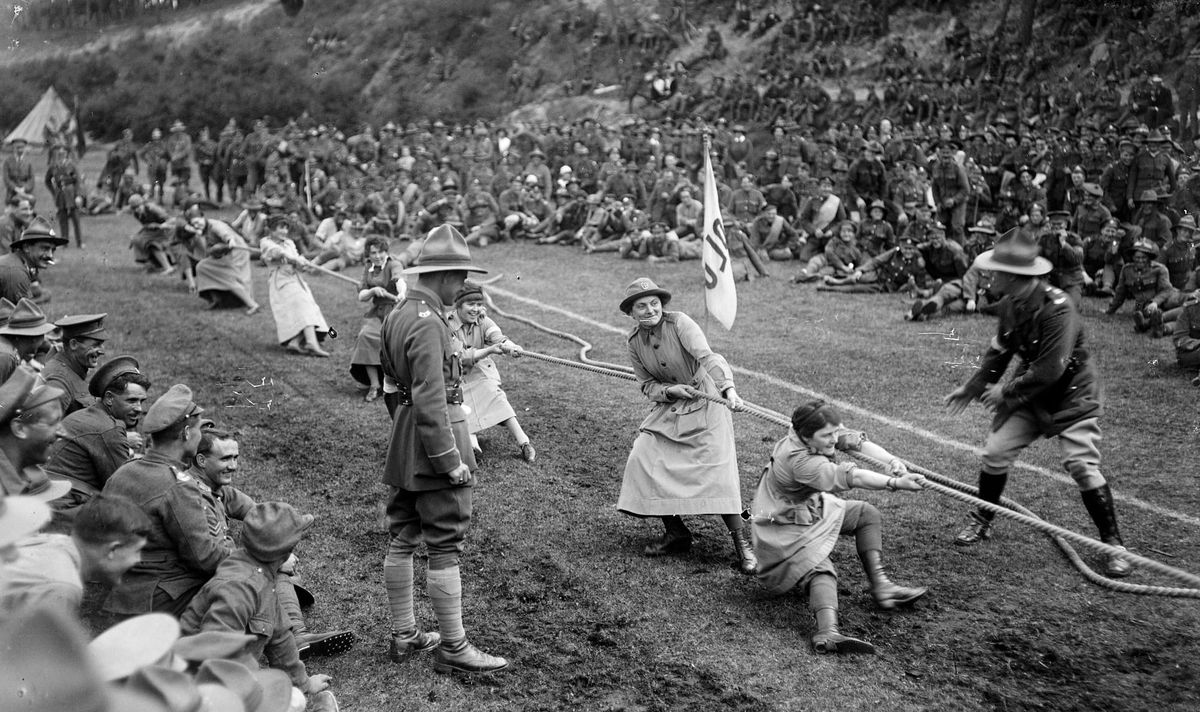
There’s a great spiritual tug-of-war happening between people who care about universal human equality and people who care about defending and promoting supremacy, and have observed that what supremacy tends to try to do more than get opponents to pull with them is to get people to stop pulling at all. I can see why. It’s harder to convince somebody who cares about universal human equality to stop doing that and to start caring about defending and promoting white supremacy, and vice versa. It’s much easier to get somebody to prioritize their own comfort somehow.
Last week I said that I thought what I was trying to do is get my audience uncomfortable. That’s a pretty foolish thing for a writer to do to their audience, a great way to be and remain a marginal figure of letters. Luckily enough for me, I am a great fool, so here goes! Let’s all get uncomfy!
I should probably mention, though, what exactly it is that we’re meant to get uncomfortable about.
So let me do that now.
Essay continues soon. But first: Feel free to subscribe if you'd like to get weekly essays.
Or don't subscribe. I'm not the boss of you. But if you do subscribe, you get one of these essays pretty much every week.
There’s the discomfort of punishment, of course. Supremacists are ultimately bullies, so punishment will always be on the table, because it’s really the only thing supremacists can imagine or create. I don’t have so much to say about punishment right now; it’s pretty easy to understand what it is, and why one would want to avoid it if they can. If you oppose supremacists meaningfully, though, they’ll sure enough punish you as much as they can. They’ll sue or prosecute or imprison or brutalize or kill you. That’s what supremacists promise to do, and if you doubt me, ask them. That’s what the $1.776 billion political retribution slush fund is for, for example.
Last week I looked at a discomfort that I would call the discomfort of disruption. The specific disruption I looked at was violence, but it could have been any disruption; there are always going to be disruptions if what you’re trying for is revolutionary change in millions of spirits, hearts, minds, in our priorities, our laws, institutions, structures—especially when the need is urgent, and the stakes are increasingly high, such as when (for example) a country is being run by a bunch of creepy fascistic white-christian billionaires who want to control all of our bodies and lives to further extend their own enrichment and power.
Now I would like to name four more discomforts, and then expand upon them in coming weeks.
There’s the discomfort of Responsibility. Literally, being responsible for this situation in which we find ourselves—which all of us are to one degree or another. It can be a heavy burden to shoulder, and even though it’s ours to shoulder, heavy burdens aren’t comfortable.
There’s the discomfort of Disrepute. People who don’t shoulder the burden don’t like it when other people do, for the same reason anyone who refuses to do the work before them dislikes it when somebody else does the work. Suddenly their claim that carrying that load is unrealistic, impossible, and untenable is revealed as a shirker’s lie, and it raises the expectation upon them. The only options left to the shirker are to either lift their own share of the burden, or to cast aspersions upon the reputation of those who have exposed them. In a workplace where nobody does the work, a worker will feel the cultural pressure to not work. So, in a culture of moral shirkers, anyone who chooses to shoulder the burden of their natural responsibility should expect to feel the further discomfort of being thought disreputable.
The discomfort of Losing. People who struggle don’t always win. Sometimes we lose ground, and sometimes we lose a lot. Sometimes it looks like we'll lose the whole thing, and maybe we will. When you're somebody who is has been unnaturally privileged, you're used to being on the winning side of everything, and losing can seem like a sort of terror, a sort of spiritual death. I've noticed this leads to a tendency to do whatever it takes to be on whatever looks to be the winning side, and to frame the cowardice and betrayal as realism or shrewdness or pragmatism.
The discomfort of Equality. It’s almost a tautology to point out that to the privileged, equality feels like oppression. But if I am receiving unnatural privilege, then equality will indeed mean that less unnatural privilege will come to me automatically, and I will face more natural competition. Equality will indeed be a discomfort, and the temptation may be strong to paint it as unfair; to decide that equality has become too uncomfortable, has done too much, has gone too far.
Let me end by sharpening this picture of tug-of-war. Let's lay the rope across a great chasm, with people pulling on either side. A raging fire burns on one side, closing in on the people there. An open and verdant field stretches out on the other. So we can see, both sides are not pulling for the same reasons, or toward the same outcomes.
A lot of times this dilemma is framed as requiring those of us who would have universal human equality to persuade our opponents to stop pulling on their side and pull on our side instead—and it would be good if they did stop, because this particular rope is stretched across a bottomless chasm, and I don't want humanity to tumble into it, and I don't want humanity to burn, either.
However, as mentioned, I have noticed that those who are eager to pull as many people into the chasm as possible aren't as focused on getting people to join in on their side as on getting their opponents to simply stop pulling so they can pull the rest into the chasm. And afterward the fire at their backs will consume them, but that will be of little comfort to the fallen.
If we would seek truth and enlightenment, we’d look with honesty and clarity at the stakes and the danger, the responsibility and the need. And we’d find a place to put our hands and pull. If we'd do it, we'd know, because we'd feel the discomfort of the struggle. If we all did this, the struggle would get easier for each of us, and the other side wouldn’t have a prayer. Those on the other side of the struggle might give up pulling and we might then even work together on turning the rope into a bridge to save them. Or, if they wouldn't stop pulling, at least there'd be enough of us that we would be enough to hold on and catch them as they fell, and pull them up—not because they have deserved salvation, but because universal humanity is the truth, and there's actually no way to let go of the rope, so human salvation is salvation for all humanity, or for none.
Yes, every metaphor eventually lies, and the tug-of-war metaphor is no exception. The lie is that you have the option to let go and be a spectator. The truth is not that you’re either pulling or watching. No, the truth is you're either pulling or you’re what's being pulled. The truth is the fire will burn both sides.
The only person you truly get to decide about is yourself. So take a moment, and ask yourself “Who am I, and what am I doing here?”
Ask yourself: "On what side am I pulling?”
Ask yourself: “Am I feeling the discomfort of struggle?"
Ask “Am I pulling, or am I the rope?”
The Reframe is totally free, supported voluntarily by its readership.
If you liked what you read, and only if you can afford to, please consider becoming a paid sponsor for as little as $1/month. If you'd like to be a patron of my work, there's a Founding Member level that comes with a free signed copy of my upcoming book, Fighting in the Dark, and thanks by name in the acknowledgement section of any books I publish.
Looking for a tip jar but don't want to subscribe?
Venmo is here and Paypal is here.
A.R. Moxon is the author of the novel The Revisionaries and the essay collection Very Fine People, which are available in most of the usual places, and some of the unusual places. You can get his books right here for example. His upcoming essay collection is Fighting in the Dark. He dialed 9-1-1 a long time ago.



Comments ()