
Us and Them
Exclusion isn't good for the team. Telling disruptive stories in a fascist locker room.

Try this: You’re in a football team’s locker room, after practice. One guy tells a joke, and everyone laughs.
A nice team building moment.
And maybe so. But maybe not.
What was the joke?
James Talarico, who may actually have a shot at winning a Senate seat in Texas for Democrats for the first time in over three decades, went onto Fox News recently and made a disappointing statement. Asked about the most pressing issue of our day according to Republicans (which, as everyone knows, is the handful of trans athletes currently playing high school sports), he responded “I will oppose trans athletes playing in girls’ sports if it risks safety or fairness.” The next day he doubled down, announcing his support for a national ban on trans care.
To say I found that disappointing would be an understatement.
I know that by saying I find it disappointing I am encouraging everyone to claim that I want Talarico to lose, or that I demand purity politics, or to tell me that voting is dumb and Talarico has always been a disappointment, and to otherwise run various pre-established pundit scripts about elections and voting and political strategy and slogans. Have fun, I say! Romp and play! Give me the hot sauce! That game isn't for me today.
Today, I want to focus on why I find Talarico’s statement so disappointing.
My disappointment is in no small part because Talarico has distinguished himself well in this area before, voting against GOP restrictions barring trans student-athletes from playing on sports teams that align with their gender identity. In the past, he's put his money where his mouth was, and sure enough for these acts of moral clarity, he's been smeared by his opponents for as weird and unmasculine and dangerous, as anyone with such twisted and cruel opponents should hope to be.
But the greater share of my disappointment lies here: Talarico gave away the frame to fascist bullies. By this, I mean that he told their story of Them instead of a competing story of Us, and in so doing signaled that his win—which, given his opponent, I think we should hope for—will have a greatly diluted effect.
A story of Them. A competing story of Us. What the hell do I mean by that?
Back to the locker room.
Try this instead: One guy tells a joke, and everyone laughs, except one person, who fills the silence following the laughter with five words.
“That’s not who we are.”
Damn. Did you feel how that changed things? What is that?
I’d call it a story challenge. Literally a challenge to the underlying story.
Somebody proposed “This is funny.” Somebody else said “this is actually unworthy of us as a group.” It's a pretty direct challenge.
Where does that response place the challenge? What would happen to the conversation if instead the retort was "that's not funny" or "that's not true?"
Do you see how it changes?
But what is the nature of the challenge? And what is its competing story?
Put yourself somewhere in the scenario. We’ll be right back.
I’m still thinking about story as a way of addressing our underlying problem, so let me start us off with the underlying problem. We are currently being ruled by Nazis and anti-human billionaires (with some category overlap) who are burning the planet and eating humanity’s future. This is pretty bad, most people agree. Most people don't like having their planet burned and their future eaten.
So why are they able to get away with it?
In part it's because these Nazi billionaires are ruthless fuckers and a critical mass of their core followers are hateful bigots who would rather have bigotry than life, but an even bigger part of it is because these ruthless fuckers have been very successful at getting a critical mass of people—who may very well be complacent or complicit or distracted or morally lazy or all of them at once, but who are not hateful bigots in an active sense, and who generally agree that burning the planet and eating humanity's future is bad—to believe that cruelty and domination toward those deemed "them" creates safety and prosperity and justice, and to believe that those who would help usher in a kinder, more equitable, and more equitable world are dangerous radicals who represent danger and impoverishment and injustice. This makes a critical mass of people skeptical of necessary change and very open to considering other groups of people to be a "them" worth excluding and abusing.
And the fascists are accomplishing this with story if you ask me. Propaganda, yes. Misinformation and lies, yes. Grotesque hypocrisy and corruption, yes. Shows of violence, yes. But all of it is in service of this traditional and popular anti-humanity narrative they’re pushing. Fascists seem to understand that story is a great lever of persuasion, and persuasion is a great lever of power.
Here's how I see it: When a person believes something, it becomes part of their story of Me, and governs what that person considers possible or not possible for themselves. When a bunch of people believe something, it becomes a story of Us, and exerts a gravity over human institution and human belief until it begins to govern what people even see as possible. When enough people believe a story of Us, it becomes the way things are, to such a degree that even those who want to change the way things are compelled to exist within it. Narrative controls belief. Belief controls possibility. Possibility controls reality. And our current underlying narrative—American Exceptionalism, grown from a submerged foundation of white patriarchal supremacy, optimizes itself for bullies, ruthless fuckers and hateful bigots. So it is that we live in a world optimized for bullies, ruthless fuckers and hateful bigots, and so it is that I'd like to find ways to disrupt the traditional narrative and introduce competing ones.
Since narrative seems to be a great lever of persuasion, and persuasion is a great lever of power, and since power is currently in the grotesquely inappropriate hands of ruthless fuckers who are burning the planet and eating humanity's future, it seems to me we ought to become effective and perceptive about story and persuasion.
I like stories. But I must confess, I get hung up on persuasion.
Back to the locker room.
It's not the end of the essay! It's only a quick reminder that The Reframe is me, A.R. Moxon, an independent writer. Some readers voluntarily support my work with a paid subscription. They pay what they want—as little as $1/month, which is more than the nothing they have to pay. It really helps.
Where did you put yourself in the story? Were you the one who told the joke? Were you one of the ones laughing? Were you the challenger, who said it wasn’t "who we are?"
What was the joke? Was it innocuous? Was it mean-spirited? Was it about somebody? Was that “somebody” in the room?
Who told the joke? Was it a star player or a scrub? Was it a freshman or a senior? Was it the coach? Somebody else?
Who is the challenger, the lone dissenter? Is it a member of the team? Is it a coach? Is it a passerby? Was it the person the joke was about?
What was the reaction to "that isn't who we are?" Was it curious? Conciliatory? Belligerent?
See how it changes?
I think it changes so much because conditions affect what the underlying stories are, and what the underlying types of stories are, and what the nature of the challenge is, and who the challenge persuades, and what it persuades them of.
I get hung up on persuasion because of how often we focus our greatest efforts on those least likely to be persuaded, and how often we define persuasion exclusively as “getting our opponents to agree with us intellectually,” and, even worse, how often we just replace that with "agreeing with our opponents intellectually in hopes that they will reciprocate." So often persuading fascists is confused with being persuaded by fascists. So often persuasion is seen as something to do exclusively with words, and neglects entirely how much more persuasive actions can be. I might be able to persuade you I can dunk on a regulation rim by telling you I can. However, if I grab the rock and stuff it, I don’t have to say a word. I can tell a bully that if they mess with my friend, they’ll have to deal with me, and I may well persuade them simply by saying so, but when I step between my friend and the bully, I am more persuasive still. So often, when persuasion should be achieved by doing, it is used as a way to avoid doing.
And I get hung up on persuasion because of how easy it is to fall into tone-policing other people with different material circumstances whenever talking about persuasion, or expecting the work of persuasion to be done by those most abused and most at risk, specifically by maintaining respectability in the eyes of their abusers. In fact, for a whole class of political actors it feels to me that the point of bringing up persuasion is policing tone, not persuasion. It’s a lot of “you mustn’t talk to people that way, you must instead talk to them this way.” Or it’s “you can’t ever talk to those people at all,” or it’s “you can’t shut those people out, you know, you’ll never persuade them.” Or “you can’t talk about that subject, it’s not persuading anybody.” Or “you can’t just shut people down.”
All that might be true, depending on circumstance. But we’re dealing with a story that needs a challenge from what is hopefully a better story, and the nature of a story’s challenge changes greatly depending on relational and material conditions. Sometimes you shouldn’t talk to those people, but sometimes you should. Sometimes you shouldn’t talk to those people, but somebody else should. Sometimes you need to shut somebody down because there’s something happening that needs shutting down. Sometimes what’s needed is space to have an expansive private conversation. Sometimes you should boo. Sometimes you should shout. Sometimes you should not. The way persuasion is talked about rarely acknowledges this or allows for it. So often, when persuasion calls for accepting responsibility, it is used as a way of avoiding responsibility.
So I get hung up on persuasion. I often fear that even by bringing it up I join with a failed and flailing narrative, that I flirt with efforts to flatter abusers and ignore the abused. I fear I might make Ezra Klein nod.
And yet persuasion is a great lever of power, and it needs to be in better hands. We ought to be good at persuasion, which starts with understanding what it actually is and how it actually works.
And narrative—story, scripts—are the levers of persuasion, and our dominant script is a deadly one. So, if we would accomplish our goal, we ought to get good at story and scripts, so we can put forward our competing story.
But wait. What is our goal? What do we want to accomplish?
And what is our competing story?
Back to the locker room.
Let’s say the joker is the star quarterback. Let’s say the joke is clearly mean-spirited. Say it is about the equipment manager, Larry, who has to use crutches to get around. If the quarterback was pressed to define what is funny about the joke, he would eventually have to admit that what is funny about the joke is that it is highlighting that, unlike everyone else in the room, Larry can’t walk well. Maybe he did this by calling him a [ableist slur redacted] girl. And let's say Larry is standing right there.
What the quarterback’s joke is saying, at a surface level, is “Larry is not Us. Larry is Them.” I'd say this makes it a story of Them. A story of Them can get confused with a story of Us, because even an act of exclusion creates a boundary where Us begins and ends, which defines what Us means.
What the quarterback’s joke is saying—at a base level he probably doesn’t even think about—is “People who are able-bodied are Us. People who are not able-bodied are Them. And women are de-facto not able bodied.”
What the quarterback’s joke is saying, at a base level, is “It’s funny when people like Us belittle and exclude people like Them.”
Maybe Larry even laughed. Sometimes you get an offer from Us to be accepted as a lesser version of Us, provided you laugh along. You’ll get shoved into lockers and toilets by your “friends,” but also nobody else will be allowed to do that to you. And sometimes people are persuaded that a lesser version of Us is the best offer available. I think they’re persuaded about this because when the joke gets told, everyone laughs, and nobody speaks.
Is there a version of the same joke that is inclusive, not mean-spirited? Can the exact same joke be not mean-spirited, even inclusive? I think so. What if the star quarterback is in a wheelchair, too? What if all the players are? What if this is a women’s Paralympic team, and they’re reclaiming and disrupting bad narratives? Suddenly a Them story becomes an Us story.
See how it changes?
At some base level, a story challenge seems to be saying: “This is not Us.” or "This is not who We should be," or else “You are not Us. You are Them.” It’s a matter of in and out. It’s matters of included or excluded. To a social creature like a human being with features evolved for social living, it’s often received as life or death.
No doubt, there is a level of risk in a story challenge. But what kind of risk? It’s relative—sometimes literally so. Sometimes the challenge comes from your family, and the relationships that are at risk are familial. There’s the risk you might have to change your worldview or some of your old scripts. That’s risky stuff, and not everyone is open to it. If somebody in your community is challenging your version of your story of Us, you risk losing your community—and all the more when you are the one doing the challenging. If your friend is challenging you, or you are challenging your friend, you risk losing your friendship. It could happen. It does happen. Your friend is taking that risk, too, by challenging you.
And, in an age when the Nazis and billionaires in power are trying very hard to define who is in and who is out, and then are devising punishment and terror, misery and death for anyone who is out, the risk is a very immediate and real case of actual life or actual death for more and more people.
A challenge to a story of Us, then, is not just received as a threat. It is a threat.
But what kind of threat is it?
Well … what is the challenge about, and where are we, and who are you to me, and who am I to you? And what sort of person am I?
The subject makes a difference. Some things are worthy of a challenge. Do I enjoy a food you don't? Did I suggest that a movie you love sucked? Did I tell a mean-spirited joke? Did I tell you that I think the earth is flat? Did I tell you that if you can’t work, you ought to be left to die if you get cancer? Did I tell you that I think Jews are replacing the white race? Did I suggest that your mother ought to be kidnapped by ICE's lawless death squads?
Where we are makes a difference. Are we speaking face to face, alone in a room? Are we across a table surrounded by colleagues? Are we on stage in front of a crowd, wearing lapel mics? Are we being broadcast to thousands or millions?
Who we are to each other makes a difference. Are you my sister? My mother? A personal hero? A cop? A judge? A stranger on the internet? Are you a friend? A close friend? Are you somebody whose opinion I respect? Are you somebody whose opinion I disrespect? Are you my boss? Am I yours?
Am I an open-minded person? Do I try to make my beliefs match my principles and evidence? Or have I shown you that I am controlled by my fears and my need to dominate?
A couple of observations.
First: An individual’s response to a story challenge depends heavily upon circumstance. This suggests that a story challenge can be effective, provided you have a goal, and act with intention rather than reflex. Which, of course, means that it can also be ineffective.
Second: Reactions to story challenges can be very powerful, because story challenges challenge identity, and disrupting identity creates not only emotional but physiological effects. This suggests that not only can a story challenge or the reaction to a story challenge be effective or ineffective, but powerfully effective or powerfully ineffective.
This suggests we’d to well to understand the nature of these interactions.
It also suggests we’d do well to understand what we’re trying to accomplish.
So, again: What should be our goal?
I think we should do things Nazis cannot do. What the Nazis and anti-human billionaires who are ruling us are trying to do is continuously shrink who is meant by “Us." I'd argue that they are each trying to shrink it until it only means "Me." Let me suggest, then that we should always do tell a story that expands the meaning of “Us.”
How far should we expand? I’d say we should expand Us to include all humans. That’s a good goal. I think our story is "Exclusion is bad for the team." That's a good story.
OK! Now we're getting somewhere! But how do we tell that story?
Guess what? It depends. It depends, it depends it depends. It always depends. It’s so annoying that way.
Here are some questions we might ask ourselves to bring clarity to these matters.
Who is the Us and the Them? This, I think, is the central axis. If I perceive you and I are in the same community—similar values, similar community, similar beliefs, different story of Us—I am far less likely to see you as an existential threat, and far more likely to experience your challenge to my story as a problem to fix. At the same time, the stakes are higher. Loss of our relationship is at risk, expulsion from our community is the threat.
So it seems to me that within a community, the challenge needs to come on the level of the community, not in the particulars. "That's not funny" gets us debating whether or not the slur and the exclusion is funny. "That's not true" gets us debating whether or not the slur and the exclusion is true. Maybe there are places for those conversations, but the first conversation is "That's not Us."
On the other hand, if I perceive that you and I are in a different community—differing values, community, beliefs, differing story of Us—I am far more likely to experience your challenge as part of my expected script; a conflict to engage with, not to learn and grow, but to fight and win. Expulsion from your community is no risk to me, because I do not see myself as part of it. Alignment with you holds the risk.
It seems to me that we have a responsibility to respond to Them stories not by debating with an individual who is expecting or even relishing debate to burnish their own standing, but rather by discovering where the Us can be found and grounding our response there.
If a passing teacher says “that’s not who we are,” it likely won’t land with the starting quarterback, from a persuasion standpoint. I want you to notice that this does not mean that the passing teacher should do nothing. There are more tasks on the persuasion board than convincing an asshole to not be an asshole. It just means that persuading the asshole to not be an asshole isn’t the teacher’s first job in that immediate moment. The teacher's story of Us is not the team, it is the whole school. Her realm may be the faculty lounge. Her "that's not who we are" conversation may be with the head coach and the principal.
On the other hand, if it was the star tight end who said “that’s not who we are,” that’s going to have a different impact. “That’s not who we are,” coming from the tight end, says, in so many words, “It isn’t funny when we exclude Larry from us.” “That’s not who we are,” says, in so many words, “It isn’t funny when we, who are able-bodied, exclude those who are not.”
So it seems that those who are inside of a community can have a greater impact than those outside it. This suggests to me that those inside a community bear a greater responsibility for disrupting bad scripts within their community than those outside it, and that we can have a greater impact in changing scripts if we can do so from a shared point than one that is not shared.
Who am I and what am I to you? If the person issuing the challenge is close to me, I am likely to experience the challenge far more intensely, in recognition of the greater risk to a greater relationship. If the story challenge is from a stranger, then I am likely to experience the challenge far less intensely.
If the tight end and the quarterback don’t get along, then the tight end's “that’s not who we are” seems less likely to be very persuasive to the quarterback about expanding Us. It seems more likely that the quarterback will just lock up and find a way to negate the statement. This is not a reason for the tight end to not issue the challenge, by the way. There might have been a general sense that the quarterback gets to tell mean-spirited jokes unchallenged. The tight end just persuaded everyone that's not true, and that's a good thing to persuade the room about.
On the other hand, if the challenge is coming from the quarterback’s best friend on the team, the quarterback might feel even more threatened in the moment, but over time that challenge seems more likely to plant a seed in his mind that might grow into real change.
This suggests to me that, the closer we are to somebody, the more responsibility we bear to address bad scripts and bad stories more directly, because we have the greatest power to disrupt them. And, if we are going to be effective at expanding Us, we ought to be ready to use more than one type of challenge.
Who is my audience? If the story challenge is being issued in a public way, I am likely to experience the challenge far more intensely, in recognition of the expanded scope of the challenge. And if I am issuing the challenge, my audience will be similarly expanded, which increases the scope of who I might wish to persuade.
Paradoxically, this means that those Us-expanding responses may result in individual exclusion. Maybe the coach responds to the incident by cutting the star quarterback, a response that sends the message “we are all a team here, and if you breach that unity with unkindness, even toward the “lowly” equipment manager, your skill will not earn you a pass, because cruelty is not Us, and if you are cruel, then neither are you.” That sort of thing can change a team's culture. If you follow sports, you know it has. It says "that's not who We are" in the most direct and persuasive way possible.
This suggests to me that those with greater authority over the whole have greater responsibility to the whole. It seems to me there are occasions when we might not be trying to persuade the target of our challenge at all, but to set the standard for what is meant by Us.
Who is open here and who is closed? Maybe the coach took this action because this was a part of a pattern of repeated behavior, and it has become clear to reasonable observers that the star quarterback is not open to change. Will such expulsion help make the quarterback a better person? It could give him a chance to do so, in a way that toothless cajoling or just laughing along at his cruelty never will.
This suggests to me that every action is persuasive to different people of different things. Laughing along with an exclusionary joke persuades the quarterback of one thing and Larry of something else. “That’s not who we are” tells a different story to the quarterback and the laughers and Larry, and persuades them of different things, too. It seems to me that our responsibility is the create the most expansive Us we can, and understand also that those who cannot accept an expansive Us will not be able to join a more expansive Us until they are open to it—not because we will not have such people, but because they refuse to have Us—and if someone can't accept all of Us, then it's not that they can't be part of us, but that they won't be.
Who and what is the target? If I am the direct target of the challenge, I am likely to experience the challenge far more intensely. If the target is who I am rather than what I am doing, more intensely still.
When the quarterback made his joke, I would guess that Larry felt it far more intensely than anyone else. Larry may have been under the impression that he was part of the Us of the team. If everyone laughed, he learned otherwise. Where can Larry go? Nowhere but out. What was being targeted was his self; who he is.
When someone retorts “that’s not who we are,” the quarterback is likely to experience it far more directly than anyone who laughed, and anyone who laughed is going to experience it far more directly than anyone who didn’t. But notice where the quarterback can go. In or out. He can stop treating Larry that way. What's being targeted is what he is doing.
“That’s not who we are,” says, in so many words, “This isn’t the sort of joke We make. If you make this joke, you are separating yourself from Us.” It targets the quarterback only so long as the quarterback continues to make those jokes. Does it exclude the quarterback? That's up to the quarterback. It's a challenge, but it's also an invitation of sorts.
This suggests to me that, if we are going to be effective at expanding Us, we should notice who is being targeted for exclusion in a challenge, and find responses that include them again, and to put the cost and risk of excluding others onto those doing the excluding.
What direction is this going? I'll end it here, with a question I think we have to ask in every encounter, every challenge: is this expansive of Us or restrictive? Are we telling a story of Us or a story of Them?
Are we saying "you aren't Us?" Or are we saying "this isn't Us?"
One is open, the other closed. One constricts, the other expands.
Fascists may seem to be telling a story of Us, and they are, to an extent, I suppose, but it's an ever-contracting story of Us. Belonging to it seems to involve managing a never-ending series of Them stories, which demand unending vigilance to make sure you stay within an ever-shrinking definition of Us by doing whatever it takes to not be whatever Fascists define as Them. We can counter that by finding the expansive narrative.
And James Talarico, who is is a Texan and a Christian and an American, can find his Us in those communities. He has a responsibility to the people of these communities, not to tell them that he shares the concerns informed by their bigotries, or even to argue over the details with people ignoring the details, but to tell them that being hateful and bigoted is not who Texans or Americans or Christians should be, that furthermore he believes in creating a world where that's not who We are or who they are, and invite them to join that story by living in it. By joining their story, by not challenging their bigotry and pushing an alterative narrative, he abandoned not only trans youth to their bigotries and fear, but the bigots themselves. In that moment at least, he joined the fascist story of Them, when he could have rejected the premise and told a story of Us instead.
James Talarico, who has shown that he knows well who is being most targeted, has a responsibility to the people of Texas to tell a story of Us that includes those most targeted for exclusion, and to pay the risk and the cost that will come with telling the competing story in which they are Us too.
And we have similar responsibilities, though the details can change.
In distancing himself from his earlier support of trans people, James Talarico may have thought he'd keep himself from being cast as Them, but he participated in the exact story that casts him that way.
He could have said "exclusion isn't good for our team. I will always stand with trans kids and all trans people, and that's how you know I'm going to stand for all of you. Texas is for everyone in Texas, and the United States is for everyone in the United States. We don't harass kids in my Texas. In fact, we don't harass anyone. I hope to earn everyone's support, but if taking away kids' health care is what I need to do to get it, then I'll work for the basic human rights of trans kids without your support, and I'll work for your basic human rights without your support, too."
Instead, he did what he has done. Talarico very likely has persuaded the bullies that he will back down to pressure, and persuaded trans people that he’d rather be liked by Republican bigots than by trans people in Texas, and that even if he wins in November, they’ll be on their own.
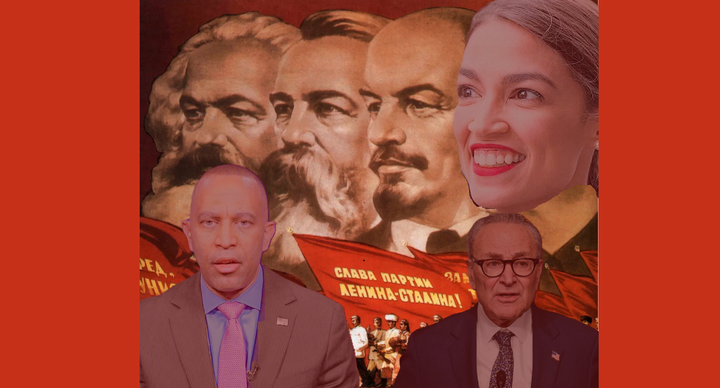
Perhaps he was trying to persuade the bullies to like him, though that’s not how pandering to bullies usually goes in my experience. And sure enough, the Republicans have unveiled their attack line. Here it is:
Oh. If only.
The Reframe is totally free, supported voluntarily by its readership.
If you liked what you read, and only if you can afford to, please consider becoming a paid sponsor for as little as $1/month. If you'd like to be a patron of my work, there's a Founding Member level that comes with a free signed copy of one of my books, and thanks by name in the acknowledgement section of any book I publish while you are a member.
Looking for a tip jar but don't want to subscribe?
Venmo is here and Paypal is here.
A.R. Moxon is the author of the novel The Revisionaries (2019) and the essay collections Very Fine People (2024) and Fighting in the Dark (2026), which are available in most of the usual places, and some of the unusual places. You can get his books right here for example. And after all, he's only ordinary men.


Comments ()